
Reviewed · TICKETS
DomQuartier Salzburg Day Ticket
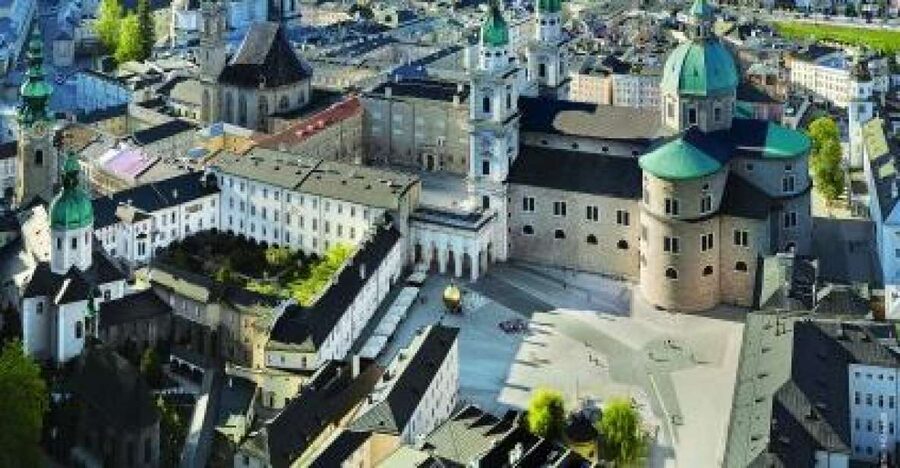
The DomQuartier is interesting because it turns Salzburg’s biggest religious landmark into a walkable story about power, art, and architecture. You move through parts of the cathedral and the Salzburg Residenz complex, plus adjoining spaces like St. Peter’s Abbey, without bouncing between unrelated museums. I love that it was designed to restore the original unity of the cathedral and Residenz, so you understand how the whole machine worked, not just one pretty room.
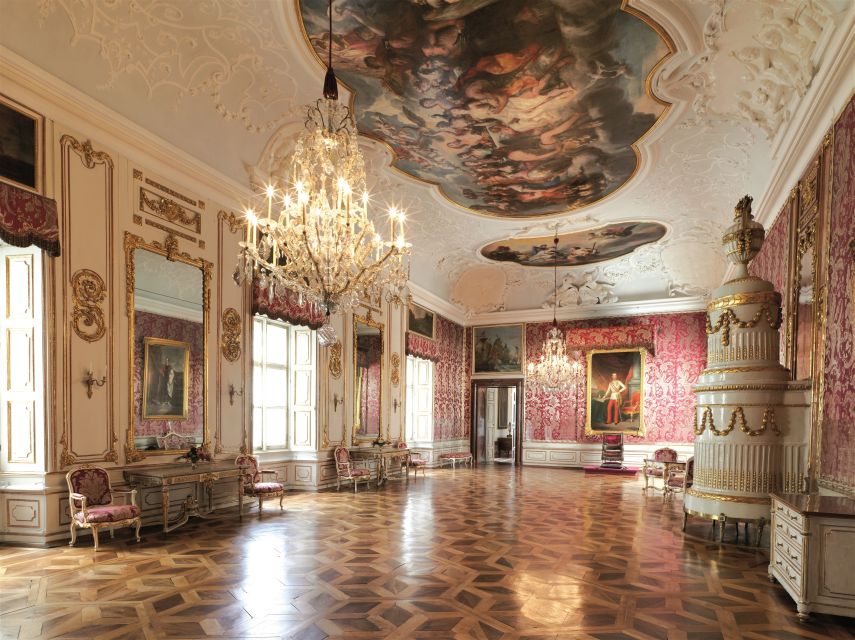
What I like most is the Baroque interior detail in the Salzburg Residenz State Rooms, with stucco and ceiling frescoes meant to impress. I also love the smart viewpoint stops, especially the Cathedral Arches Terrace, where the city feels close enough to study street by street. The only real drawback to plan around is that some areas can close on certain days for events or conversion works, and the cathedral arches terrace is sometimes closed during exceptional situations like storms.
Key Things I’d Prioritize Here
- 15,000 square meters and 2,000 exhibits, built around 1,300 years of Salzburg art and culture
- Baroque power up close in the Salzburg Residenz State Rooms and official ceremonial spaces
- Cathedral arches terrace views that help you see Salzburg’s layout in a way street level can’t
- North Oratory special exhibitions and the organ loft route that guides your eye through key spaces
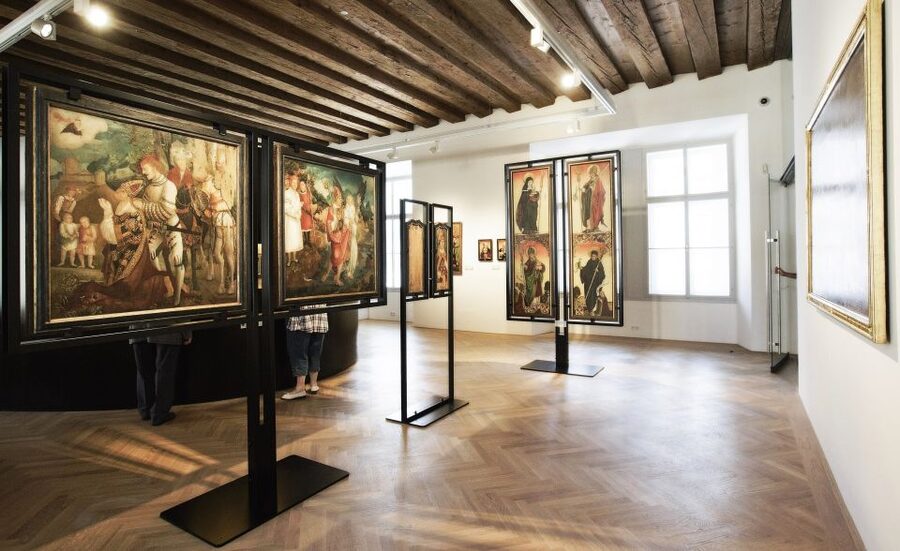
- Museum St. Peter for monastic treasures in a permanent setup tied to the oldest continuously running monastery in German-speaking areas
A Restored Cathedral-Residenz Story, and Why It Feels Different
DomQuartier Salzburg is built around a simple idea: the cathedral and the Salzburg Residenz complex are supposed to be experienced as one connected site. That matters because Salzburg’s Prince Archbishop era was all about visible authority, and Guidobald von Thun, who ruled in the mid-1600s, shaped a lot of what you see. He helped build major elements like the cathedral arches and the Residenz, plus passages linking the cathedral and Residenz.
The big historical twist is that after the Prince Archbishopric of Salzburg was dissolved in 1803, the complex lost its original unity. The DomQuartier project restored that connection, reopening the ensemble to the public on 17 May 2014. In plain terms, you’re not just visiting rooms. You’re walking through a designed relationship between sacred space and secular power.
More days in Salzburg:
- The Original Sound of Music Tour in Salzburg
★ 4.5 · 6,129 reviews - Salzburg: Original Sound of Music Tour
★ 4.8 · 5,059 reviews - From Salzburg: Half-Day Tour to Hallstatt
★ 4.6 · 3,596 reviews
Price and Timing: A Day Ticket That Lets You Control the Pace
Your ticket is valid for one day, but it’s not a one-shot timed entry. The ticket includes multiple admissions on the day of validity, and you can interrupt the tour and resume later the same same day. That flexibility is a big deal in Salzburg, where you may also want time for coffee, a side street, or the basics like photos and people-watching near the cathedral.
At about $14 per person, the value comes from the fact that you’re paying for entry into a whole cluster of interconnected spaces. You’re looking at 15,000 square meters and 2,000 exhibits across centuries, with sections focused on paintings, cathedral-related collections, and monastic holdings at St. Peter’s Abbey. You’re not paying for a single room or a short corridor.
In my view, this is a good “core morning” activity. Based on how long people tend to spend here, plan around two hours, then decide if you want to stretch it longer. If you prefer a slower pace, the multiple admissions rule lets you come back without feeling like you missed a window.
State Rooms of the Salzburg Residenz: Where Baroque Theatre Meets Real Life
The tour starts with the State Rooms of the Salzburg Residenz Palace, the living quarters and official seat of the prince archbishops. These are the rooms where rulers displayed wealth and control, and the interiors are meant to hit you fast. Expect opulent surroundings, extravagant stucco, and impressive ceiling frescoes designed to project authority.
What I think you’ll appreciate here is the logic of the design. You’re seeing how architecture and art worked as messaging, not just decoration. Even if you’re not a “big museum” person, these rooms do a good job of making the historic context feel physical.
One practical consideration: these rooms can be among the first areas to see partial closures on certain days due to conversion works or events. If you show up when something is closed, you can still keep moving through the rest of the complex and return later the same day.
Residenz Gallery: Paintings With a Clear Baroque Focus
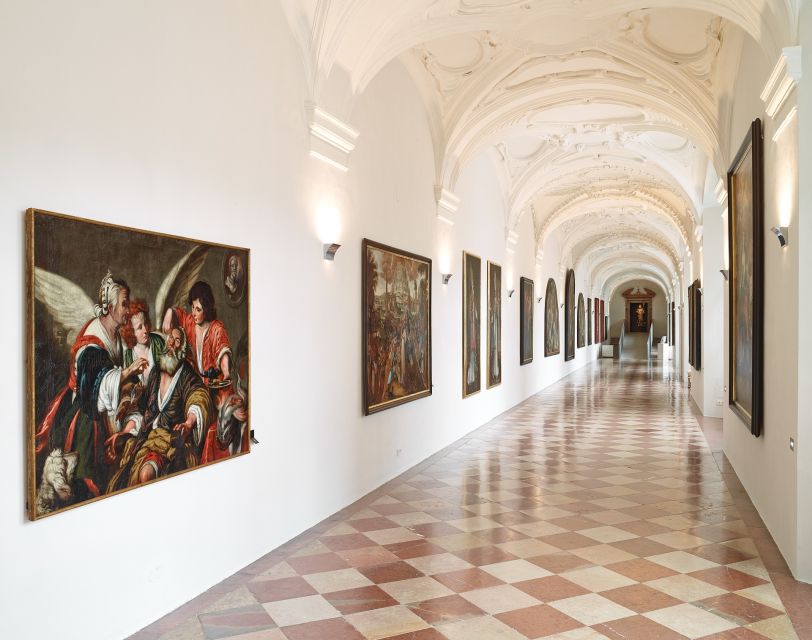
Next comes the Residenz Gallery, which centers on European painting from the 16th to the 19th century, with a clear emphasis on the Baroque period. This is a strong stop if you want art history that connects to what you just saw in the State Rooms. The story stays coherent: politics and faith in the buildings, then painting that echoes those same eras and tastes.
I like that the gallery is not trying to be everything at once. The focus helps you follow a thread. If you want a quick win, spend time on a smaller number of works and let the guide help you place them in context.
Other Salzburg bookings to compare
- Salzburg: Hohensalzburg Fortress Admission Ticket
★ 4.6 · 2,236 reviews - Salzburg: The Magic Flute at Marionette Theater Ticket
★ 4.7 · 255 reviews - Salzburg: Cathedral Entry Ticket with Audio Guide Option
★ 4.4 · 134 reviews - Salzburg Cathedral: Guided Tour with Entry Ticket
★ 4.6 · 126 reviews
Cathedral Arches Terrace: The Best “Map in Your Head” View
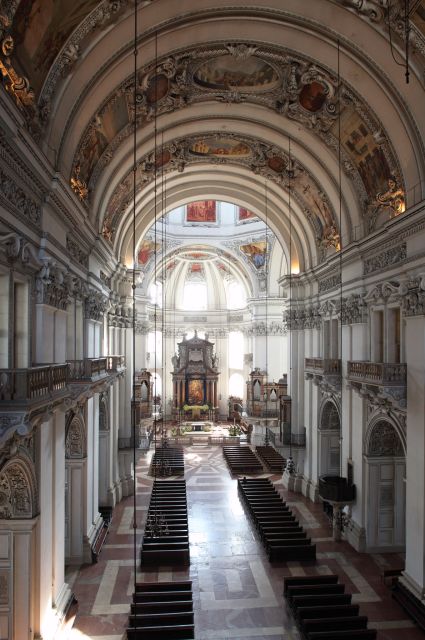
Then you reach the Cathedral Arches Terrace, which connects the secular center and the spiritual center. It’s basically Salzburg Cathedral’s elevated in-between space, and the view helps you understand the city’s shape. From here, you can spot how the old town is arranged around key landmarks.
This terrace is included with the ticket, but it’s important to know the terrace can be closed in exceptional cases, like special events or storm warnings. If weather looks shaky, check the situation when you arrive so you are not planning your schedule around a guaranteed viewpoint.
If you love getting your bearings fast, this is one of the stops that accomplishes it. Instead of trying to read a city map while walking, you get a built-in vantage point that turns the center into something you can mentally organize.
North Oratory and the Organ Loft Route
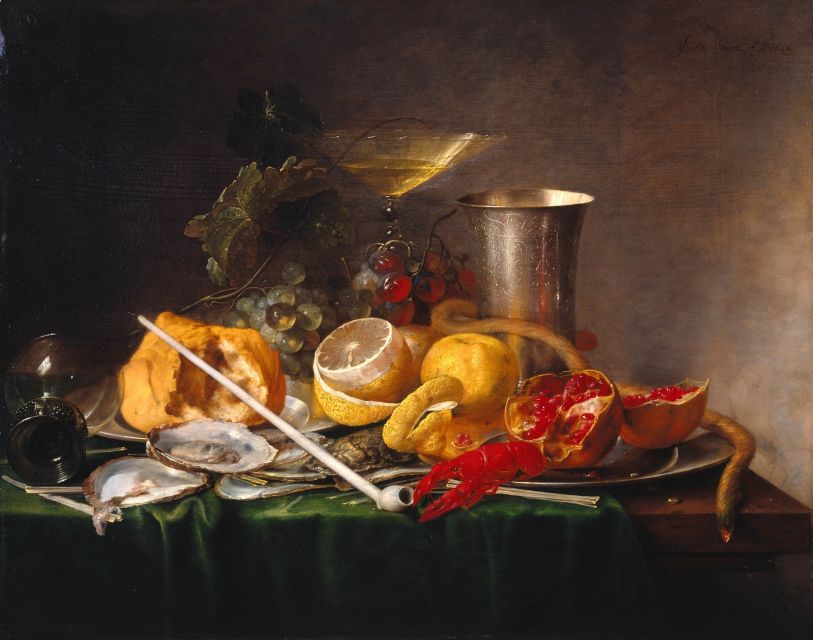
The North Oratory is set up to host special exhibitions, with the original structure recorded for the future. In the meantime, there is a guest presentation from the Salzburg Museum with the Rossacher collection. This is one of the places where the experience can feel slightly different from day to day because special exhibitions change.
The route also matters. The description of the path highlights the organ loft first, with a view over the cathedral, before you move into a chain of key collections like the Cathedral Museum, Kunstkammer, and the Long Gallery. Even if you’re not chasing every single room, the order helps you keep your attention.
There’s also a nice rhythm to the design. You alternate between elevated perspectives and close-up viewing of objects. That makes the complex feel navigable, not like you’re just wandering.
Cathedral Museum, Kunstkammer, and the Long Gallery
After the organ loft, you get pulled into the Cathedral Museum and Kunstkammer territory, with the Long Gallery coming in along the route. These spaces are where the emphasis shifts from architecture and frescoes to collections built from centuries of collecting and preserving.
For me, the best way to use these sections is simple: pick a few objects and read the labels carefully. The point is not to race through everything. It’s to notice how Salzburg’s cathedral culture collected and displayed art treasures, then how the Kunstkammer approach turned that into a curated cabinet mindset.
If parts of these rooms are closed on your specific day, don’t panic. The ticket structure lets you keep the full day flowing without losing your place. You can prioritize the open rooms and come back later.
Museum St. Peter: Old Monastic Treasures in a Permanent Setup
Right next to the cathedral and Residenz complex sits St. Peter’s Abbey, described as the oldest continuously running monastery in the German-speaking countries. That continuity is a big reason this stop hits differently. It isn’t only about medieval art on paper. It’s about a living institution that shaped intellectual and cultural life in Salzburg.
The abbey has an extensive art collection, and the Museum St. Peter presents the most beautiful objects in a specially designed permanent museum. The description notes that these displays have been shown for the first time since 1982, which signals this is a newer presentation even if the collection itself is old.
I’d treat this as your “slow down” area. Museum St. Peter is not just another room of paintings. It’s a way to connect the cathedral complex with the monastery’s long view of Salzburg’s cultural development. If you want one stop that gives you a deeper sense of place, this is it.
The End Point: Franciscan Church Choir and Carabinieri Hall
The route includes a look into the Gothic choir of the Franciscan Church before the tour ends in the Carabinieri Hall of the Salzburg Residenz. Even though you may not have time to linger in every adjacent space, the fact that the tour touches these different types of interiors helps you see how mixed Salzburg is: Gothic elements, Baroque power rooms, and monastic spaces all in one continuous day.
This ending point is also useful psychologically. You finish back inside the Residenz complex, so the day closes where the “main civic statement” started.
How the Online Audio Guide Keeps You on Track
The audio guide is included, designed to work with your own smartphone. You do not need pre-installation. Just use an up-to-date web browser and an Internet connection to access: www.domquartier.at/audioguide. There’s free WiFi available in the museum, which can save you if your roaming data is unreliable.
You can listen in many languages: German, English, Dutch, Italian, French, Spanish, Russian, Mandarin, Korean, and Japanese. If you’re traveling with kids, there is also a specially developed children’s audio guide in German, English, and Italian.
One reason this matters for visitors is navigation. The complex is large, but the route is organized enough that you do not feel like you are stuck guessing. The audio guide supports that by guiding you through the key transitions, from rooms to terraces to collections.
If you’re the kind of person who likes to learn while walking, you may find you naturally spend more time than expected because the guide keeps you busy and focused. If you’re more of a “look first, read later” person, you can still use the guide selectively, saving longer listening for the most interesting objects.
Rules and Practical Tips That Save Time
DomQuartier has clear rules, and they’re there to keep the museum experience smooth. No smoking, no food and drinks, and restrictions on luggage and bags. Large bags are not allowed, pets are not allowed except assistance dogs, and some items are banned like flash photography, umbrellas, cameras, and selfie sticks.
So pack light. If you’re carrying a camera, plan on using only whatever you can safely do without violating the no camera rule, and avoid bringing umbrella setups even if rain is possible. The rules also mean you should wear comfortable shoes. You’ll be moving across multiple rooms and levels.
Also keep your schedule realistic. Some limited areas may close due to events and conversion works in the State Rooms or the Cathedral, and the terrace can close in exceptional cases. The best move is to treat your day plan as flexible, then let the open areas decide your route that day.
Should You Book This DomQuartier Salzburg Day Ticket?
Book it if you want a high-value way to understand Salzburg’s cathedral power story in one place. For around $14, you get access to major components of the cathedral and Residenz complex, plus St. Peter’s Abbey museum spaces. You also get an online audio guide that works right on your phone, in many languages, which makes it easy to move at your own speed.
Skip it only if you’re strictly a “single collection, one-hour max” visitor. This is a designed circuit across multiple spaces, and you’ll likely want at least a couple of hours to feel like you got your money’s worth. If your schedule is tight, prioritize the State Rooms, Cathedral Arches Terrace, and Museum St. Peter.
If your goal is Salzburg’s center beyond the postcard view, this is one of the most practical ways to do it.
FAQ
Is the Cathedral Arches Terrace included in the ticket?
Yes, the Cathedral Arches Terrace is included with your ticket. It can be closed in a few exceptional cases, such as a special event or storm warning.
How long should I plan to spend in DomQuartier Salzburg?
The activity lasts for one day, and you can explore as much as you want within your visit window. In practice, you should plan on at least a couple of hours, and you can take your time and return later the same day.
Can I use the audio guide on my smartphone?
Yes. The audio guide is available online for your own smartphone. You do not need pre-installation, just a phone with an up-to-date web browser and an Internet connection at www.domquartier.at/audioguide.
What languages are available for the audio guide?
The audio guide is available in 10 languages: German, English, Dutch, Italian, French, Spanish, Russian, Mandarin, Korean, and Japanese. There is also a children’s audio guide in German, English, and Italian.
Is there WiFi inside DomQuartier?
Yes, free WiFi is available in the museum.
Are pets allowed?
Pets are not allowed. Assistance dogs are allowed.
Are cameras and selfie sticks permitted?
No. Cameras, flash photography, and selfie sticks are not allowed, and umbrellas are also not allowed.
Latest Salzburg reviews
- Wachau, Melk Abbey & Salzburg (Sound of Music & UNESCO)★ 5.0 · 23 reviews
- Werfen World’s Largest Ice Caves and Golling Waterfalls Tour★ 4.5 · 7 reviews
- Private Werfen Ice Cave and Golling Waterfall from Salzburg★ 5.0 · 15 reviews
- Viator Exclusive: ‘The Sound of Music’ Private Tour★ 5.0 · 28 reviews
- Public 8h tour to sites of “The Sound of Music Movie” & Hallstatt★ 5.0 · 219 reviews
- Private transfer from Salzburg to Vienna, 2 hours for sightseeing★ 4.5 · 7 reviews
- Private Transfer from Salzburg to Munich with 2 hours for sightseeing★ 5.0 · 8 reviews
- Public 4h tour to filming locations of “The Sound of Music Movie“★ 4.5 · 323 reviews
Tickets, compared.
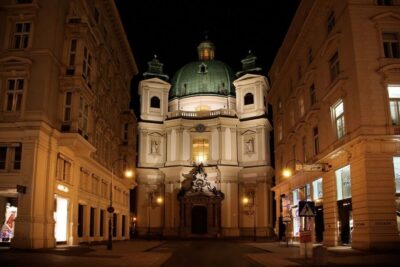
Classic Ensemble Vienna in St. Peter’s Church Ticket
Read our review →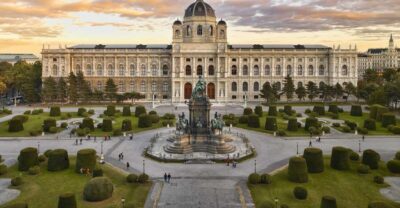
Vienna Kunsthistorisches Museum Day Admission Ticket
Read our review →
Tickets for Mozarthaus Vienna with Audio Guide
Read our review →
Skip-the-Line Entrance Ticket to the Danube Tower
Read our review →
St. Stephen’s Cathedral & Dom Museum Wien Tickets
Read our review →Browse the lists this tour appears in