
Reviewed · ÖTZTAL ADVENTURES
Ötztal: Via Ferrata Climbing at Stuibenfall
This via ferrata is interesting because you’re not just climbing a wall, you’re doing it right under a major waterfall, with steel cables, bridges, and fixed help points doing the heavy lifting. I like that it feels structured and approachable for a first via ferrata, and I also like the added comfort of a guided day that ends with a warm shower and a drink. One thing to keep in mind: it is still a hands-on climbing activity on a real rock face, so it is not the best fit for people with mobility limitations.
What makes it especially satisfying is the mix of adrenaline and “you’ve got this” support. Guides like Alex and Tini show up in people’s stories as clear, confidence-building leaders, and the route itself is built with lots of helpful brackets. The only drawback I can’t ignore is the time commitment: you’re signing up for a focused half-day, about 4 hours, with a transfer by minibus and no wandering around on your own.
If you want a memorable Ötztal action day that doesn’t require prior climbing experience, this is one of the most straightforward ways to get it done.
Key things to know before you go
- Climb directly under Stuibenfall for a dramatic setting and nonstop waterfall energy
- Steel rope bridges and a waterfall crossing keep it varied, not just a vertical grind
- A guided camera setup means you can document your run without worrying about snapping at the wrong moment
- A well laid-out route with many brackets helps first-timers move confidently
- Schnapps, shower, and time to cool off make the finish feel like a reward, not an exit
- Not suitable for mobility impairments or pregnancy, so be honest about fit before you book
Stuibenfall via ferrata, the waterfall next to your feet
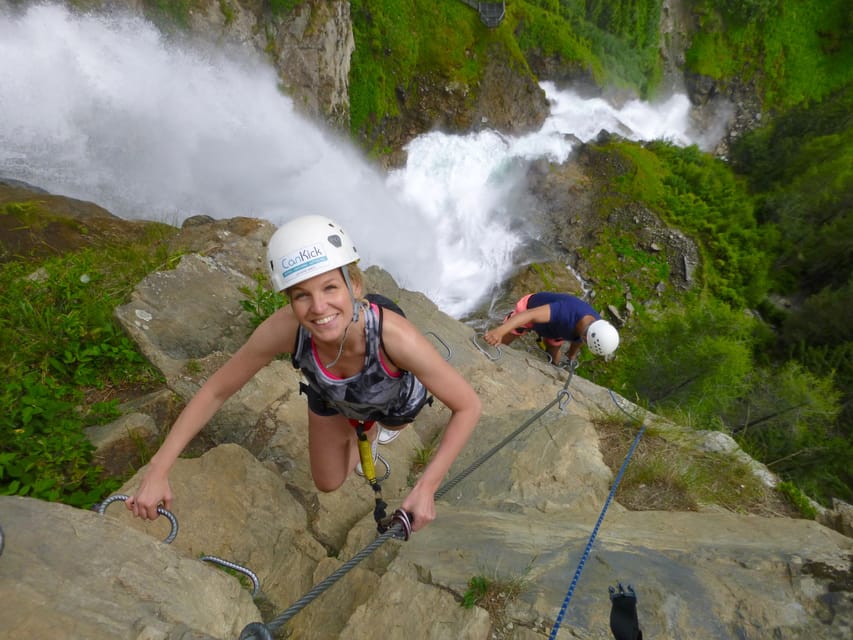
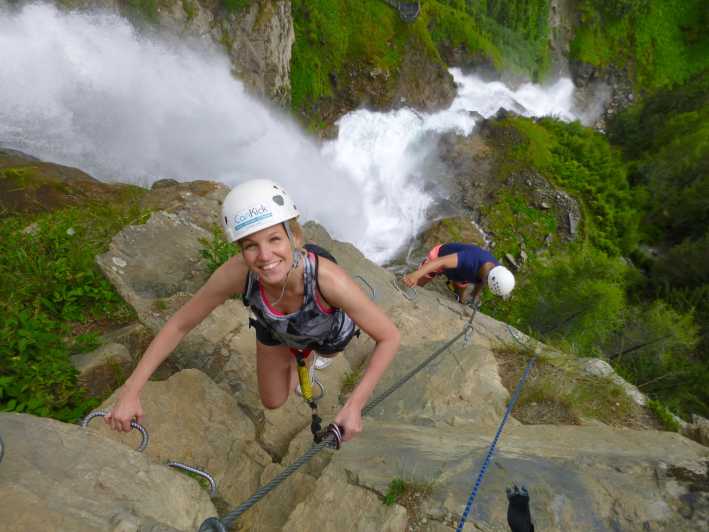
The Stuibenfall via ferrata in Ötztal is the kind of activity that makes you understand why people love fixed-rope climbing. You’re on a 220 meter rock face, but the best part is the sensory layer: mist, roar, and constant visual cues that you’re working in the middle of the waterfall’s world. It turns the climb into something more than technique. It becomes a place.
Another thing I really like about this style of via ferrata is the “training wheels” effect. The route is described as not too difficult, with a lot of built-in assistance like brackets to grab and footholds that guide you upward. That matters, because the hardest part of a first via ferrata is usually not strength. It’s getting used to the rhythm of clipping in, moving your hands and feet in sync, and trusting the line you’re attached to.
Finally, you need to go into it with realistic expectations. Even when the route is well prepared, there will be moments that feel more challenging. One participant pointed out tougher grade C sections. That’s a normal part of many via ferratas, and the guide’s job is to help you through it safely, but your body still has to do the work.
More in the Ötztal:
- Ötztal: Rafting at Imster Canyon for Beginners
★ 4.7 · 70 reviews - Ötztal: Action Whitewater Rafting at Imster Canyon
★ 4.8 · 15 reviews - Ötztal: Advanced Canyoning at Auerklamm
★ 4.6 · 13 reviews
The 4-hour flow, what you’ll do and why it works
This is set up as a smooth half-day experience, not a long expedition. You’ll meet at the base, then take a minibus to the entry point. That’s useful because it saves time and keeps the experience focused. You arrive, gear up with the right setup, and then get on the route without the logistics headache.
Once you’re at the start, you get a detailed safety briefing. This is not a quick lecture. It matters because the via ferrata experience is about systems: harness fit, rope behavior, how you move along the line, and what the guide expects from you at each section.
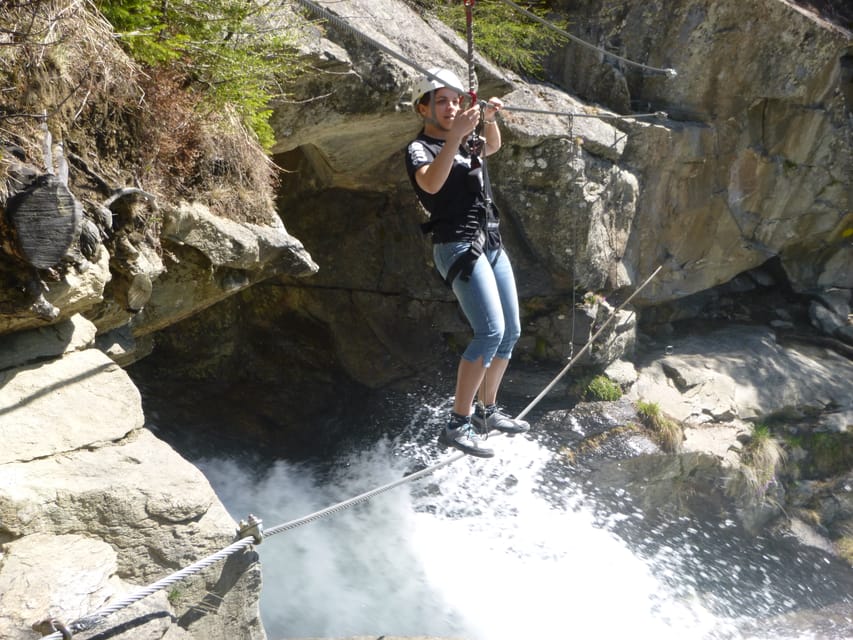
From there, the climb is the center of the day. You’ll cross steel rope bridges and you’ll also cross a waterfall during the route. Those elements break up the vertical feel and make it easier to stay engaged. After you finish the route, you pause for a photo with your guide, then head back by minibus to the base.
The ending is part of the value too. You’re treated to a schnapps after the climb, plus a soothing shower and a swim to cool off. That sequence turns the day from “I did something hard” into “I recovered well and enjoyed the whole experience.”
Gear and footwear, how to prep without fuss
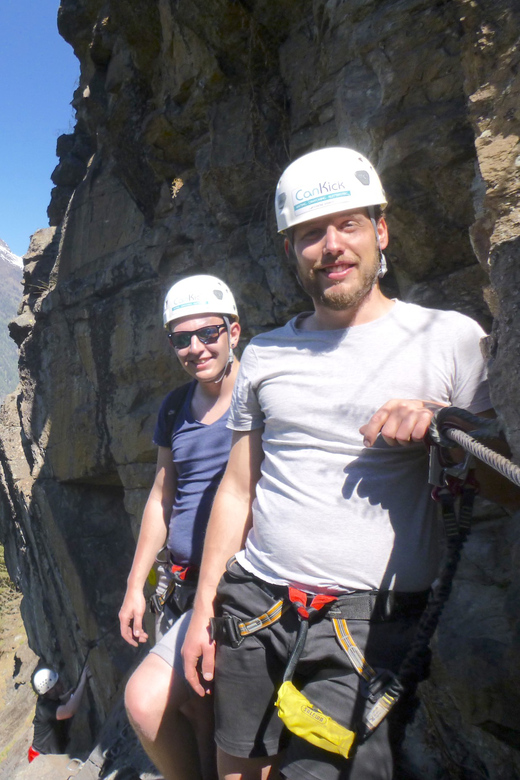
The good news is that the important climbing gear is handled for you. You get high quality harness and rope material, plus a certified guide. That means you’re not trying to borrow random equipment or guess whether a setup is safe.
What you do control is footwear. Bring hiking shoes or sports shoes with decent grip. This matters on fixed climbs because you’re often stepping on smaller surfaces than you would on a normal trail. Wet rock is also a possibility when you’re climbing under a waterfall, so shoes that feel secure on varied surfaces are your best bet.
Also, do yourself a favor and show up ready to move. You’ll be clipped in and working your way along the route, so loose clothing, flip-flops, or anything slippery is a bad plan. If you’re unsure, your best “travel common sense” is traction and comfort.
One more gear note that isn’t about equipment: mental prep. Via ferrata is a blend of focus and breathing. The more you can keep your eyes moving from the next foothold to the next clip point, the better you’ll feel.
The climb itself: brackets, rope bridges, and 220 meters of focus
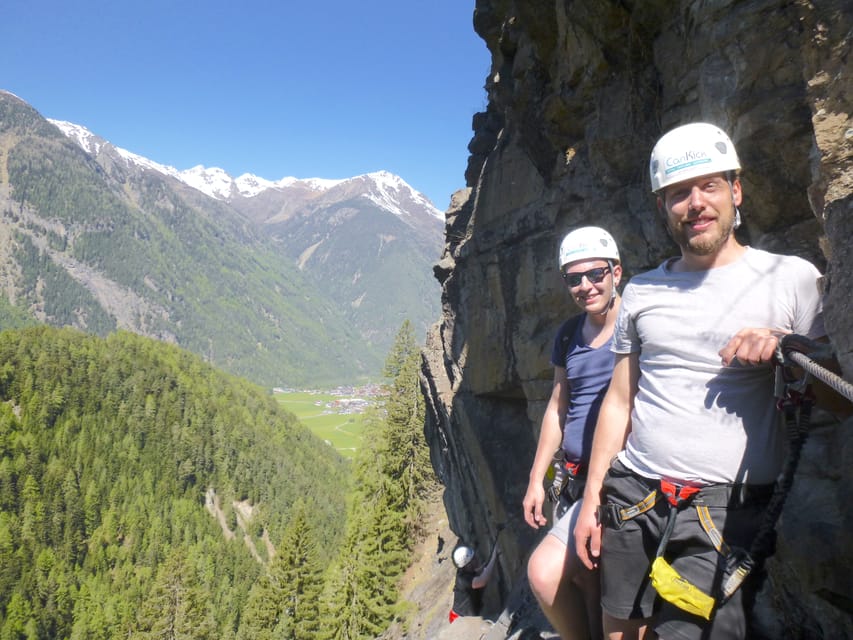
This via ferrata is built to be climbable, while still delivering real adventure. The route is described as picturesque and well laid out underneath the imposing Stuibenfall. You’ll climb on a system of fixed help with many brackets, which are there for a reason. They reduce the guesswork, letting your body learn the movement without constant uncertainty.
You’ll spend time on sections that include steel rope bridges, which are exactly the kind of feature that makes the climb memorable. Bridges add balance tasks, and they also change your view from straight-up rock to a moving crossing. It’s one of the best ways to avoid the sensation that you’re just grinding upward in one mood.
Another highlight is that you cross a waterfall as part of the route. That’s not just scenic. It forces your attention to stay on your positioning and timing, and that keeps the adrenaline focused instead of chaotic.
And yes, you’re dealing with a tall rock face, 220 meters. That sounds intimidating, but “meters” doesn’t automatically mean “long time.” The experience is managed through fixed sections, guided coaching, and frequent opportunities to reset your rhythm.
If you’re brand-new to climbing, you may encounter portions that feel tougher, including grade C sections. The important point is this: the route is still set up with help points, and the certified guide is there to keep you safe and moving.
A different sort of Tyrol day:
- Ötztal: Guided Cave Tour for Beginners
★ 5.0 · 3 reviews
Photos with your guide, and what to plan for
There’s a nice detail here that many people appreciate: your guide is equipped with a camera to photograph you as you go. That means you’re not juggling your phone while clipped in, and you still get a record of the day.
One important consideration is the photo cost. You may get a digital photo copy at no extra charge, but the pictures cost €10 per group. So budget for that if you want the set. If you only want a couple of shots, ask how it’s handled before you start, so there are no surprises at the finish.
Also, for the photo moment after you complete the route, don’t rush it. Take the time to breathe, loosen your grip, and stand how the guide suggests. It’ll make the picture better and it helps your body recover from the climb.
After the climb: schnapps, shower, and a swim
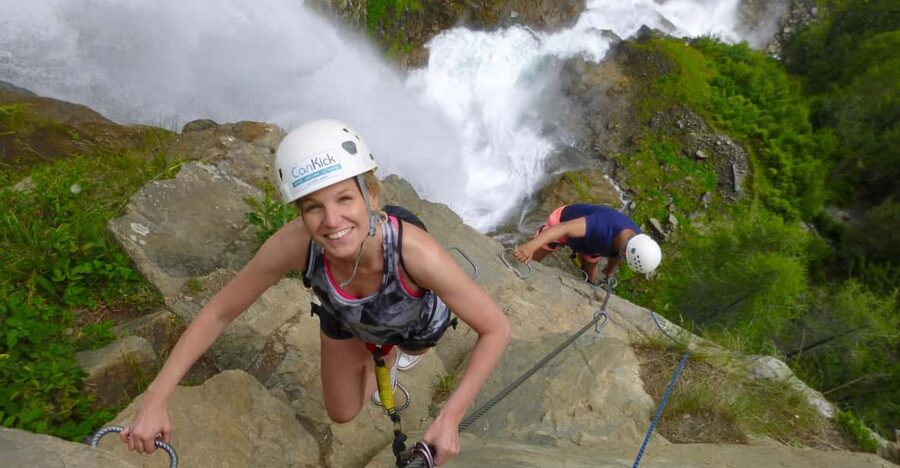
The finish of this experience is not an afterthought. It’s intentionally built as a recovery moment. You get a schnapps right after completion, which is a fun way to mark the transition from effort to celebration.
Then comes the soothing part: a hot shower, plus a swim to cool off. Under a waterfall environment, the contrast feels great. Even if you’re not soaked the whole time, you will likely feel warm from the activity, and cooling down helps you feel better for the rest of your day.
Back at base, the setup is also designed to support the group after climbing, with facilities that let you change and reset. This matters because the experience ends with comfort, not with you figuring out your next steps in sweaty clothes.
Price and value: why $106 can make sense
At about $106 per person for roughly 4 hours, you might wonder what you’re really paying for. In this case, the value is in the safety and friction removal.
First, you’re paying for a certified guide and their ongoing job during the entire climb. That includes a detailed safety briefing, managing your movement across bridges and fixed sections, and handling the gear checks that make a via ferrata feel secure.
Second, the equipment side is included: harness and rope material, plus the overall setup you need to climb safely. That removes a lot of uncertainty, especially for first-timers who may not have gear.
Third, the experience adds guided documentation via the guide’s camera, along with an experience certificate. Those small touches make it feel like a real activity day, not just “someone pointed at a wall.”
Finally, the included after-climb elements, schnapps and shower, turn the price into something closer to a full program. If you try to do this on your own, you’d have to solve guide, gear, and safety concerns yourself, and that’s exactly where the cost is justified.
Who should book this Stuibenfall via ferrata
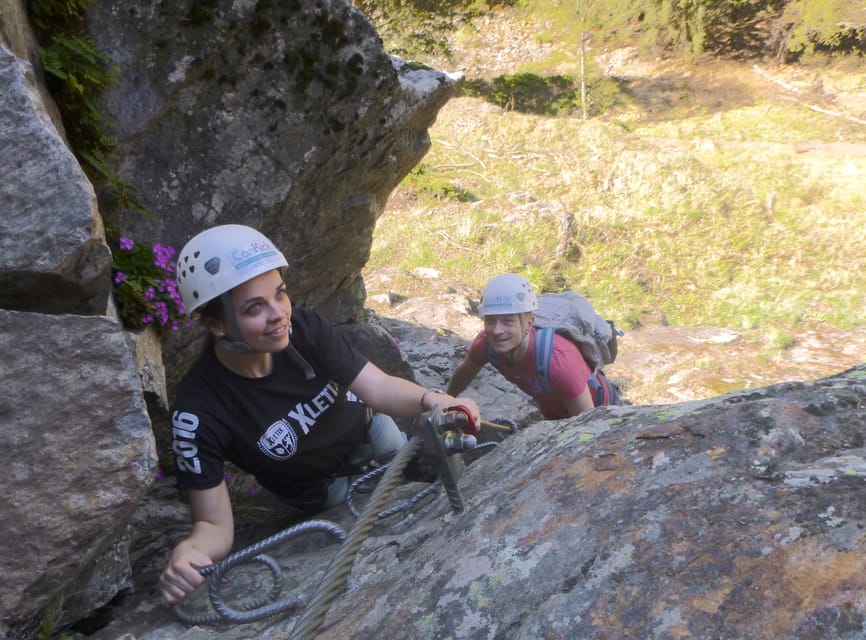
This experience is best for people who want a guided via ferrata without spending months training. If it’s your first time, you’ll likely like the fact that the route is described as not too difficult and well laid out with many brackets.
It’s also a great fit if you want a day that feels like scenery plus action. The waterfall setting is a major part of the emotional payoff, so if you enjoy dramatic environments and want your effort paired with big views, this works.
You should skip it if the activity does not fit your physical situation. It is listed as not suitable for pregnant women and people with mobility impairments. If you’re in that category, it’s better to choose a different Ötztal adventure that matches your needs.
If you’re anxious about the idea of heights, remember that via ferrata guides are used to that. A good guide helps you settle your pace, and a well-marked route helps you keep trust where it belongs: in the fixed system and in the guidance you get.
Practical tips that make the day smoother
You’ll get the safety briefing, harness, and coaching, but you can still show up prepared in small ways.
- Wear the shoes you trust on uneven surfaces, not brand-new sneakers with zero tread
- Expect to get close to water conditions. Pack a mindset for mist and damp rock
- Bring a calm approach to clipping and moving. Your job is to follow the guide’s rhythm
- Plan for the photo set if you want it, since the pictures cost €10 per group
Also, because you’ll be on a fixed route for part of the day, you don’t want to arrive rushed. Give yourself time to meet and gear up properly.
Should you book this Ötztal Stuibenfall via ferrata?
Yes, I think you should book this if you want a guided via ferrata that’s approachable, scenic, and clearly managed from briefing to finish. The combination of a well laid-out route with many brackets, a dramatic waterfall setting, and a strong “finish with schnapps and shower” program makes it feel like real value, not just an activity box checked off.
I would not book it if you need an accessibility-friendly option, or if the physical demands of a fixed climbing route are not a match for you. And if you’re the type who hates being on a timed, structured program, you might prefer a more flexible hiking day.
If you’re open to putting your hands and feet on rock with a certified guide by your side, this is one of those Ötztal half-days that tends to leave people smiling long after the mist dries.
FAQ
How long is the via ferrata experience?
The duration is listed as 4 hours.
Where does the tour take place?
It takes place in Tyrol, Austria, in the Ötztal region, with the route at Stuibenfall.
What is included in the price?
Included items are transfer from the base to the entry point and back, a certified guide, harness and rope material, an experience certificate, and an after-tour drink.
What photos are provided, and do they cost extra?
Your guide takes photos as you go. A digital photo copy service is free, but the pictures cost €10 per group. Photos are not included as a separate item, so plan for the €10 per group if you want the photo set.
What should I bring?
Bring hiking shoes or sports shoes.
Is the tour offered in English?
Yes. The live tour guide is listed as German and English.
Is this tour suitable for everyone?
No. It is not suitable for pregnant women or for people with mobility impairments.
What is the difficulty level like?
The route is described as picturesque but not too difficult, with well laid-out help points. There may be some more challenging portions (grade C) for some participants.
What do people do after climbing?
After the tour, you enjoy a schnapps and a hot shower, and the experience also includes a swim.
Is it possible to cancel or pay later?
Free cancellation is available up to 24 hours in advance for a full refund, and you can reserve and pay later.
Latest Tyrol reviews
- Ötztal: Rafting at Imster Canyon for Beginners★ 4.7 · 70 reviews
- Ötztal: Action Whitewater Rafting at Imster Canyon★ 4.8 · 15 reviews
- Ötztal: Advanced Canyoning at Auerklamm★ 4.6 · 13 reviews
- Ötztal: Guided Cave Tour for Beginners★ 5.0 · 3 reviews
Ötztal Adventures, compared.
Ötztal: Canyoning at Alpenrosenklamm for Beginners
Read our review →
Ötztal: Via Ferrata Climbing Tour at Lehner Waterfall
Read our review →
Ötztal: Action Whitewater Rafting at Imster Canyon
Read our review →
Ötztal: Obere Auerklamm Canyoning Tour for Beginners
Read our review →
Browse the lists this tour appears in