
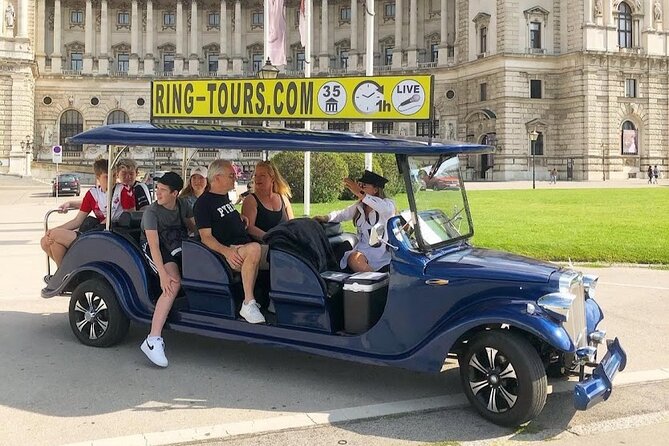
Reviewed · CITY TOURS
Panoramic Vienna City Tour Passing by the Most Famous Landmarks
Vienna can feel like a lot at first. This short, panoramic loop is interesting because it gives you a fast orientation to the city’s power centers and culture landmarks without forcing you to sprint between neighborhoods. I especially like how the route threads Habsburg history with Vienna’s later 19th-century grand build-out. I also like that guides like Constanze and Hannah bring the buildings to life with clear storytelling and smart pointers. One watch-out: with only about 1 hour, you’ll mostly see sights from the outside and from key viewpoints, not deep museum time.
What makes this work well is the pacing. Reviews highlight that the pace feels right and the guide stays warm and helpful, answering questions and offering recommendations you can actually use right away. I’d use this early in a trip to decide where you want to return later. If you’re hoping for lots of inside visits or a slow, lingering walk, you may want to pair it with other time-scheduled tours.
Key Points to Know Before You Go
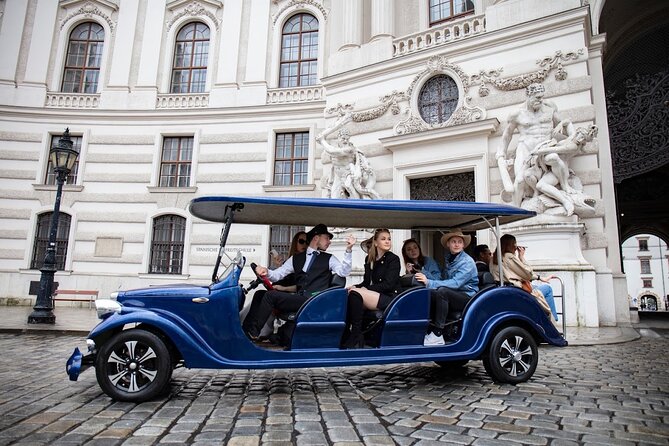
- A fast “greatest-hits” orientation: you cover major Ringstraße-era landmarks in one compact loop.
- Habsburg stories you can picture: Hofburg, Maria Theresa, and the political center connect in a way that clicks.
- Culture stops in the open air: parliament, Burgtheater, Opera, and Musikverein all show Vienna’s arts side.
- Design details matter here: the guide points out what to notice in façades and squares, not just names.
- Small, private group feel: up to 7 people, so questions do not get swallowed.
- English mobile ticket for easy day-of use: confirmation comes at booking time, and you show on your phone.
Why This Panoramic Vienna Loop Works So Well for First-Timers
This is the kind of tour I like in a city like Vienna. You get a cleaned-up, guided version of “where everything is,” plus enough context to stop the place from feeling like postcard wallpaper. In about an hour, you can grasp how Vienna’s monarchy, government, universities, and performing arts line up along a major urban spine.
The best part is how the route connects ideas. You do not just hear that Hofburg existed. You learn why it mattered, how the Habsburgs used it, and how the city later expanded around the political center. That makes the photos better, too, because you start recognizing what you are looking at and why it looks the way it does.
The second reason this tour earns its keep is practical. You can take notes mentally as you go, then plan the next day based on what sparked your interest. The guides mentioned in feedback, especially Constanze, are praised for being warm and for sharing thoughtful recommendations. Hannah also stands out in reviews for being a pleasure and a real source of knowledge, which matters when you are using the tour as your decision tool.
More City Tours in Vienna
- Vienna: Guided Walking Tour of City Center Highlights
★ 4.7 · 4,989 reviews - Vienna: City Cruise with Optional Lunch
★ 3.4 · 3,982 reviews - Vienna: City Cruise
★ 3.3 · 2,978 reviews
Hofburg Palace and Maria-Theresien-Platz: The Habsburg Power Corridor
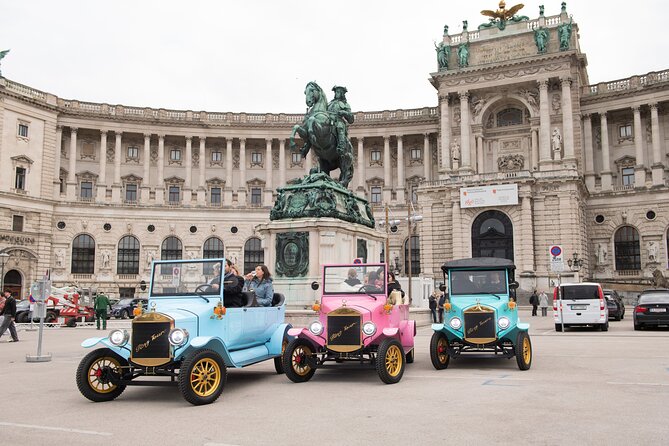
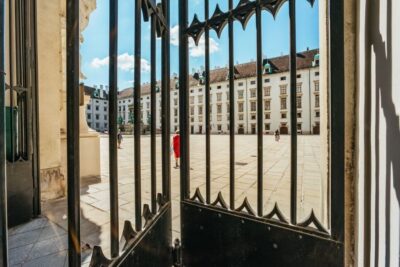
The tour begins by aiming you at the heart of imperial Vienna: the Hofburg. This palace complex was the principal power base for the Habsburg dynasty and developed over centuries, starting in the 13th century and expanding many times afterward. It also functioned as the winter residence, which is one of those details that helps you understand why the city’s “main stage” is where it is.
From there, you shift to the memorial that anchors one of Vienna’s biggest storylines: Empress Maria Theresa. The monument honoring her took longer than earlier memorials for Habsburg monarchs, and it was unveiled in 1888 by Franz Joseph. This is a smart stop, because it frames Vienna’s identity as not only about rulers, but about how later generations choose to remember them.
Right after, you are in the atmosphere of the late 19th century, when Vienna expanded and rebuilt after city fortifications were removed. This is when planners and architects filled the space, and you can feel that shift as you look across key sites around Maria-Theresien-Platz.
What I like here: your guide makes the area feel readable. Hofburg tells you politics. Maria Theresa tells you resilience and transformation. The square and its monuments show you how Vienna packaged power into public space.
Possible consideration: if you already know a lot of Habsburg facts, you may still enjoy the orientation, but you might want to do a deeper follow-up tour for the museums or palace interiors later.
Museums Quarter Face-Off: Natural Science Meets Grand Architecture
Next comes the museum zone across Maria-Theresien-Platz, where two major institutions face each other: Kunsthistorisches and Naturhistorisches. Even if you never buy a ticket for either museum, the pairing is useful, because it explains Vienna’s love of monumental institutions. This is the city that builds for status, learning, and long-term cultural memory.
You specifically pass by the Natural History Museum Vienna, described as a major natural history museum and research center, one of the largest of its kind in Austria. That matters because the building is not just a pretty container. It represents scientific ambition and public learning, which is very “Vienna” in a quieter, serious way than the opera and concert halls.
I find this kind of stop valuable because it gives you a contrast. Vienna’s arts landmarks often steal the spotlight, but here you get the “other Vienna,” the one that prized study and discovery. If you love museum architecture, you’ll likely enjoy seeing the scale and symmetry from the outside, even if you later choose to visit only one museum.
Austrian Parliament, Burgtheater, and Vienna City Hall: Power With a Pedigree
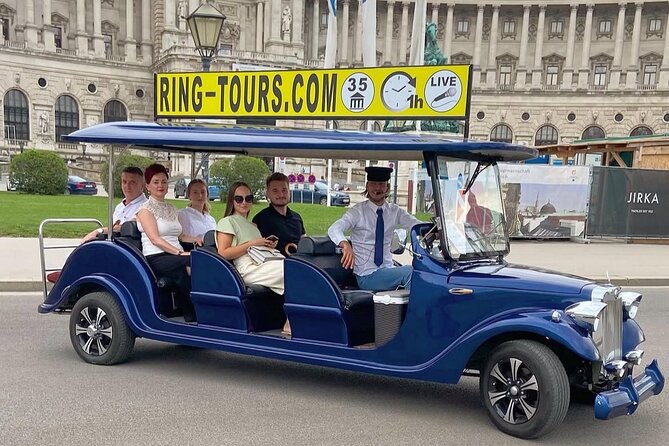
Then the tour turns to civic identity, starting at the Austrian Parliament Building near Hofburg and the Palace of Justice. The Parliament is where the two houses of the Austrian Parliament meet, so this is more than a photo stop. It anchors the story that Vienna’s center of gravity shifted from imperial residence to public governance, even if the old influence did not vanish overnight.
After that, you move to Burgtheater Court Theater, Austria’s national theater in Vienna. It is described as the most important German-language theater and one of the most important theaters in the world. You can see why this belongs on a panoramic tour: it is a cultural landmark with the same “civic importance” feeling as the government buildings around it.
The tour also passes Vienna City Hall, the Rathaus, a Gothic Revival building designed by Friedrich von Schmidt and built between 1872 and 1883. This is a great contrast stop. The monarchy and its palaces are one style of authority. The city hall shows another kind, built to project permanence and legitimacy.
What you get from these stops is a quick map of Vienna’s authority structure:
- imperial center (Hofburg)
- national legislation (Parliament)
- national stage (Burgtheater)
- municipal administration (City Hall)
That mental map makes it easier to plan your next walk, because you start knowing which buildings belong to which “chapter” of the city.
A different sort of Vienna day:
- Vienna: Vivaldi’s Four Seasons Concert in Karlskirche
★ 4.7 · 14,951 reviews - Vienna: Spanish Riding School Training
★ 3.9 · 9,281 reviews - Vienna: Skip-the-cashier-desk-line Giant Ferris Wheel Ride
★ 4.5 · 7,859 reviews - Vienna: Schönbrunn Palace & Gardens Skip-the-Line Tour
★ 4.7 · 7,739 reviews
University of Vienna and the Landmark Café Scene: Ideas in Public
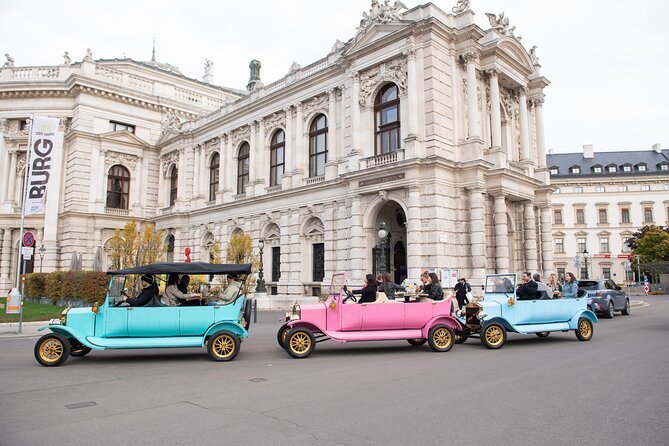
Next is the University of Vienna, founded in 1365 and described as the oldest university in the German-speaking world. When you pass by it, it helps to remember that Vienna is not only about the monarchy and opera. It has had an intellectual engine for centuries, and universities are part of that.
Right alongside the academic energy, the tour includes a major stop for everyday culture: a landmark café that opened in 1876 and became a key meeting place for Viennese intellectuals. The list of names given is startling and very Vienna: people like Peter Altenberg, Theodor Herzl, Alfred Adler, Egon Friedell, Hugo von Hofmannsthal, Adolf Loos, Leo Perutz, Robert Musil, Stefan Zweig, Alfred Polgar, and Adolf Hitler and Leon Trotsky are mentioned as patrons at different points. It also notes that in January 1913, figures like Josip Broz Tito, Sigmund Freud, and Stalin were patrons of the establishment.
I’m not asking you to read that list as a moral story, just as a time capsule. It shows how one public room can intersect with many ideas, movements, and personalities, for better and worse. If you care about the “real Vienna” where people talked, argued, wrote, and shaped thought, this stop does something that a pure architectural tour cannot.
One practical note: since this is a passing stop, you might not be going inside for a long coffee break. If you want the full café experience, plan separate time later.
Spanish Riding School and the Hofburg Neighborhood: Tradition, Horses, and Location
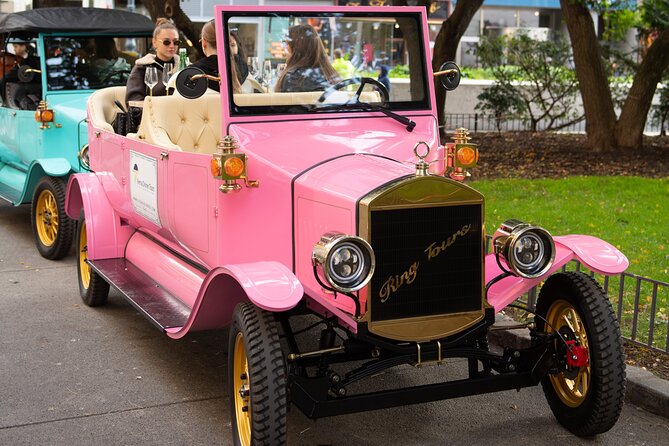
Vienna does tradition well, and the tour highlights that with a stop for the Spanish Riding School. This Austrian institution preserves classical dressage and trains Lipizzaner horses. The performances take place in the Hofburg, which ties back to the palace and reinforces why Hofburg is not just a backdrop.
Even if you do not attend a show, this stop helps you understand Vienna’s “living heritage.” The Riding School is not a museum artifact. It’s an ongoing discipline tied to a specific place.
What I like about including it on a panoramic route is the way it breaks up the dense cluster of civic buildings. You also get a more human scale idea, horses and training, which keeps the city from becoming only stone and bureaucracy.
Austrian National Library and Albertina: Pages, Prints, and the Vienna of Quiet Depth
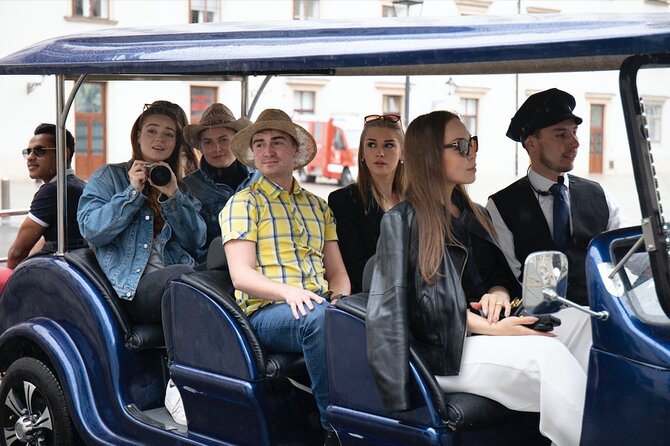
The tour passes the Austrian National Library, the largest library in Austria with more than 12 million items. It is located in the Neue Burg Wing of the Hofburg. It also notes that since 2005, some collections have been relocated within the Baroque structure of Palais Mollard-Clary. That detail is useful because it tells you this is not one simple building with one static collection.
If you are a reader, researcher, or just the kind of person who likes the smell of old pages, you’ll likely enjoy learning that Vienna stores knowledge at scale and keeps it in major architectural settings. Even if you do not tour inside today, this stop gives you a reason to come back with more time.
Then the route turns to Albertina, which is famous for its print collections. The tour notes that it houses around 65,000 drawings and about 1 million old master prints, plus modern graphic works, photographs, and architectural drawings. For anyone who loves art on paper, this is the kind of stop that makes you stop and think, even from outside.
This is also a good balance. Opera and concert halls are spectacular, but prints and drawings are the quieter kind of art that often stays with you longer. You leave with a reminder that Vienna’s culture is not only about big venues with big crowds.
Vienna State Opera, Musikverein, and Karlskirche: Vienna’s Arts Triangle
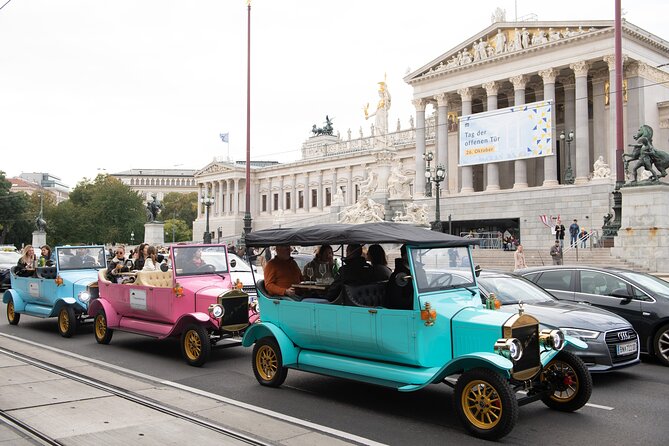
After the library and art-on-paper stop, the tour leans hard into performance landmarks.
First is the Vienna State Opera, described as a historic opera house and company based in Vienna. The venue has 1,709 seats and is Renaissance Revival, and it was the first major building on the Vienna Ring Road. That fact is a helpful “why now” detail. It’s not just pretty. It marks a major moment in the city’s development along the Ringstraße.
Then comes the Wiener Musikverein, home of the Vienna Philharmonic. The hall opened in 1870 and is one of Vienna’s top concert addresses. Even if you never catch a performance, seeing where the Philharmonic belongs adds context to why Vienna is so serious about music.
Finally, you reach Karlskirche, a Baroque church dedicated to Saint Charles Borromeo. It sits on the border of Wieden and Innere Stadt. This is a great closing visual because it mixes grand design with a “religious landmark” feel, a different mood from the opera and concert hall.
If you’re the type who likes to understand a city through its art, this sequence works. You get architecture for power, then institutions for learning and culture, then performance halls and a church that rounds out the spiritual and artistic skyline.
Price, Timing, and What You’ll Actually Get in 1 Hour
The cost is listed as $212.93 per group, up to 7 people, with the tour lasting about 1 hour. That pricing works best when you can split it with a small group or when you value time in a tight schedule. If you’re traveling solo, it may feel steep compared to per-person group bus tours, but you do get a private group experience.
Also, the tour includes a mobile ticket and is offered in English. That makes a big difference for day-of stress. You can focus on learning and looking, not figuring out paper tickets or language logistics.
Now the real expectation setter: with a tour built around passing landmarks, you should assume this is orientation with storytelling, not a full museum day. If you want inside visits, you’ll likely need to book those separately based on what you love during this loop.
The good news is that the reviews emphasize pace and thoughtful recommendations. This tour is ideal for people who want a quick “where should I spend my real hours” answer.
Who This Tour Fits Best (and Who Might Want a Different Plan)
This works especially well if:
- it’s your first trip to Vienna and you want fast orientation
- you like architecture, monuments, and institutions more than random stops
- you want an English guide who can answer questions
- you are traveling with a small group and want a private feel
You might consider a different plan if:
- you want extended time inside major buildings like museums or palaces
- you prefer unguided wandering with long stops and minimal structure
One more practical plus: the tour allows service animals, it’s near public transportation, and most people can participate.
Should You Book This Panoramic Vienna City Tour?
Yes, if you want Vienna’s top landmarks explained in a way that helps you plan what to do next. The combination of Hofburg, the Parliament and theater cluster, the City Hall area, and then Opera, Musikverein, and Karlskirche is a strong use of an hour. Add in the standout guide experiences, with Constanze praised for warmth and making Vienna feel alive, and Hannah praised for knowledge and friendliness, and you have the ingredients for an actually useful tour.
I’d book it early in your trip. Then use what you like most to choose where to spend real time later, whether that means returning for an interior visit or scheduling a music or art-focused day.
FAQ
How long is the Vienna panoramic city tour?
It runs for about 1 hour.
What does the tour cost?
The price is $212.93 per group, up to 7 people.
Is this a private tour?
Yes. It is a private tour/activity, and only your group participates.
What language is the tour offered in?
The tour is offered in English.
Do I get a mobile ticket?
Yes, you receive a mobile ticket.
Where do I meet for the tour?
The meeting point is Führichgasse 8, 1010 Wien, Austria, and the tour ends back at the meeting point.
Are service animals allowed?
Yes, service animals are allowed.
Can I cancel for a full refund?
You can cancel for a full refund if you cancel up to 24 hours in advance of the experience start time.
Latest Vienna reviews
- Private tour of Hallstatt and Salzburg through beautiful Alps★ 5.0 · 3 reviews
- Vienna: Vienna under the Nazis, Private Walking Tour★ 1.8 · 3 reviews
- Magical Vienna Christmas Market Tour – 2 Hours★ 2.7 · 3 reviews
- Vienna: Mythos Mozart Experience Ticket& Guided Walking Tour★ 2.5 · 3 reviews
- Vienna: Private tour Mauthausen and Linz★ 4.1 · 3 reviews
- Vienna Private Schönbrunn Palace Tour, Extra Rooms and Gardens★ 5.0 · 3 reviews
- Schoenbrunn Palace Skip-The-Line and Vienna Highlights Private Tour★ 4.5 · 3 reviews
- Skip-the-line Belvedere Palace Guided Tour with Transfers★ 5.0 · 3 reviews
City Tours, compared.
Guided Walking Tour of City Center Highlights
Read our review →
Guided Walking Tour of City Highlights & Hidden Gems
Read our review →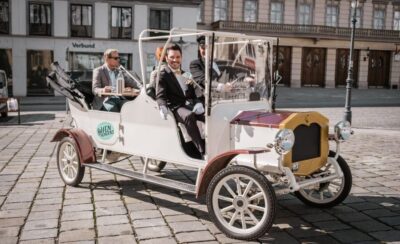
City Sightseeing Tour in an Electro Vintage Car
Read our review →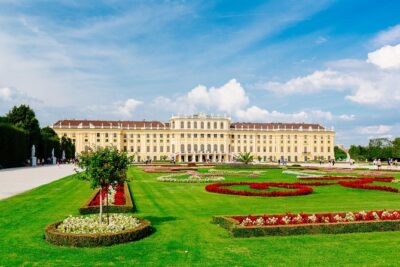
Skip-the-Line Schonbrunn Palace Guided Tour and Vienna Historical City Tour
Read our review →
Vienna City Card: Public Transport incl. 200+ discounts
Read our review →Browse the lists this tour appears in