
Reviewed · CITY TOURS
Terrible crimes in Vienna, hidden secrets of the inner city
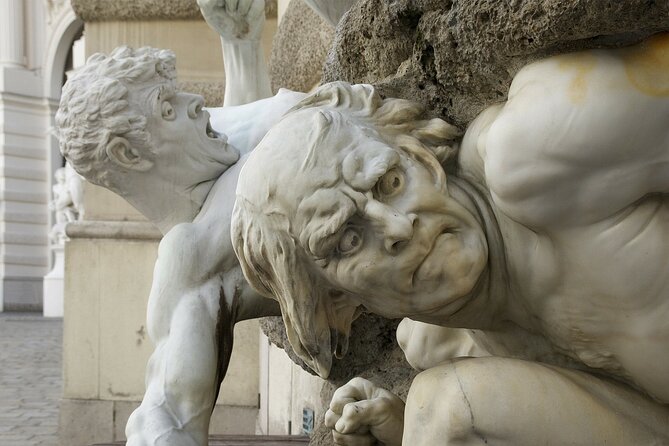
Vienna looks polished on postcards. This tour flips the script, using real locations to tell stories of punishment, obsession, and power plays. You walk through the center and suddenly the pretty facades feel a lot less harmless.
I especially like the offbeat history angle and how the stories line up with different eras of Vienna. Another strong point is the guide, Ben, who does a lot of the research himself, so the walk feels anchored in what happened at these exact spots.
The tradeoff is the subject matter. Some cases are gruesome, and it is generally suited for teens and adults who can handle darker themes while sightseeing.
Key things you should know before you go
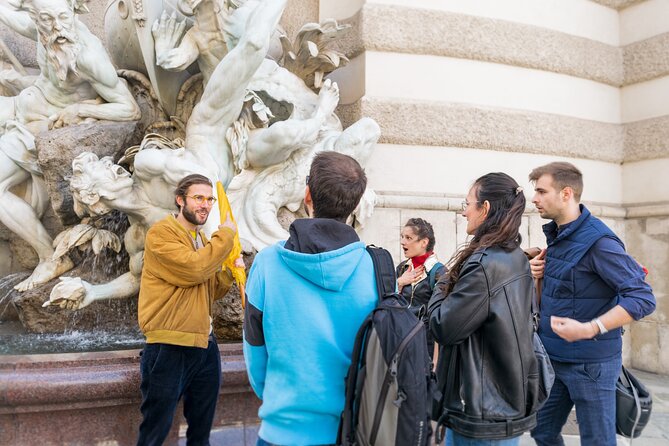
- Small group pace (max 20 people), which helps the story land without feeling rushed
- English tour with a mobile ticket plus a complimentary smartphone audio guide
- No extra admission fees at the listed stops, so you just show up and follow along
- True-crime style storytelling tied directly to well-known central streets and squares
- A walking route through spots most tourists skip, including remnants connected to old Vienna
- A short duration (about 2 hours), so it works even if you want something focused, not long and exhausting
Price and logistics: what $46.13 buys you in Vienna
For $46.13 per person, you are getting a 2-hour walking tour in Vienna’s inner city, offered in English. That price includes a mobile ticket, and the big extra is a complimentary smartphone audio guide you can use during the experience. The stops are also listed as admission ticket free, so you are not stuck paying small entry fees for each “spot.”
What really matters for value is how the time is used. This is not a slow museum-style affair. You move between 14 tightly packed locations, with stops often around 5 to 15 minutes, and you get the narrative as you walk. If you like your history with plot and consequence, this format is a good match.
Two practical notes based on what the experience is built for: it is designed for good weather, and it is set up so most people can participate. Since this is an outdoor walk through central streets, plan for the usual comfort needs of a city stroll.
More City Tours in Vienna
- Vienna: Guided Walking Tour of City Center Highlights
★ 4.7 · 4,989 reviews - Vienna: City Cruise with Optional Lunch
★ 3.4 · 3,982 reviews - Vienna: City Cruise
★ 3.3 · 2,978 reviews
Start to finish: the inner-city route you will actually walk
The tour starts at Helmut-Zilk-Platz, Albertinapl. 2-3, 1010 Wien, and it ends around Rauhensteingasse, 1010 Wien. The exact route is built to keep you in the heart of Vienna, mostly around Graben, Kohlmarkt, Herrengasse, and the older lanes near St. Stephen’s.
It also helps that the meeting area is listed as near public transportation. That makes it easier to plug into a day of sightseeing. If your schedule is tight, the short length is the other big win. Two hours is long enough to absorb real stories, but short enough that you can return to the classic sights afterward without losing your whole day.
Tegetthoffstraße to Augustinerstraße: monastery dungeons, murder cases, and the blood-countess legend
This first stretch is where Vienna’s “dark side” stops being abstract. You start with places tied to confinement and legal power, then shift into famous crime-attempts and courtroom-fueled gossip.
Stop 1: Tegetthoffstraße 2 and the Capuchin monastery dungeon
At Tegetthoffstraße 2, you get the story of a monastery dungeon discovered and announced by Father Innocentius. The point is not just that people suffered. It is how arbitrary the system could feel. Monks were allegedly locked up for decades for reasons that included unauthorized afternoon walks and other absurd conduct.
The political twist is Joseph II. Father Innocentius announced the dungeon to Emperor Joseph II, who then closed the dungeon and transferred him to Lviv for safety. The story keeps branching, saying that Innocentius later became a Protestant, a Freemason, and an advisor to the tsar. That mix of punishment, bureaucracy, and sudden life turns is a big part of what makes this tour move fast.
A different sort of Vienna day:
- Vienna: Vivaldi’s Four Seasons Concert in Karlskirche
★ 4.7 · 14,951 reviews - Vienna: Spanish Riding School Training
★ 3.9 · 9,281 reviews - Vienna: Skip-the-cashier-desk-line Giant Ferris Wheel Ride
★ 4.5 · 7,859 reviews - Vienna: Schönbrunn Palace & Gardens Skip-the-Line Tour
★ 4.7 · 7,739 reviews
Stop 2: Trattnerhof and the Jaroszynski murder case
At Trattnerhof, the focus shifts to the Jaroszynski murder case, made especially famous by the actress Therese Krones. The narrative plays with rumor first. There were ideas that her extravagant desires drove Jaroszynski toward despair and crime.
Then the tour reframes it. The explanation given is that Jaroszynski was heavily addicted to games and deep in debt. If you like true-crime stories that show how easy it is to blame romance, money, or jealousy, this stop is a strong early reality check.
Stop 3: Augustinerstraße 12 and Palais Bathory
Next is Palais Bathory at Augustinerstraße 12, connected to Elisabeth Bathory, commonly called the blood countess. The key word here is alleged. The tour presents the legend that she murdered enormous numbers of virgins and even bathed in their blood for youth and beauty.
Even if you treat it as story material rather than confirmed fact, this stop works for a simple reason: it ties an infamous legend to a real city palace address. That is the tour’s main trick. Instead of telling you about crime somewhere generic, it grounds the tale in the geography of Vienna.
Your takeaway for this section: you are seeing different flavors of danger, from institutional confinement to scandal-driven murder narratives to a larger-than-life legend tied to one façade in the inner city.
Graben to Herrengasse: Demel conspiracies, medieval mass murder, and the spy-story suicide at Hotel Klomser
This middle run is where greed, violence, and state secrets show up close together. The stops cluster around famous inner streets, so you get both the recognizable city center and the surprise of what happened there.
Stop 4: Place of Demel, Udo Proksch, and the insurance-fraud conspiracy
In the Graben and Kohlmarkt area, you reach the story linked to the Place of the Demel. The name that comes up is Udo Proksch in the 1970s.
The case described here is chilling because it mixes money and large-scale harm. The plan involved an overinsured freighter for Asia, with an explosive charge hidden aboard. The conspiracy allegedly led to mass murder and major insurance fraud. The explanation given is that the investigation took years, partly because Proksch had relationships across multiple directions.
This is one of those stops where you will look at the street and think: how can something this central be tied to a long, complicated case? That reaction is basically the point.
Stop 5: Palais Ferstel and Zu den Fünf Morden, medieval Vienna’s worst day
At Herrengasse, you enter the story of Palais Ferstel, tied to the former “Zu den Fünf Morden” house. This is presented as the site of the most notorious mass murder of medieval Vienna, including the detail that the perpetrator was impaled.
The tour also highlights how execution changed the whole event. The executioner was described as not experienced with that type of execution, so the process allegedly took extremely long. The crimes listed include five murders, with one victim said to be a seven-year-old.
If you are sensitive to graphic justice stories, this is where you might feel the emotional temperature shift. It is not gory for the sake of shock, but it is brutal by design.
Stop 6: Colonel Redl at the former Hotel Klomser
Still on Herrengasse, you move to the former Hotel Klomser, opposite Palais Ferstel, tied to Colonel Alfred Redl. The tour says his suicide ended the greatest spy affair of the monarchy.
The core takeaway is what the espionage did to the system. Discovering Redl’s activity allegedly damaged the army’s reputation and exposed vulnerabilities in the underfunded Evidenzbureau (the secret service). This stop adds a different kind of danger to the walk, less about local street crimes and more about how one actor can shake state-level trust.
Your takeaway for this section: you are watching Vienna’s dark stories evolve, from commercial plotting at a central address to medieval public punishment to espionage that threatens a whole institution.
From Molker Bastei to Maria am Gestade: dismemberment rumors, 1848 political violence, and a cruelty Joseph II faced
This segment leans hard into “how the city dealt with people” and “what violence looked like in different centuries.” You also pick up a different texture of Vienna, with the walk brushing older streets and water-adjacent clues.
Stop 7: Molker Bastei and the Anna Gaugisch murder
At Molker Bastei, you hear the story of Anna Gaugisch, murdered in 1861 and dismembered by her boyfriend Raimund Lewisch. The details include that some body parts were found in the Danube, and others in the nearby water area described here.
The explanation focuses on motive. Lewisch wanted an “uncomfortable woman” out of the way, especially since she was said to be pregnant. The story also mentions Lewisch’s skills as a blacksmith and that he was already used to working with tools in a dark way.
Even if you skim details, this stop is powerful because it ties a violent crime to a specific Vienna spot you might otherwise treat as scenery.
Stop 8: Am Hof and Theodor Baillet de Latour in 1848
At Am Hof, the story turns political. You get the lynch murder of war minister Theodor Baillet de Latour during the revolution year 1848.
The tour frames it as one of the rare cases of political violence in Vienna, and also as a starting point linked to the Wiener October Revolution, a later phase of the broader unrest. It also points out that the civil arsenal is in the same place and was looted during the revolution.
This is where Vienna’s political history becomes painfully human. People do not just debate ideas here. They attack individuals, and the violence has ripple effects.
Stop 9: Hannaken-Brunnen and the surgeon who made injuries
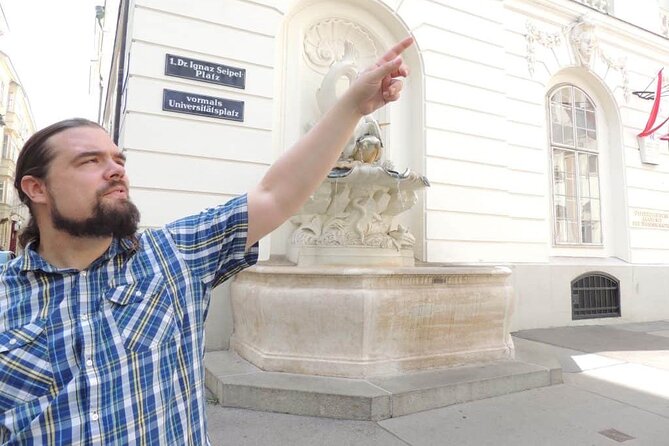
At Hannaken-Brunnen, you meet a darker kind of hustler. The tour references a character called Hannakenkönig, described as a surgeon who caused broken bones himself to improve business. The story says he set trip hazards to provoke injuries and then healed the victims.
The tour also gives context about the Hannaken, describing them as a minority from Moravia who often came looking for work in Vienna. The fountain itself is described as showing two men carrying an injured comrade to the “Hannakenkönig.”
This stop works well because it mixes street-level economics with public storytelling. You are looking at a water feature, but the meaning is about employment, survival, and manipulation.
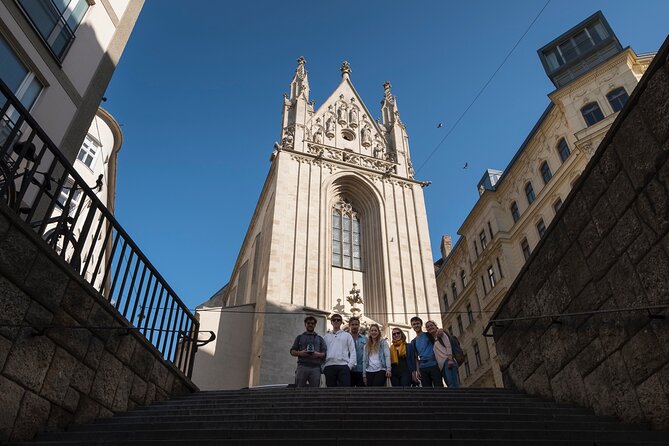
Stop 10: Maria am Gestade and the city wall in the Zahlheim case
At Maria Am Gestade, the tour references a section of the city wall tied to the Zahlheim case. It also highlights a specific punishment described as the last wheeling in Vienna.
The death penalty is presented as extremely cruel and something many countries eventually moved away from. The tour says the case happened during Joseph II, and that Joseph II usually rejected the death penalty, yet these facts forced the decision.
So this stop is not just a story about execution. It is a story about exception, when a leader’s usual rules get overridden by one case.
Your takeaway for this section: you are seeing violence move through three lanes, private crime, political upheaval, and legal punishment, all anchored to places that still exist in the city center.
Hoher Markt to Himmelpfortgasse: torture, bakers in cages, a witch trial, and a romance turned into a sentence
The final stretch pulls you toward the big landmarks most people visit, then twists them with details about punishment and cruelty that you likely have never heard.
Stop 11: Hoher Markt and Thekla Riener’s torture
At Hoher Markt, the story centers on Thekla Riener and a torture scene described as being set up with instruments from the courthouse.
The details are grim. She was supposed to betray a supposed lover, but there was said to be no real person at all. The tour describes it as a culmination of acts driven by jealousy of imaginary lovers. It also says the situation ended with Thekla being accidentally killed, and that her parents became insane.
This is not just about harm to one person. It is about how obsession can ripple out through a whole family.
Stop 12: St. Stephen’s Cathedral and the baking punishment legend
At St. Stephen’s Cathedral, the tour discusses a legend about an alleged standard bread loaf linked to Vienna and framed as a symbol of brutal quality assurance in the Middle Ages.
The “true part” provided is the story called the baptism of bakers for a bad baker. The description says bakers were put in a cage and dipped several times into the Danube. The tour also notes that in English-speaking countries there was a similar punishment for women in dispute intended.
It sounds absurd, but that is exactly why it sticks. You get the message that medieval quality control could be physical punishment, not just a fine or a warning.
Stop 13: Steffl and the only witch burned in Vienna
At Steffl, you hear about the former Malefizspitzbubenhaus, described as an executioner’s apartment and dungeon. The story says it was connected to the only witch burned in Vienna, called the Plainacher.
The charge described includes witchcraft tied to an epileptic granddaughter bewitched and demons summoned. The tour also says witch persecutions were not common in Vienna, but in this case the city judge had to avoid public pressure, implying the court needed cover to proceed.
If you like dark history that is also about power structures, this stop gives you a “how did they get away with it” angle.
Stop 14: Himmelpfortgasse and the nun walled in 1319
The last stop lands at Himmelpfortgasse, connected to the former Himmelpfort monastery. The story here is a forced separation romance turned into confinement.
The tour says that in 1319, a nun was walled in because she did not want to part with her lover, whose father hated the relationship. It is described as a Vienna version of Romeo and Juliet, with a mayor and his archenemy whose children are good friends. When Anna’s hand is requested, the father supposedly condemns her to a life as a nun.
This ending hits differently from the previous stops. After all the greed, violence, and punishment mechanics, you get a story about love, family control, and legal coercion.
After that, the tour concludes back near Rauhensteingasse.
Should you book this Vienna crime walk?
Book it if you want a short, focused walking tour that turns the inner city into a chain of real crime-linked locations. I think it is especially worth it when you enjoy stories that explain motive, not just the outcome, like the Jaroszynski case and the insurance conspiracy. The fact that Ben does a lot of the research himself, plus the smartphone audio guide support, is exactly the kind of combination that keeps the walk from feeling like random dark trivia.
Skip or be cautious if you do not handle gruesome material well. This is not a “spooky for fun” tour. It is more serious than that, and the punishments described range from dungeons to torture to death sentences.
One last practical fit check: this is also a strong choice as a companion if you plan to see Vienna’s crime-focused sites. It helps you connect the dots in the real streets, so the city feels less like a postcard and more like a place where history actually happened.
FAQ
How long is the tour?
It lasts about 2 hours.
What language is the tour offered in?
The tour is offered in English.
Is a smartphone audio guide included?
Yes. The tour includes a complimentary smartphone audio guide.
Do I need to pay admission fees at the stops?
No. Each listed stop shows admission ticket free.
What group size is this tour limited to?
The tour has a maximum of 20 travelers.
What if the weather is bad?
The tour requires good weather. If it is canceled due to poor weather, you will be offered a different date or a full refund.
Latest Vienna reviews
- Private tour of Hallstatt and Salzburg through beautiful Alps★ 5.0 · 3 reviews
- Vienna: Vienna under the Nazis, Private Walking Tour★ 1.8 · 3 reviews
- Magical Vienna Christmas Market Tour – 2 Hours★ 2.7 · 3 reviews
- Vienna: Mythos Mozart Experience Ticket& Guided Walking Tour★ 2.5 · 3 reviews
- Vienna: Private tour Mauthausen and Linz★ 4.1 · 3 reviews
- Vienna Private Schönbrunn Palace Tour, Extra Rooms and Gardens★ 5.0 · 3 reviews
- Skip-the-line Belvedere Palace Guided Tour with Transfers★ 5.0 · 3 reviews
- Schoenbrunn Palace Skip-The-Line and Vienna Highlights Private Tour★ 4.5 · 3 reviews
City Tours, compared.
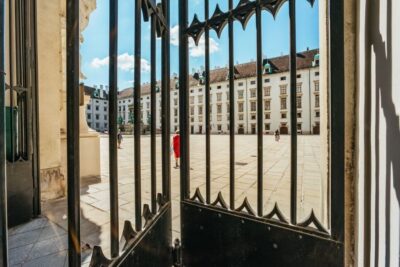
Guided Walking Tour of City Center Highlights
Read our review →
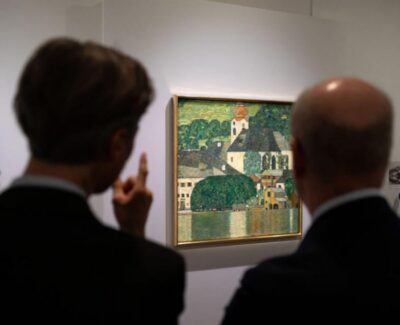
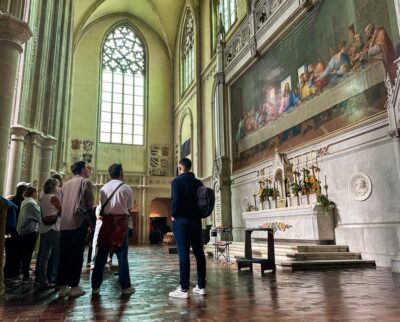
Guided Walking Tour of City Highlights & Hidden Gems
Read our review →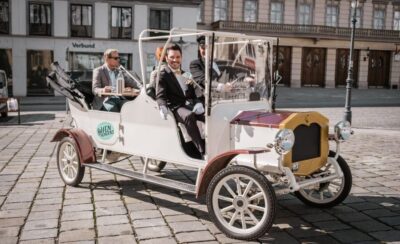
City Sightseeing Tour in an Electro Vintage Car
Read our review →
Skip-the-Line Schonbrunn Palace Guided Tour and Vienna Historical City Tour
Read our review →
Vienna City Card: Public Transport incl. 200+ discounts
Read our review →Browse the lists this tour appears in