Reviewed · TOURS
Vienna Oldtown Tour
Vienna Old Town is interesting because this tour strings together power, art, and everyday city life in a tight loop, so you get an orientation fast. I like that it is private and runs for about 45 minutes, which means you are not stuck waiting around with strangers. One thing to consider: the route moves quickly, so you have to be ready for brief stops and photo moments rather than long museum-style time.
I also like the mix of stops, from imperial Vienna at the Hofburg area to major institutions like the National Library and Austria’s Parliament, plus classic squares and churches where the city’s story is visible in stone. The catch is simple: it is only offered in English, so if you were hoping for another language, confirm before you go.
Key Highlights You’ll Actually Feel During This Tour
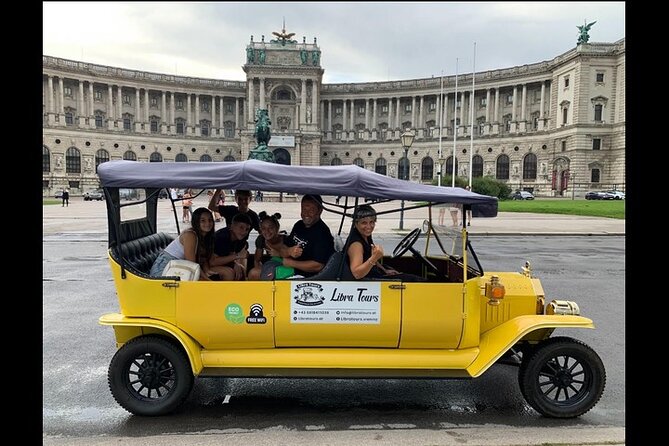
- Imperial center focus with the Hofburg complex, Swiss Gate, and Heldenplatz statues that define the skyline
- Big-institution stops like the National Library and Austria’s Parliament, which help you understand how Vienna runs
- Major museum corridor near MuseumQuartier, Kunsthistorisches, and Naturhistorisches, even if you do not go inside
- Quick culture hits at places like the Freud Museum and the Secession building for modern Vienna context
- Classic city squares including Am Hof, Volksgarten, and Rathaus, where photos make sense
- A guide-driven experience that can work well for older travelers, based on real feedback about care and flexibility
A 45-Minute Old Town Circuit That Helps You Read Vienna Fast
This is the kind of Vienna tour I recommend when you want a fast map in your head. You come in, you get the names and landmarks lined up, and you leave knowing where major sights sit in relation to each other. At about 45 minutes, it is short enough to fit into almost any schedule, including your first day.
I also think this format is smart for people who feel overwhelmed by Vienna’s size. You get a concentrated walk and photo route past heavyweight buildings, from the imperial Hofburg zone to the Ringstraße institutions.
The main drawback is pacing. If you like slow, deep explanations at every stop, this will feel like a sampler. And if you are not an easy walker, you will want to plan for quick exits and re-boarding.
More days in Vienna:
- Vienna: Vivaldi’s Four Seasons Concert in Karlskirche
★ 4.7 · 14,951 reviews - Vienna: Spanish Riding School Training
★ 3.9 · 9,281 reviews - Vienna: Skip-the-cashier-desk-line Giant Ferris Wheel Ride
★ 4.5 · 7,859 reviews
Price and What $42.17 Really Buys in 45 Minutes
At $42.17 per person, the value depends on your goal. If your goal is a quick orientation plus photo stops around the core landmarks, this is priced like an efficient city pass for your day. It is also a private experience, which helps if you want the guide to steer the conversation toward what you care about.
If your goal is to spend time inside multiple museums, this is not that kind of tour. Think of it as a guided highlights loop, with the explanation doing the heavy lifting.
One practical note: because it is short, you should treat it like a booking for clarity. Go in with 2 to 3 questions you want answered, and you will get far more from the time you have.
Private Tour, Mobile Ticket, and the Easy Parts You Should Know
This experience is run as a private tour/activity, meaning it is just your group. That matters more than people think, because the guide can adapt the pace, the photos, and the stop rhythm to your needs.
You also get a mobile ticket, which keeps your day simple. There is no rummaging for printed confirmations.
Service animals are allowed, and there is extra support for some mobility needs, including an extra stool for handicaps and elderly persons. That is not a substitute for accessibility planning, but it does signal that the operator is thinking about comfort.
Starting Point Reality Check, and How to Find It Without Stress
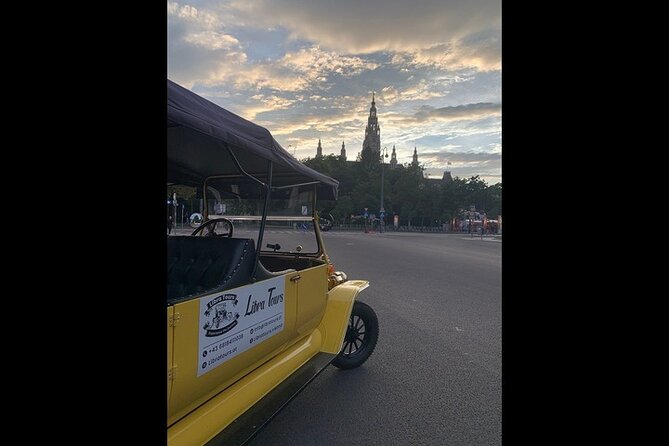
The tour ends back at the meeting point, so plan to keep that location in mind as your anchor. One review point that matters for your nerves: meeting-point instructions can be a bit vague, such as being near the Burgtheater and the Volksgarten rose garden area.
So here is my practical advice. Before you leave your hotel, open the meeting point in your map app and zoom in to the street level. If you are arriving early, do a quick “spot check” so you are not standing in the wrong place if the route has you there at a specific minute.
Because this is a timed 45-minute experience, even small confusion costs time. You want that time for the views.
A different sort of Vienna day:
- Vienna: Schönbrunn Palace & Gardens Skip-the-Line Tour
★ 4.7 · 7,739 reviews - Vienna: Light of Creation Votive Church Immersive Light Show
★ 4.8 · 6,779 reviews - Vienna Spanish Riding School Guided Tour
★ 4.7 · 6,765 reviews - Vienna: Classical Concert in the World-Famous Musikverein
★ 4.6 · 6,673 reviews
Hofburg Palace and Michaelerplatz: Where Vienna’s Imperial Layer Starts
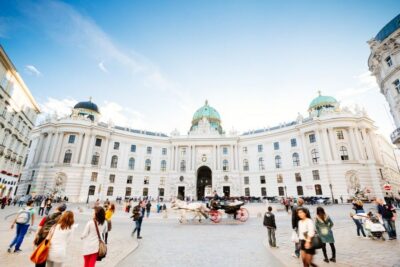
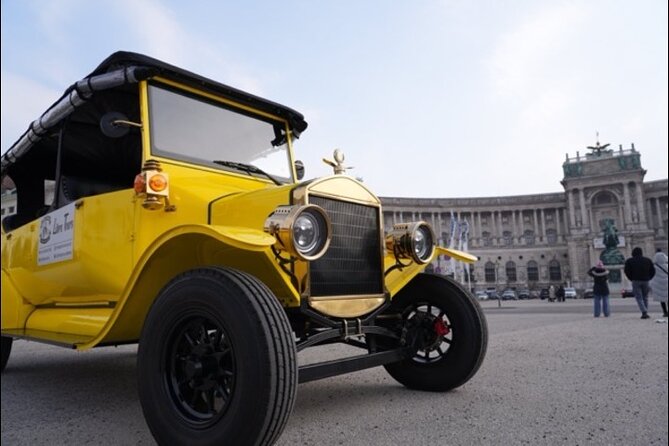
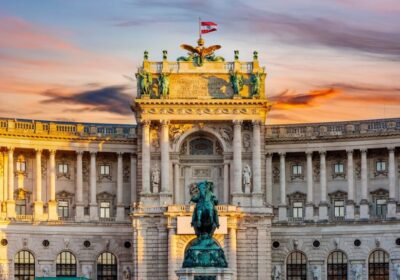
The tour’s imperial spine runs through the Hofburg Palace area. This is the former winter residence of the Habsburg dynasty, now connected to Austrian national life through the president’s residence and workplace. You also have the Sisi Museum and the Imperial Treasury in this palace complex, which helps you understand why people talk about Hofburg as more than just one building.
This is also where you get visual context for the Hofburg’s gates and entry points. You may pass the Swiss Gate, named after the Swiss Guards, which gives you a nice story hook for Heldenplatz and the surrounding power buildings.
At this stage, pay attention to what kind of architecture you are seeing. Hofburg is about authority, ceremony, and continuity, and the guide’s job here is to help you connect faces, rulers, and institutions to real buildings rather than just names on a plaque.
Heldenplatz and the Big Statues: Prince Eugene and Archduke Karl
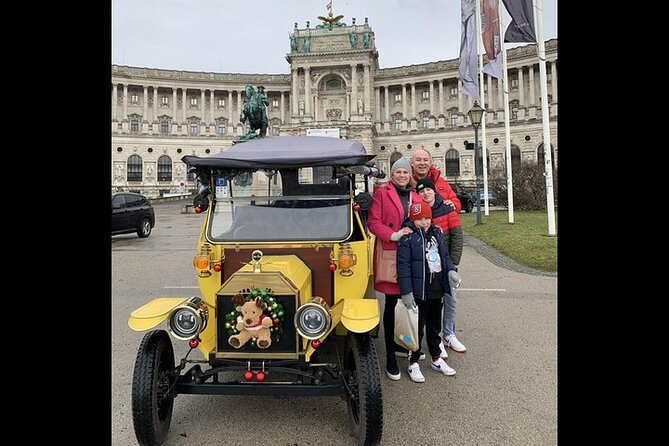
From the Hofburg area, Heldenplatz brings you to the monumental side of Vienna. You get statues tied to major historical figures, including Prince Eugene of Savoy, celebrated for military victories against the Ottoman Empire and France. You also see the Archduke Karl equestrian statue, a standout monument in Heldenplatz.
These aren’t just for postcard photos. If you want to understand why Vienna’s center feels so formal, these statues explain it. Vienna loves to put rulers and victories in public space, and Heldenplatz is one of the clearest examples.
If you are short on time, this is a moment to slow down for 30 seconds. Look at the posture, the placement, and the sightlines. It makes the rest of the route easier to “read” afterward.
National Library and Parliament Library: The City as a Knowledge Machine
One of the smartest parts of this tour is that it does not only hit churches and palaces. You also stop at the National Library, one of the oldest and largest libraries in the world, with over 11 million books and manuscripts. The library is also tied to special collections like the Papyrus Museum and the Globe Museum, which tells you that Vienna treats knowledge like a public treasure.
Then you move into political knowledge with stops connected to Austria’s Parliament, including the Library of the Austrian Parliament. This is the kind of place that can seem abstract on a map, but once you see the setting, it becomes concrete. The Parliament building itself was completed in 1883 on Vienna’s Ringstraße in a Greek Revival style, and the tour helps you connect that style to the idea of civic power.
If you like understanding how a city builds systems, this section is your reward. And if you do not, you still come away with a clearer mental map of where the public institutions sit.
Kunsthistorisches, Natural History, and MuseumQuartier: Museums Without the Time Commitment
Vienna’s museum density is real, and this tour plays a clever game with your time. You are shown the big museum names and their locations, especially around Kunsthistorisches Museum and Naturhistorisches Museum, plus the MuseumQuartier Wien area.
Kunsthistorisches Museum, opened in 1891, holds the imperial art collection of the Habsburgs and focuses on European art from antiquity to the late 18th century. Naturhistorisches Museum, founded in 1807 and opened in its current building in 1889, is about natural history collections, including dinosaur skeletons, minerals, and animal exhibits.
MuseumQuartier Wien is a restored area of historic and modern buildings with many of the city’s museums, opened to the public in 2001. If you are curious about modern Vienna alongside imperial Vienna, this helps connect the dots quickly.
You may not spend a long time inside each museum on a 45-minute tour, but you will get the orientation you need to plan a later return if one museum really grabs you.
Freud, the Secession, and the Shift From Court to Modern Vienna
This route includes stops that help you understand Vienna’s pivot from imperial rule to modern ideas. The Sigmund Freud Museum is a highlight here, located in his former residence, and it covers his life from 1891 to 1938 through his personal belongings and original furniture. It is the kind of stop that makes Vienna feel human, not just formal.
You also get a hit of modern art at the Vienna Secession building, completed in 1898. The Secession movement was where artists like Gustav Klimt pushed back against older styles, and the Secession building becomes a visual symbol of that break with tradition.
If you like cities that have both old-world power and new-world thinking, this section is what makes Vienna feel like more than a postcard.
Ringstraße Landmarks: Rathaus, Votive Church, and Theatre Culture
Ringstraße is where Vienna shows its civic face. You can see the Vienna City Hall, known as the Rathaus, a huge Neo-Gothic building built between 1872 and 1883. It is one of the largest municipal buildings in Europe, and it is also the kind of place that often runs tours and hosts events, which means it is more than decoration.
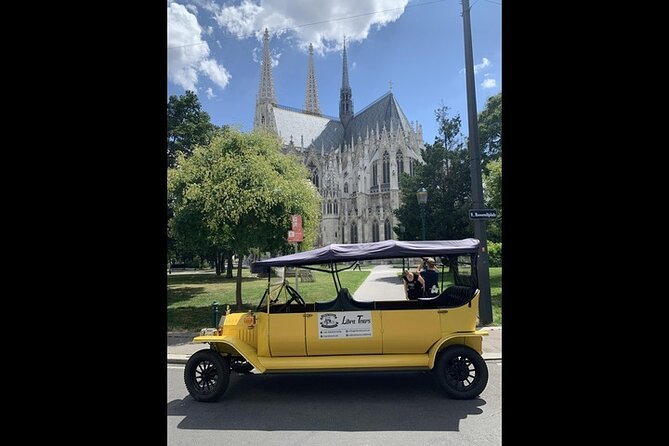
The tour also includes the Votive Church (Votivkirche), a neo-Gothic masterpiece completed in 1879 after a failed assassination attempt on Emperor Franz Joseph I. It is an easy landmark to orient yourself around because the twin spires are hard to miss.
And you get theatre culture with the Burgtheater, Austria’s national theatre. Established in 1741 and moved to its Ringstraße location in 1888, it is an important part of Vienna’s German-language cultural identity.
This part of the tour works well when you want your photos to come out readable. These buildings are visually distinct, so your brain learns fast.
Churches and Squares You’ll Remember: Am Hof, Scots Church, and Minoritenkirche
This is where the tour becomes more than “big buildings.” It includes historic squares and older churches that show layered Vienna, from Roman-era streets to Baroque and Gothic facades.
You may visit Am Hof, a square dating back to Roman times and linked to Babenberg dukes in the 12th century. Today it is a lively square with the Baroque Church am Hof, the Mariensäule (Marian Column), and shops and restaurants.
You also see older sacred buildings like the Scots Church (Schottenkirche), founded by Irish monks and known for its Baroque facade completed later. Another stop is the Wiener Minoritenkirche, a Gothic church famous for its mosaic of Leonardo da Vinci’s Last Supper.
If you want a break from royal and institutional Vienna, this church cluster gives you a calmer, more intimate feeling. Even if the stop time is short, the architecture is memorable.
Art, Print Rooms, and Memory: Albertina and the Memorial Against Fascism
The tour’s museum-and-memory mix continues with the Albertina. It houses one of the world’s largest print rooms, with drawings, prints, photographs, and architectural works spanning masters like Dürer to contemporary artists. It also includes Habsburg staterooms and Modern art collections.
Right near Albertinaplatz, there is the Memorial Against Fascism, created by Alfred Hrdlicka and unveiled in 1988. It commemorates victims of Nazi terror, and it is meant as a reminder and a call for peace.
That pairing works surprisingly well in a short tour. One stop points you to how Vienna collects and preserves art. The other stop reminds you that the city also remembers hard truths in public space.
Classic Car Comfort, Photo Stops, and What Guides Do Differently
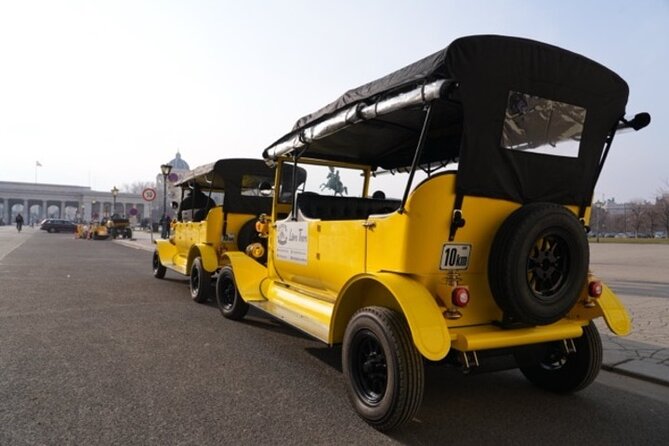
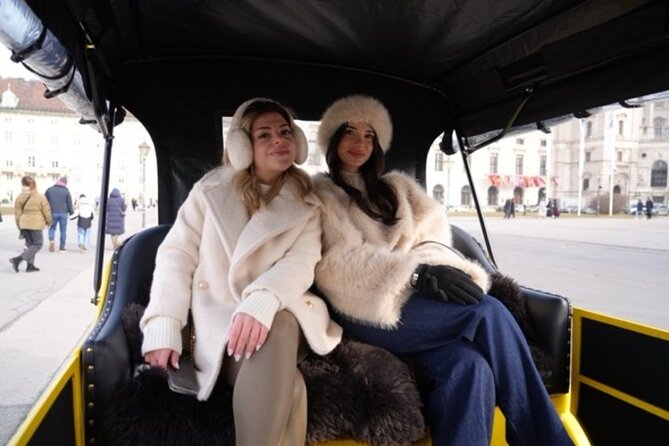
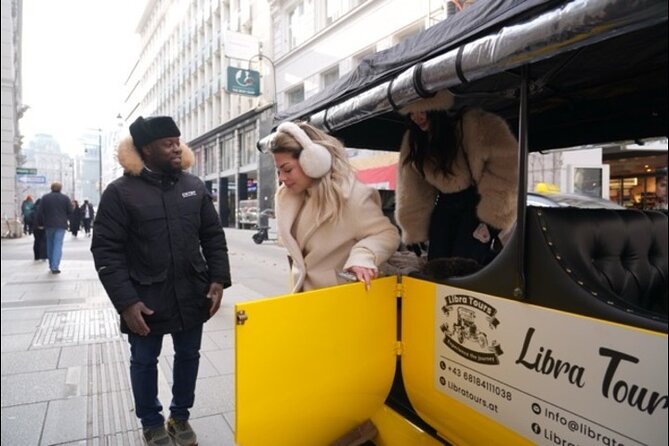
Some versions of this Vienna Old Town experience run as a classic car city loop. If your tour uses that style, you get a smooth way to cover distance without burning energy. One review detail that stands out is how the driver provided photo opportunities at different buildings and adapted to weather, including rolling a roof in certain conditions.
You should also know this from real feedback: if it is sunny, the roof handling can vary, and that can affect your photos and your view angle. If photography matters a lot to you, ask the guide a quick question early about the best way to get clear shots.
Guide style also matters. Guides named Jerry and Jeremiah were praised for being friendly, informative, and good at making the trip feel fun, with smooth communication and care for older passengers. On the flip side, there were issues when English clarity was not strong, which meant the explanation did not land as well.
So do this: if you care about deeper history at every stop, bring a list of questions and ask the guide to focus on them.
Practical Tips for Getting the Most From 45 Minutes
The biggest lever you control is your mental preparation. Pick what you want most: imperial sights, art institutions, or civic architecture. Then, listen for the guide’s connections, like why a building looks a certain way or what a named institution actually does.
Here are a few quick tactics that make the most of a short tour:
- Be ready to get in and out fast for photo stops.
- Stand where you can see the building and still keep your face toward the guide for context.
- If you are sensitive to cold, come dressed for quick exterior moments, not long indoor time.
Weather matters too. The experience requires good weather, and if it is canceled for poor weather, you should expect a different date or a full refund. If your trip is in a rainy stretch, build in a flexible day.
For mobility needs, the presence of extra support like an extra stool is a plus. Still, you will likely do short walks around major stops, so tell the operator what your comfort level is.
And if meeting point directions feel vague, use your map and zoom in before you arrive.
Who Should Book This Old Town Tour?
Book this tour if you want a fast, guided way to connect Vienna’s major landmarks into one coherent mental map. It is especially useful for first-time visitors who want to know where things are before committing to longer museum days.
I also think it fits well for families and small groups, including older travelers, because a private guide plus quick stops can feel less stressful than long self-guided wandering. If you want short, photo-friendly moments with helpful explanations, this is a good match.
You might skip it if you are the type who needs deep historical detail at each stop. The time is too short, and you may leave wanting more than a taste. You may also want to rethink if you need a language option other than English, since the tour is offered in English only.
Should You Book Vienna Oldtown Tour with Libra Tours Vienna?
Yes, if your priority is orientation plus recognizable landmarks in a tight window. At $42.17 for a private 45-minute circuit, you are paying for convenience, guidance, and efficient sightseeing rather than hours of museum time.
My final recommendation is simple: go into the tour with a short list of what you want explained, and be ready for quick exterior stops. If you do that, you will leave with the city feeling less confusing, and your later Vienna days will make more sense.
FAQ
How long is the Vienna Oldtown Tour?
The tour is approximately 45 minutes.
How much does the Vienna Oldtown Tour cost?
It costs $42.17 per person.
Is the tour offered in English?
Yes, the tour is offered in English.
Is this a private tour?
Yes. It is a private tour, and only your group will participate.
Do I need a printed ticket?
No. The tour uses a mobile ticket.
Where does the tour start and end?
It starts at the meeting point and ends back at the meeting point.
What are the available tour hours?
Tours run Monday through Sunday from 9:00 AM to 6:00 PM.
Is the tour accessible and are service animals allowed?
Service animals are allowed. There is also mention of an extra stool for handicaps and elderly persons.
Latest Vienna reviews
- Vienna Food Tour: Dishes, Wine, Street Food & Culture★ 4.7 · 12 reviews
- A box for a romantic walk in the city center of Vienna★ 5.0 · 13 reviews
- Vienna: mumok Museum of Modern Art Entry Ticket★ 3.8 · 13 reviews
- eBike Vienna 90min guided tour – use ebike for the whole day★ 4.0 · 13 reviews
- Bratislava Private Tour from Vienna★ 4.5 · 13 reviews
- Vienna: Austrian Wine Tasting★ 4.8 · 13 reviews
- Best of Vienna Tour in TUK TUK!★ 5.0 · 14 reviews
- Small Group Half Day Tour from Vienna to Bratislava★ 4.0 · 14 reviews
Tours, compared.
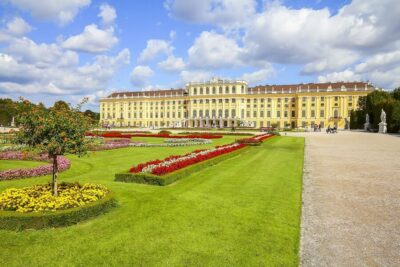
Schönbrunn Palace & Gardens Skip-the-Line Tour
Read our review →
Skip-the-Line Sisi Museum, Hofburg and Gardens Tour
Read our review →
Skip-the-Line Schönbrunn Palace & Gardens Tour
Read our review →
Guided Walking Tour of City Center Highlights
Read our review →