
Reviewed · MUSEUMS
Kunsthaus Graz Museum Entrance Ticket
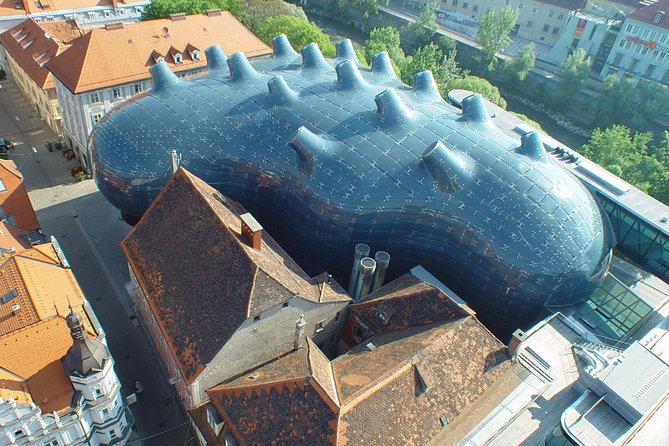
Kunsthaus Graz is interesting because the building itself feels like part of the art, a surreal blue shape on the riverbank that you see before you even reach the doors. I like that you get a paper entrance ticket and can plan a self-guided visit at your own pace, no group herding.
Two things I really like: you get access to temporary contemporary art that ranges beyond Austria, and you can pair it with big views from inside, especially from the upper levels. Depending on what is showing, you may run into sound-driven installations and political or identity themes that can feel funny, eerie, or both.
One possible drawback is that this is not an included story-by-story guided tour. If you want extra explanation, you’ll need to pay for an English audio guide (and it costs extra), and if you dislike modern, concept-heavy shows, the experience may feel hit or miss.
Quick highlights
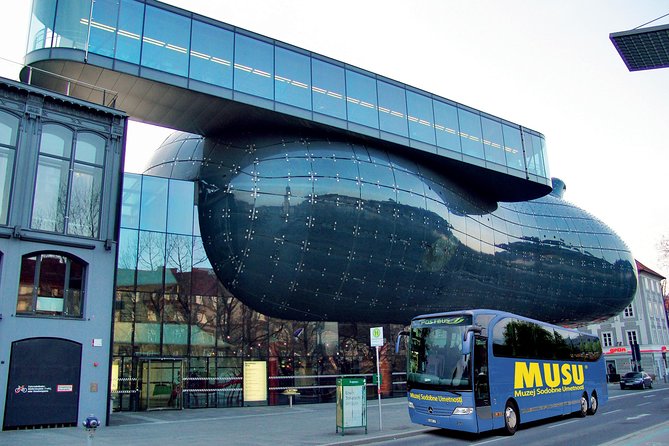
- Surreal “alien” museum building next to the Mur, often described as a blue heart
- Self-guided, flexible pacing so you can stop for ideas that catch your eye
- Temporary exhibitions on multiple levels, reached via moving ramps
- Sound and concept art you might find dark rooms, whispers, and voice-based work
- Views from higher floors, plus a top-floor hall with scenery
- Fair ticket value for 1 to 2 hours, depending on how long you linger
The friendly alien factor: why the Kunsthaus Graz is worth the trip
Kunsthaus Graz is the kind of museum that makes you want to walk slower, just so you can take in the architecture again and again. From outside, it has that unmistakable futuristic look, often compared to a friendly alien, and in the daylight the blue tones really read as “this is not your normal gallery box.”
Inside, the building continues the idea. The museum is known for its unusual structure, and it helps that it sits close to the historical core of Graz and on the riverbank. That means your museum time does not feel isolated from the rest of the day. If you plan a stroll afterward, it still feels connected.
Even if you only catch one exhibition that really grabs you, the overall experience tends to be memorable. Some installations can get spooky in a deliberate way, with dark rooms and disembodied sound effects that feel like they are talking through you rather than at you. If you like art that plays with perception, this is a strong match.
More Museums in Graz:
- Vienna: Skip-the-Line Sisi Museum, Hofburg and Gardens Tour
★ 4.8 · 5,918 reviews - Vienna Kunsthistorisches Museum Day Admission Ticket
★ 4.6 · 3,690 reviews - Tickets for the Albertina Exhibitions
★ 4.7 · 2,126 reviews
Ticket basics: what you get for $15.38, and how long you should plan
Your entrance ticket is priced at $15.38 per person and is meant for an approximately 2-hour visit. In practice, I’d treat 2 hours as a comfortable target, especially if you like to read a bit and move at a relaxed pace. If you’re a fast walker and you’re only there for one or two shows, you may finish closer to 1 to 1.5 hours.
The ticket you’re buying includes admission to the Kunsthaus Graz Museum. The museum runs temporary exhibitions, so you are not paying for one fixed collection that will look the same every day. That matters for value. If the current exhibitions click with your taste, it can feel like a bargain. If they don’t, you may feel like you paid for a smaller-than-expected amount of art.
English is offered, and you’ll get the admission you need. What is not included is a guided tour. If you want extra context, audio guides are available for 3 EUR per person and they’re described as English, German, and partly Italian and Slovenian. If you rely heavily on interpretation to enjoy contemporary art, budget a bit more.
Also note a small but real planning bonus: there are specific openings listed for different date ranges, and the museum is open Tuesday to Sunday from 10:00 AM to 6:00 PM in the periods shown. That makes it easy to build into a normal sightseeing day.
Arriving at Lendkai 1 and getting your ticket scanned
Kunsthaus Graz is located at Lendkai 1, and it’s near public transportation, which helps if you don’t want to wrestle with parking or a long walk from a bus or tram stop.
To receive your ticket, you show a printed booking confirmation from Viator at the cashier point. That detail matters. Bring the paper printout, not just your phone screen, because that is what the cashier is expecting.
One more detail that makes logistics easier: the museum allows service animals, and the experience is described as suitable for most people. If you’re traveling with any mobility concerns, the key is that the exhibitions are housed on multiple floors and you’ll be using the ramps described for access. If you need step-free help, it’s still smart to ask on arrival, but the layout suggests ramp-based movement is part of how you’ll get around.
And if your dates line up with it, there’s a special day. Free entry on June 28 and 29, 2025 is listed as part of the MIKROtopia Open House event. If you’re lucky enough to be there then, you get the same experience for zero cost.
How the self-guided visit works once you’re inside
This is your museum, which is a good thing. You don’t need to follow a strict route or match your pace to a group. The building is laid out so you can drift from space to space, then slow down when something grabs you.
A typical pattern works like this: you start by orienting yourself, then go up to the exhibition levels. The museum has a shop and a bar on the ground floor, so if you need a quick reset, this is where you can do it before you commit to the heavier rooms. From there, exhibitions are across upper floors, and access is described as being via moving ramps.
Here’s the practical tip I’d use: don’t try to “finish everything.” With temporary contemporary work, reading every panel cover to cover can make you exhausted and you lose the emotional impact. Instead, pick a few anchors. Spend extra time with the exhibition that matches your interest, then skim the rest to get a sense of what the museum is exploring right now.
If you like art that uses sound, lighting, and time based effects, keep a little patience. These installations often land better when you stand still and let the atmosphere do its job.
More days in Graz:
- Graz: Old Town Highlights Private Walking Tour
★ 4.6 · 16 reviews - Universalmuseum Joanneum Pass in Graz
★ 4.0 · 14 reviews - Fun & mobile scavenger hunt through Graz
★ 4.5 · 12 reviews - Graz Scavenger Hunt and Sights Self Guided Tour
★ 4.0 · 9 reviews
The two-floor flow: moving ramps, changing rooms, and pacing
Kunsthaus Graz is designed so you naturally move through layers. Many people experience it as a walk through multiple floors rather than a single long corridor. The moving ramps help you keep momentum, and they also make the building feel like a guided journey even without a guide.
In a good pacing plan, I’d do this:
- First pass: move with curiosity, looking at titles and images quickly.
- Second pass: slow down for one or two rooms that really draw you in.
- Final pass: go back for one last look at anything you rushed.
One reason this helps is that contemporary exhibitions can shift tone fast. You might move from a quieter section into a darker environment where sound is the main material. That change is part of the art, and rushing can make you miss what it’s doing.
Some exhibitions may also feel like they have fewer works on display, which can change your sense of time. If that happens to you, your best move is not to force it. Use the space for atmosphere, then end when you still want more, not when you’ve crossed the point of diminishing returns.
What kind of contemporary art shows up here
Kunsthaus Graz specializes in contemporary work, and the current program can range from photography and labor themes to sound art and politically charged installations. If you like variety within modern art rather than only one style, this museum plays that game well.
A few examples of what you might encounter include voice and noise themed work, and also exhibitions that focus on political power. One voice based experience is described as happening in dark rooms with whispered sounds and disembodied voices, which makes it feel less like passive looking and more like an encounter.
There are also examples of art that uses humor in an unexpected way. In a political power themed installation, an amusing video moment is described: a grandmother and her two very young granddaughters reading aloud from Karl Marx’s Das Kapital. That kind of juxtaposition, serious source material mixed with intimate family behavior, is exactly the sort of conceptual surprise contemporary museums are built for.
You might also see major contemporary photography and media shows. One example listed is Camera Austria – Destroying Photography, plus thematic work labeled Poetics of Power and 24/7 Work Between Meaning and Imbalance. If your interests include how power and labor get framed by media, these types of exhibitions often reward close reading.
And yes, the museum can also go hard on social themes. One example described includes feminism and violence, with work that can disturb you on purpose. If that’s your kind of engagement, you’ll likely leave feeling changed rather than just entertained.
Still, not every show lands for everyone. Some visitors describe the art as disappointing or mediocrity. That doesn’t mean the museum is bad, it means contemporary art programs can divide opinion. Your best protection is to check what is scheduled for your exact visit dates, because the value depends heavily on the temporary exhibitions.
The building and the views: the art isn’t only behind glass
Even when you’re not focused on the exhibition walls, the museum’s design keeps contributing. The architecture has a strong visual identity against Graz’s more traditional buildings, and that contrast is part of why it feels special.
A couple of view moments come up repeatedly in descriptions. One is a good view toward the Schlossberg from the outside context, and another is the top-floor hall with a great view. On a clear day, this is where the museum shifts from “inside rooms” to “inside, with the city unfolding around you.”
If you’re the type who needs a break from heavy themes, those view spaces do the job. You can step back, refocus, and then return to the installations with a clearer mind.
How long should you stay, and when you might feel done early
Since your ticket is timed in spirit for about 2 hours, I’d plan your day so you have wiggle room. Not much goes on in the building that requires strict timing, so the only real limiter is how quickly you connect with the exhibitions.
Some people report shorter visits, like around 1 to 1.5 hours, which makes sense if the current program is concentrated. Others suggest longer. If you’re the type who reads interpretive text, watches video works fully, or enjoys sound installations by standing still, go closer to the full 2 hours.
A useful rule: if you’ve seen your top one or two highlights and you’re starting to feel restless, don’t keep going just to hit an arbitrary time. Contemporary exhibits can be dense. It’s okay to leave on a high note.
Price check: is this good value or a bit pricey
For the price of $15.38, you’re paying for museum admission to a program of temporary exhibitions in a museum with notable architecture. That is generally a fair deal, especially because the building itself is part of the experience, and because the shows can include immersive sound and concept work that you cannot replicate in a normal street scene.
That said, value depends on what is on view. Some visitors feel the exhibitions were not enough for the price, particularly if there are fewer works or if the themes are not your thing. Other visitors find the price reasonable and recommend the visit strongly.
My practical take: if you actively like contemporary art, and you’re curious about installations, this ticket is likely a good match. If you mainly want classic masterpieces in a traditional layout, the museum might feel like you paid for a lot of concept and not enough familiar art.
Also, if you are traveling with an art-focused pass or student deal, it can become a better value. One description notes the museum is included in a year ticket and priced well for students, though the details of your own situation depend on what you already have.
Who this ticket is best for, and who should think twice
Buy this ticket if you:
- Love contemporary art and are curious about how artists use sound, media, and social themes
- Enjoy architecture and want a museum building that feels unusual right away
- Prefer self-guided visits where you can linger when something hits
- Want an easy stop that can fit into a larger Graz day
Think twice if you:
- Want a guided explanation included in the price
- Dislike concept-heavy exhibitions, especially ones that aim for discomfort or eeriness
- Expect lots of works like a large permanent collection
Language is another factor. The experience is offered in English, and audio guides for English and other languages cost extra. If English interpretation is essential to your enjoyment, consider budgeting for an audio guide so you can get more out of the exhibits.
Should you book Kunsthaus Graz for your Graz day?
If you want one strong, modern art experience in Graz that is flexible and not trapped in a rigid schedule, I’d book it. The architecture alone makes it worth seeing, and when the exhibition choices align with your taste, the museum can feel memorable in a very specific way, especially with sound and theme-based installations.
My advice is simple: check what exhibitions are scheduled for your dates, then decide based on the themes. If you see something that matches your interests, the ticket is a solid value for 1 to 2 hours of real contemporary art. If you are unsure, you still might enjoy the building and the atmosphere, but don’t plan on the museum converting you if contemporary art is usually not your thing.
FAQ
How long is the Kunsthaus Graz Museum entrance ticket visit?
The visit time is listed as approximately 2 hours, though how long you stay can vary based on your pace and what exhibitions you choose to focus on.
Is the tour guided or self-guided?
This is a flexible self-guided entrance ticket. You explore the museum at your own pace.
What languages are available with this entrance ticket?
The experience is offered in English. Audio guides are available for an extra cost and are described as English, German, and partly Italian and Slovenian.
Does the price include audio guides or a guided tour?
No. Guided tours or audio guides cost extra, and the listed extra cost for audio guides is 3 EUR per person.
What do I need to show to get my ticket?
To receive your ticket, you show your printed booking confirmation from Viator at the cashier point.
Where is Kunsthaus Graz located?
The museum is located at Lendkai 1.
What are the opening hours?
For the periods listed, the museum is open Tuesday to Sunday from 10:00 AM to 6:00 PM (based on the date ranges shown in the details).
Is there a free entry day?
Yes. Free entry is listed for June 28 and 29, 2025 as part of the MIKROtopia Open House event.
Is it easy to reach using public transportation?
Yes. The museum is described as near public transportation.
Are service animals allowed?
Yes. Service animals are allowed.
Latest Graz reviews
- Graz Old Town Highlights Private Walking Tour★ 5.0 · 4 reviews
- Graz Private Walking Tour With A Professional Guide★ 5.0 · 5 reviews
- Graz Scavenger Hunt and Sights Self Guided Tour★ 4.0 · 9 reviews
- Graz city tours★ 3.5 · 9 reviews
- Universalmuseum Joanneum Pass in Graz★ 4.0 · 14 reviews
- Explore Graz in 60 minutes with a Local★ 5.0 · 7 reviews
- Graz Funicular Ride and Schlossberg Picnic Experience★ 5.0 · 5 reviews
- Fun & mobile scavenger hunt through Graz★ 4.5 · 12 reviews
Museums, compared.

Skip-the-Line Sisi Museum, Hofburg and Gardens Tour
Read our review →
Vienna Kunsthistorisches Museum Day Admission Ticket
Read our review →

Chocolate Workshop in Chocolate Museum w/ Tasting
Read our review →
St. Stephen’s Cathedral & Dom Museum Wien Tickets
Read our review →
Browse the lists this tour appears in