Reviewed · TOURS
Fall in Love with Vienna in 4h: Hidden Gems- Group Tour
What makes Fall in Love with Vienna in 4h so interesting is how it strings together Mozart-related stops, old-world streets, and big landmarks into one walk you can finish in an afternoon. It starts near Mozarthaus and ends at the Vienna State Opera, so you get a clear sense of the city’s shape fast.
I love two things about this tour. First, the small-group setup, where it feels easy to ask questions and talk with the guide. Second, I also love the included break, a traditional Viennese coffee house stop with apple strudel, which is a very smart reset in the middle of a walking route.
One possible drawback: this is a fast-moving “see a lot, but don’t linger” style tour. Many stops are brief, and since it’s outdoors and weather dependent, you’ll want comfortable shoes and a plan for cold or rain.
Key highlights to know before you go
- Guided loop from Mozarthaus to the State Opera, so you end in a landmark area with lots of options
- Short, story-focused stops across churches, passages, markets, and squares
- Included 30-minute coffee house break with coffee and apple strudel
- Small group (max around 15, described as up to 18) for a more conversational pace
- A stop at the Judenplatz Holocaust Memorial, adding necessary context to the Old Town walk
How This 4-Hour Vienna Walk Gets You Oriented Fast
If you’re in Vienna for a short time, you can waste hours zigzagging on your own and still feel lost. This tour solves that with a tightly planned loop through the central city, from Mozart-connected places to the cathedral area and onward to the Opera district.
I also like the “quick taste” format. You do not sit through long lectures, but you do get enough context at each stop to understand what you’re looking at. That matters in Vienna, where buildings and streets can look similar until someone points out the why.
And the ending is practical. Finishing at the Vienna State Opera means you’re in one of the easiest areas to continue independently, grab a late lunch, or simply keep exploring central Vienna without needing a second plan.
More days in Vienna:
- Vienna: Vivaldi’s Four Seasons Concert in Karlskirche
★ 4.7 · 14,951 reviews - Vienna: Spanish Riding School Training
★ 3.9 · 9,281 reviews - Vienna: Skip-the-cashier-desk-line Giant Ferris Wheel Ride
★ 4.5 · 7,859 reviews
Price, Value, and What You Still Might Pay
The tour costs $84.29 per person, and the value comes from what’s built in. You get a live guide for about four hours, a group size that stays manageable, a 30-minute coffee house break, and extra help tools like a printed information package and a Vienna city map.
It’s also helpful that many of the listed stops are marked as free entry, so you’re not constantly hunting for ticket counters just to see the exterior or a quick interior moment. That said, entrance fees to museums are not included, so if you want to go deeper than the tour’s brief stops, you’ll still pay on your own.
For me, the best way to judge value here is simple. If you’d otherwise spend money on a separate “orientation walk” and then still try to piece together history yourself, this bundles a lot of that thinking into one afternoon, including a food break you’d probably pay for anyway.
Meeting Point at Mozarthaus Vienna, and the 1:00 PM Flow
You meet at Mozarthaus Vienna, Mozarthaus on Domgasse 5 (near the city center). The tour starts at 1:00 pm and runs about four hours, then finishes at the Vienna State Opera.
This schedule is ideal for travelers who want to use the morning for museums or neighborhoods, then switch to a walking tour when you’re ready to see the city’s layout. It’s also a good bridge day if you’re tired of planning and want someone else to handle the route.
The route is designed for people with moderate physical fitness, which in plain terms means walking at a steady pace and doing short stops along the way. It is not a sprint, but it is also not a sit-down tour.
The Included Coffee House Break (and Why It Matters)
Halfway through, you get a 30-minute break at a traditional Viennese coffee house. The tour includes coffee and apple strudel, and the whole point is to give you time to warm up, catch your breath, and reset before the second half of the walk.
I’m glad this isn’t just a token pause. One winter review specifically highlighted that the guide worked with the cold and offered chances to enter places along the route to warm up, then added the extra coffee house break. That’s exactly what you want from a guide when conditions aren’t perfect.
If you’re the type who tends to get distracted by hunger on walking days, this break is your built-in solution. Use it to slow down, look over your map for the rest of the route, and then get ready for a stretch of iconic photo stops.
A different sort of Vienna day:
- Vienna: Schönbrunn Palace & Gardens Skip-the-Line Tour
★ 4.7 · 7,739 reviews - Vienna: Light of Creation Votive Church Immersive Light Show
★ 4.8 · 6,779 reviews - Vienna Spanish Riding School Guided Tour
★ 4.7 · 6,765 reviews - Vienna: Classical Concert in the World-Famous Musikverein
★ 4.6 · 6,673 reviews
Stop-by-Stop: Mozart to the Medieval Lanes
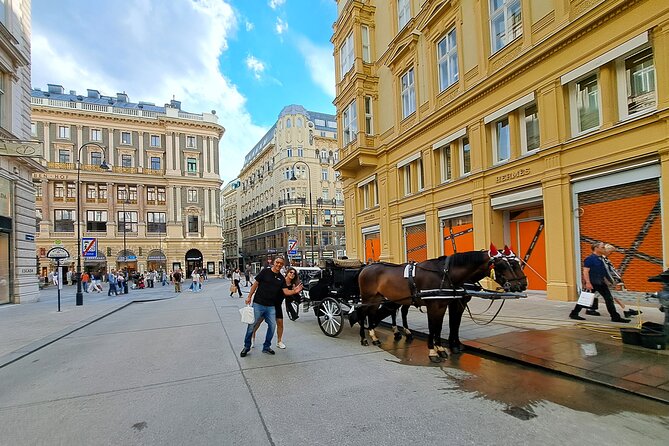
This is the part of Vienna where you start to connect the dots. Mozart and Vienna’s music reputation are everywhere, but you only get the full picture when you see the specific corners tied to his world.
Mozarthaus Vienna, the Mozart apartment called the Figaro house
You begin at Mozarthaus Vienna, the Mozart home and apartment complex sometimes referred to as the Figaro house. Even if you keep your time focused on the exterior and quick stop moments, you get a foundation for why Vienna felt so musical at the time.
This is also a confidence boost. Starting at a clear landmark location helps you orient quickly, and you’re not guessing which street the guide will use next.
Blutgassenviertel, the Blood Alley Quarter
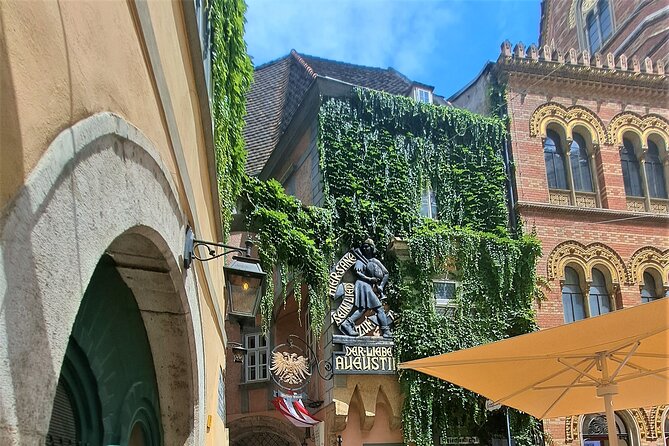
Next comes the Blutgassenviertel, known for the narrow lanes and older traditional buildings. The name Blood Alley sounds dramatic, and that’s usually the point with medieval street names, they carry stories even when the modern street looks almost too quiet.
This stop is short, but it’s the kind of place where you start seeing how Vienna’s charm often lives between the obvious big sights.
Sala Terrena im Deutschordenshaus, an early concert setting
Then you visit Sala Terrena in the Deutschordenshouse, described as an early concert house where Mozart performed. The value here is context. You’re not just admiring Vienna’s reputation, you’re seeing a real venue type tied to music life.
Even if your visit is brief, it’s a useful correction to the idea that history is only about palaces and cathedrals.
Stephansdom, St. Stephen’s Cathedral
Stephansdom is the big one. You’re there for about 10 minutes, which is enough to take in the exterior details and understand why it anchors central Vienna.
The practical advice: keep your eyes up and around. This is one of those places where the design has layers, and a short orientation talk helps you notice what you would otherwise miss.
Schnitzel in a Passage, Baroque Churches, and Market Stories
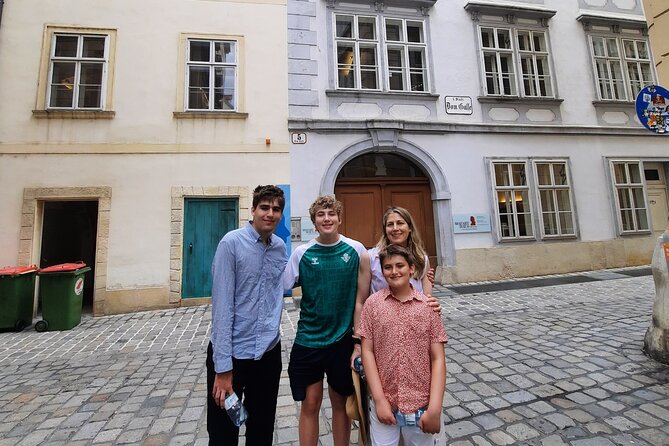
After the cathedral, the tour shifts into the Vienna that feels like it’s made for wandering. Passages, churches, and squares are where the city’s character shows up.
Figlmüller at Wollzeile, schnitzel in a historic passage
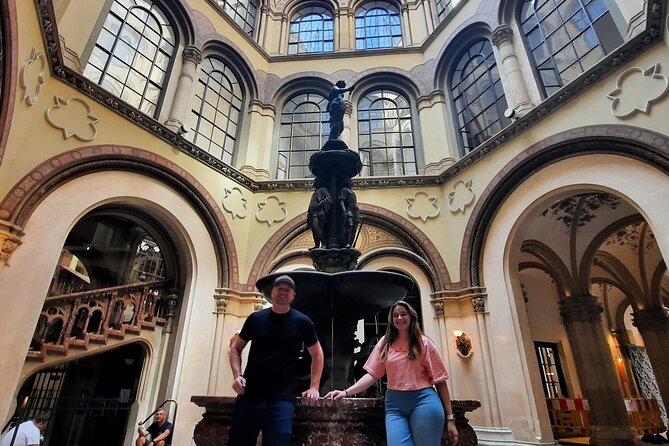
You stop at Figlmüller on Wollzeile, known as a very historic schnitzel restaurant in a passage. This is a fun pause because it’s both practical and atmospheric. You get a location for future food, and you also see how Vienna’s shopping and strolling culture uses covered lanes.
If you’re hungry later, this stop gives you a clear lead without forcing a decision on the spot.
Church of the Jesuits, a major baroque stop
The Church of the Jesuits is one of the more impressive baroque churches in Vienna, and you get about five minutes here. That’s not long for a deep interior visit, but it’s enough to take in the baroque drama and, more importantly, to understand what baroque style was trying to do.
If you plan to return later, a quick stop like this can help you choose the right spots to revisit.
Heiligenkreuzerhof Market and a tragic imperial story
Heiligenkreuzerhof Market is tied to a dramatic story connected to the abbey of Holy Cross, including the account of the suicide of the son of the last emperor. This is the kind of stop where the guide’s explanations are the main event.
If you like history that has human stakes, this is one of the stops that can change how you read a place. Also, markets are just useful. Even when you are not shopping, you start seeing where food and everyday life might happen nearby.
Griechenkirche zur heiligen Dreifaltigkeit, medieval streets and passages
Next comes Griechenkirche, connected to medieval Vienna and surrounded by old pedestrian streets and passages. This is a strong “walk and notice” stop, because you get to shift from landmark architecture to the texture of daily movement.
The tour frames this area with tales, which helps you slow down and see details instead of rushing past them.
St. Rupert’s Church, the oldest church of Vienna
At St. Rupert’s Church, you’re stepping into the “oldest” layer of the city. Even with a short stop, it helps you grasp how Vienna’s religious and civic identity grew over centuries.
This is also a good counterpoint to the more baroque, showy stops. You get contrast, not just repetition.
Clocks, Roman-Era Remnants, and the Judenplatz Memorial
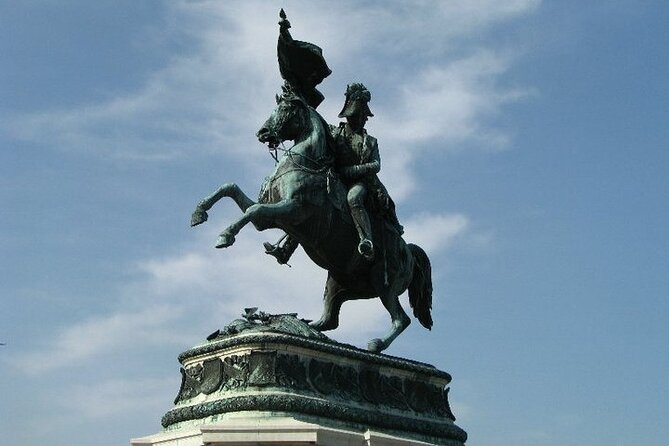
This section is where Vienna becomes more than pretty architecture. You get the layers, the mix of eras, and the difficult part of 20th-century history.
Ankeruhr Clock, a signature Vienna sight
The Ankeruhr clock is described as one of Vienna’s famous clocks and a beautiful landmark. It’s the kind of spot that works for both photos and orientation.
At a quick stop like this, I find clocks act like wayfinding anchors. Once you’ve seen it, it’s easier to remember the neighborhood shape around it.
Hoher Markt, Roman museum area
Hoher Markt includes a Roman museum area and ties into the wider Roman-era history of Vienna. Even if you do not go museum-deep during the walk, the placement matters, it reminds you that Vienna was a long-running settlement, not a city that suddenly appeared.
If you enjoy “under the street” thinking, this stop will land well.
Judenplatz Holocaust Memorial, Jewish Vienna in WWII context
Judenplatz is one of the most important stops on the tour. You pause at the Holocaust Memorial in Jewish square and get the story of how the Second World War impacted the Jewish community of Vienna.
This is where a skilled guide matters. You’re not just ticking off a landmark, you’re learning context. Plan to take a moment here, even if the scheduled time is brief.
Old Streets, Passages, a Leonardo Copy, and Vienna’s Rose Garden
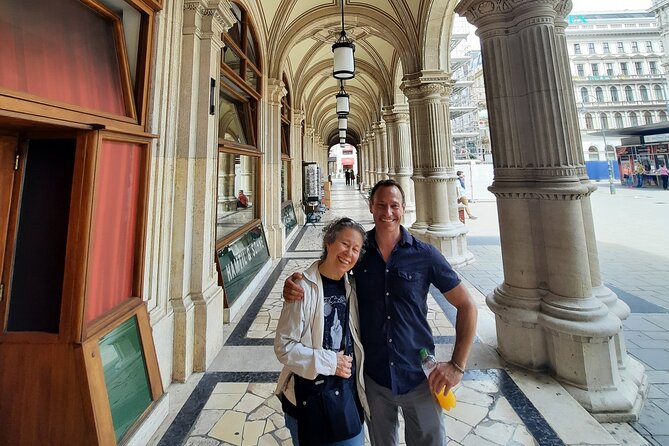
This part of the route leans into the elegant middle ground, where Vienna mixes historic faith sites, parks, and refined streets.
Am Hof, one of the oldest parts of the city
Am Hof gives you a sense of Vienna’s long continuity. It’s a short stop, but it helps you connect the idea of “old city” to a real square and street pattern you can see.
Freyung Passage, a classic strolling corridor
Freyung Passage is a passage that enhances the experience with the surrounding buildings and the feel of the walkway. Passages are a big deal in Vienna because they let you move through the city with style and shelter.
If you like photography, this is the kind of spot where your photos will look more interesting because the space guides your eye.
Minoritenkirche, a copy of Leonardo’s Last Supper
At Minoritenkirche, you visit a copy of Leonardo da Vinci’s Last Supper. Again, the stop is short, so the guide’s context is what makes it meaningful.
If you’re a fan of art history, this pause is a nice way to fit a known artwork reference into an afternoon without turning the day into a museum marathon.
Volksgarten, the rose garden
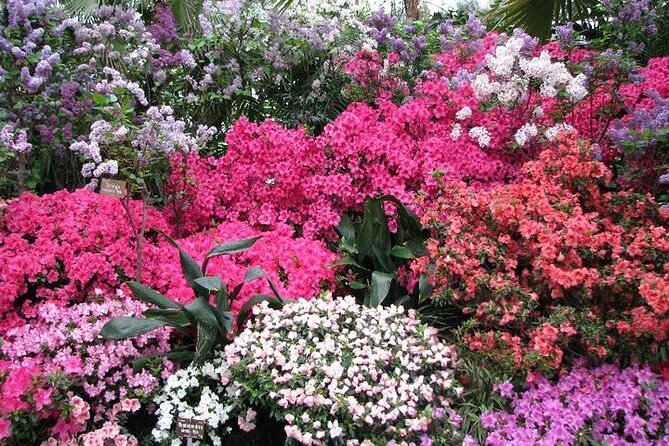
Volksgarten is the garden of thousands of roses. Even in a short stop, it gives you a breather from architecture and streets.
It’s also a good signal that Vienna doesn’t only do buildings and churches. It gives you green pockets that can refresh your eyes and legs.
Big Monuments: Justizpalast, MuseumsQuartier, Hofburg, and Burggarten
The last chunk of the tour moves you through some of the grandest parts of central Vienna.
Justizpalast, an impressive civic building
Justizpalast is described as one of Vienna’s most impressive buildings. The value of a quick stop is learning what kind of landmark it is and how it fits the broader city center.
MuseumsQuartier Wien, inner yard with museums
Then you reach MuseumsQuartier Wien, focusing on an inner yard with several museums. This stop is more about orientation and vibe than about going deep into collections.
If you’re the type who wants a second visit later, this is a handy introduction.
Hofburg, palace of the Habsburgs
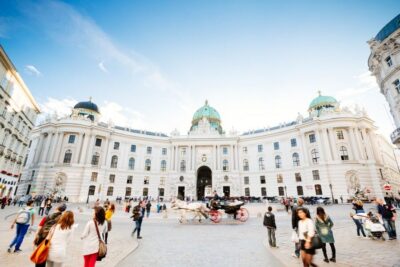
Hofburg is the Habsburg palace, and you get about 10 minutes. This is a classic “big structure, big meaning” moment, and the tour helps connect it to the rulers who shaped Vienna.
Even if you don’t go inside on the walk, you’ll understand why this area is a magnet for history lovers.
Burggarten, Mozart statue and the Butterfly Museum
Burggarten is tied to the most photographed Mozart statue in Vienna and the Butterfly Museum. This stop is useful if you like recognizable photo points and small curiosities.
If you’re traveling with kids or you simply want something lighter before the finale, this area can be a nice mental shift.
Finale at Wiener Staatsoper, where the tour ends
The walk finishes at the Wiener Staatsoper, the Vienna State Opera. Ten minutes at the opera is enough for exterior orientation, and it’s a smart end point because it’s a place people recognize even if they’re new to Vienna.
From here, you can keep going on foot in multiple directions, or switch to public transport without feeling stranded.
If you want a final practical tip: take a moment at the end to look back at what you covered. When the last stop is a major landmark, it helps your brain file everything into a clear mental map.
Who This Tour Fits Best, and Who Might Want Something Different
This tour is best for you if you want a guided way to see a lot of central Vienna in about four hours. It’s also a great match if you like learning through stories at street level, not only through museum walls.
It may not be ideal if you want long, unhurried interior time. Many stops are brief by design, and museum entrance fees are not included, so you’ll need to choose what to revisit later if you want deeper access.
Also, because the experience is described as requiring good weather, you should plan ahead if you’re visiting in winter. Cold walks are doable, but you’ll want layers and you’ll appreciate the fact the guide can help with warming up along the way, plus that included coffee house break.
Should You Book Fall in Love with Vienna in 4h?
Yes, I think you should book it if you are short on time and want a well-paced route through Mozart-related sights, the cathedral area, old passages, and key historic context. The combination of a live guide, a small-group feel, and the coffee house break with apple strudel makes it feel like more than a basic sightseeing walk.
Skip it, or consider another option, if you plan to spend most of your day going into museums and you need long stops. This is a get-your-bearings-first tour, not a slow deep dive.
FAQ
How long is the Vienna walking tour?
It runs about 4 hours.
What time does the tour start?
The start time is 1:00 pm.
Where does the tour meet and where does it end?
You meet at Mozarthaus Vienna, Domgasse 5, 1010 Wien, and the tour ends at the Vienna State Opera, Opernring 2, 1010 Wien.
What language is the tour offered in?
The tour is offered in English.
What’s included in the price?
Included features are a knowledgeable and friendly tour guide for 4 hours, a small group (up to 18 for engaging conversation), a 30-minute break at a traditional Viennese coffee house, a printed Vienna information package, plenty of suggestions for places to visit outside the city center, and a Vienna city map. You also get a mobile ticket.
Are museum entrance fees included?
No, entrance fees to museums are not included.
How big is the group?
It is listed as a group of 4 up to 18 persons, and the maximum is stated as 15 travelers.
Is the tour suitable for people with limited mobility or low fitness?
It says travelers should have a moderate physical fitness level.
What happens if the weather is bad or you need to cancel?
The tour requires good weather. If it’s canceled due to poor weather, you’ll be offered a different date or a full refund. You can cancel for a full refund if you cancel at least 24 hours before the experience start time.
Latest Vienna reviews
- Private tour of Hallstatt and Salzburg through beautiful Alps★ 5.0 · 3 reviews
- Vienna: Vienna under the Nazis, Private Walking Tour★ 1.8 · 3 reviews
- Magical Vienna Christmas Market Tour – 2 Hours★ 2.7 · 3 reviews
- Vienna: Mythos Mozart Experience Ticket& Guided Walking Tour★ 2.5 · 3 reviews
- Vienna: Private tour Mauthausen and Linz★ 4.1 · 3 reviews
- Vienna Private Schönbrunn Palace Tour, Extra Rooms and Gardens★ 5.0 · 3 reviews
- Skip-the-line Belvedere Palace Guided Tour with Transfers★ 5.0 · 3 reviews
- Schoenbrunn Palace Skip-The-Line and Vienna Highlights Private Tour★ 4.5 · 3 reviews
Tours, compared.
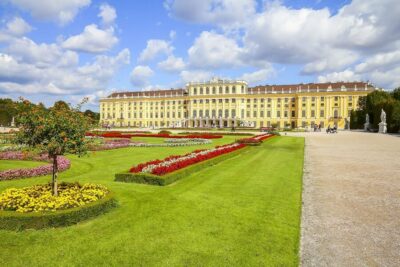
Schönbrunn Palace & Gardens Skip-the-Line Tour
Read our review →
Skip-the-Line Sisi Museum, Hofburg and Gardens Tour
Read our review →
Skip-the-Line Schönbrunn Palace & Gardens Tour
Read our review →
Guided Walking Tour of City Center Highlights
Read our review →