Reviewed · TOURS
Vienna: ‘Armenia In The Heart Of Austria’ Tour
This tour is interesting because Vienna has a real-life Armenian cultural pocket, tucked inside the Mekhitarist Monastery. You get art, faith, and scholarship in one compact visit, and the payoff is more than just looking at buildings. I especially like the chance to see Maria Schutz Church up close and then move into the Mekhitarists Library, where Armenian manuscripts and publications live.
I also like how the guide ties details together, from church art to specific collections like Armenian coins and printed materials. The tour is guided by a live monk, and people highlight Father Vahan’s warm welcome and clear answers. One drawback to consider: this is tightly focused on one site and its collections, so if you want wide-open city sightseeing, you may prefer a broader Vienna highlights tour.
Quick hits
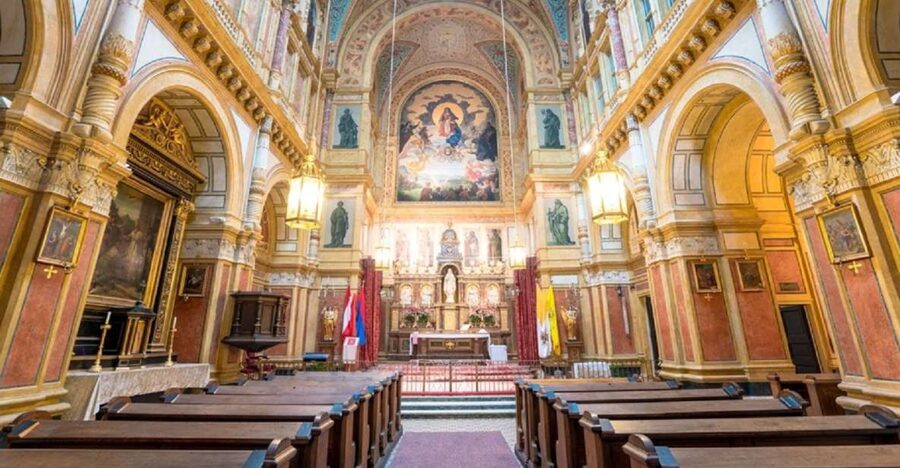
- Maria Schutz Church (built 1874), replacing an older Capuchin church, with interior access you usually do not get on your own
- St Mary’s protection of Armenia altar painting by Camillo Sitte, plus another standout altar linked to St Gregory the Illuminator
- Loretto-Chapel and Mary with the Rose, a baroque miraculous image said to have survived the Turkish siege of Vienna in 1683
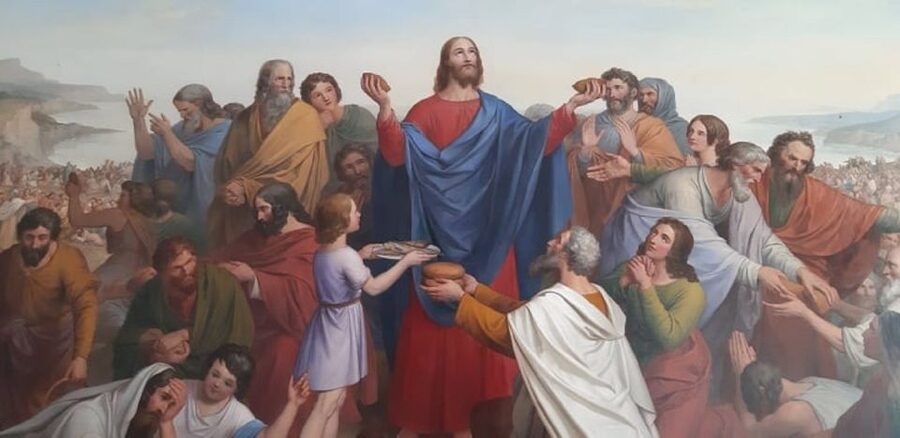
- The Refectory’s Feeding of the Five Thousand, a major painted work you’ll see in the room it belongs to
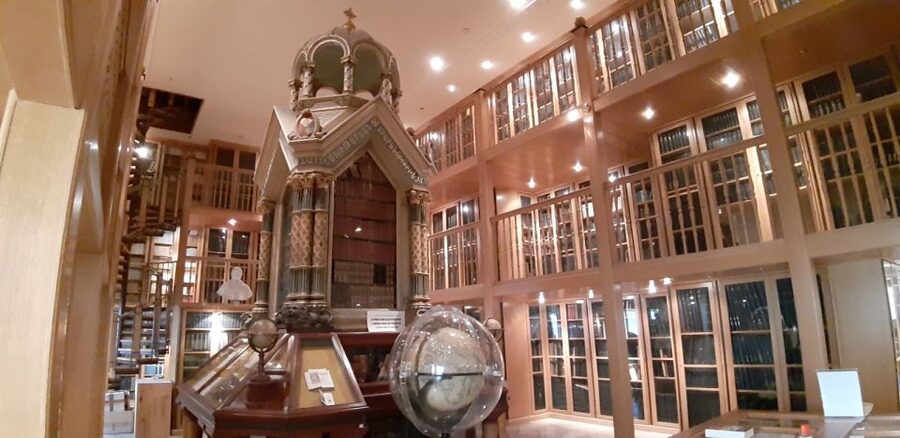
- One of the world’s most important Armenian collections, with thousands of manuscripts and a huge range of newspapers and magazines
- Mechitharine liqueur tasting at the end, with an explanation of taste, history, and the families behind it
Why Small Armenia in Vienna Happens Inside the Mekhitarist Monastery
If you only know Vienna for palaces and classical music, this tour is a helpful reality check. It shows how cultures travel and take root, even in a city that already seems complete. The Mekhitarist Congregation has a strong presence here, and the tour is designed to help you understand that presence as more than a sign on a door.
You start with a guide-led introduction to the history of the Mekhitarist Congregation in Vienna. That framing matters. Without it, the church and museum can feel like a lot of pretty rooms. With it, every object starts making sense as part of an Armenian community preserving identity through centuries.
The group stays small, limited to 10 participants, so your guide can actually answer questions. That is a big deal in a place where the details are the whole point.
More days in Vienna:
- Vienna: Vivaldi’s Four Seasons Concert in Karlskirche
★ 4.7 · 14,951 reviews - Vienna: Spanish Riding School Training
★ 3.9 · 9,281 reviews - Vienna: Skip-the-cashier-desk-line Giant Ferris Wheel Ride
★ 4.5 · 7,859 reviews
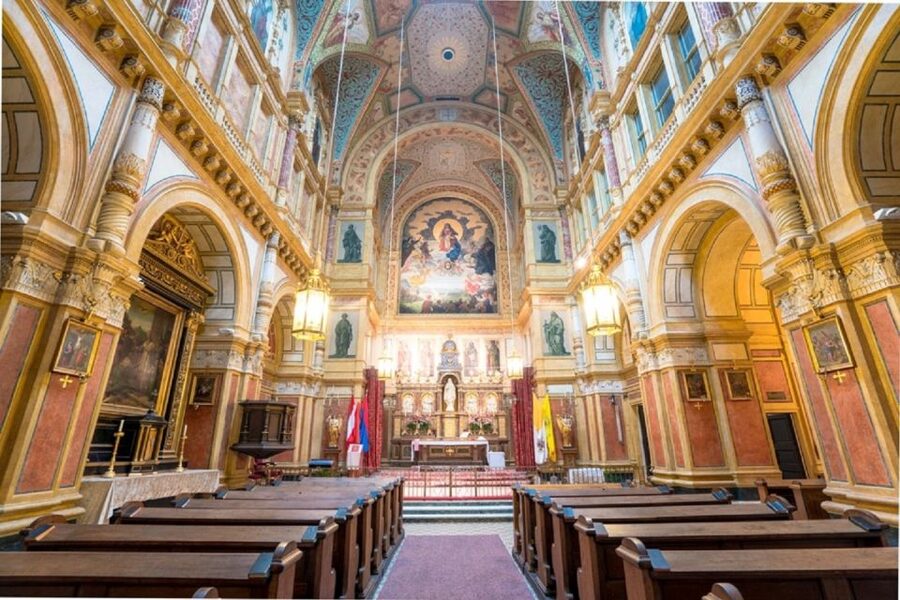
Entering Maria Schutz Church, Built in 1874, and Why It Replaced an Older Church
The visit begins in the church area with Maria Schutz Church, built in 1874 as a replacement for an older Capuchin (Cappuccine) church. Getting that bit of timeline early helps you read the building like a story, not just a backdrop.
Your guide then brings you into the interior of the church, which is where this tour earns its keep. Many visitors outside of guided visits never get the same level of explanation about what you’re seeing. Here, you get pointed attention on specific artworks and architectural choices, so you know where to look and why it matters.
One practical consideration: this is an indoor-focused tour, and churches are not always designed for speed. Plan to slow down a bit. You’ll get more from the explanations if you treat it like a thoughtful visit, not a checklist.
Camillo Sitte Altarpiece and Theophil von Hansen’s St Gregory the Illuminator Altar
This is the part I find most satisfying if you like art that has names attached. The guide points out an altar painting of St Mary’s protection of Armenia, painted by Camillo Sitte. It’s a powerful subject, and it is also a concrete way to connect faith with cultural identity.
Then you’ll encounter another notable altar dedicated to St Gregory the Illuminator, designed by Theophil von Hansen. If you recognize that name, it’s because von Hansen is the architect behind the Austrian Houses of Parliament in Vienna. That connection is valuable for you because it shows the same talent shaping major Vienna landmarks and a monastery’s sacred art.
Why this matters for your experience: when you link artists across locations, you stop seeing Vienna as isolated sights. Instead, you start seeing how style, patronage, and historical priorities traveled into different corners of the city.
The Loretto-Chapel’s Mary with the Rose After the 1683 Siege
From the main church focus, the tour moves to the Loretto-Chapel. The star here is the baroque miraculous picture Mary with the Rose. The story attached to it is intense: it was rescued intact from the perils of the Turkish siege of Vienna in 1683.
Even if you approach the story with a modern, respectful mind, the point is still clear. This is an artifact tied to survival, memory, and community belief during a historic crisis. It’s not just an image. It’s a physical anchor for a narrative that helped people endure.
In a practical sense, this stop is a good reset. After larger church art, a chapel tends to feel more personal and concentrated. You’ll get time for the guide’s interpretation, which is key because these details are exactly what make a guided visit worth paying for.
A different sort of Vienna day:
- Vienna: Schönbrunn Palace & Gardens Skip-the-Line Tour
★ 4.7 · 7,739 reviews - Vienna: Light of Creation Votive Church Immersive Light Show
★ 4.8 · 6,779 reviews - Vienna Spanish Riding School Guided Tour
★ 4.7 · 6,765 reviews - Vienna: Classical Concert in the World-Famous Musikverein
★ 4.6 · 6,673 reviews
The Refectory Painting of the Feeding of the Five Thousand
Next you pass through the monastery spaces toward the refectory. This room is special because it houses one of the most impressive painted works on the tour: The Feeding of the Five Thousand by Ludwig Ferdinand Schnorr von Carolsfeld.
A big advantage here is context. Seeing a painting in the setting meant for daily communal life changes how you read it. Instead of thinking about a masterpiece in a gallery, you understand it as part of a rhythm of feeding, discipline, and spiritual reflection.
The only drawback I’d flag is timing of attention. If you tend to rush, you might miss what makes the painting noteworthy in this setting. Slow down. Let the guide point you to what to notice.
Mekhitarists Museum and Library: Manuscripts, Newspapers, Coins, Carpets, and More
Now you hit the section that often becomes the emotional highlight: the Mekhitarists Museum and Library. This is where the tour becomes more than architecture and art. It becomes scholarship you can feel in your hands, at least through the artifacts and displays.
The library collection is described with jaw-dropping scale: more than 2,800 Armenian manuscripts and more than 170,000 volumes of Armenian publications, old and new. The tour also emphasizes that the library holds the largest collection of Armenian newspapers and magazines found in the Western world. For you, that means you’re not just seeing religious objects. You’re seeing records of daily life, politics, culture, and language across time.
What I like about this portion is how the guide builds layers. You don’t only get numbers. You get the meaning of why those numbers matter. A community’s survival is often made from documents as much as from prayers.
Beyond books: coins, ceramics, carpets, and Armenian artists
The tour also highlights the numismatic collection of coins, including 10,000 Armenian coins and 20,000 from other countries. That mixture is useful because it shows the Armenian story in a broader economic and historical map, not in isolation.
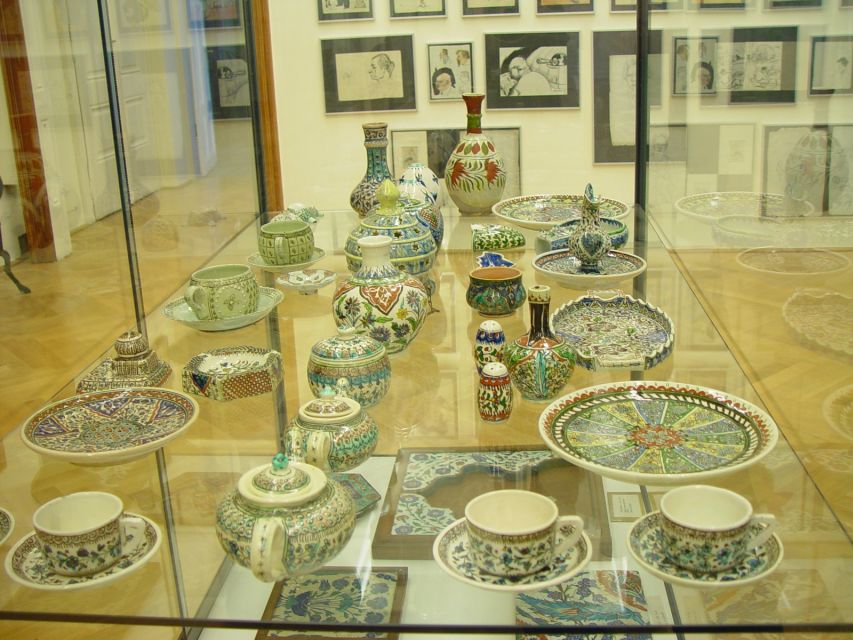
You’ll also see collections of ceramics and carpets, along with other items largely made in Armenian production. Even without a deep background in these crafts, you should come away with a sense that art and trade were not separate from identity.
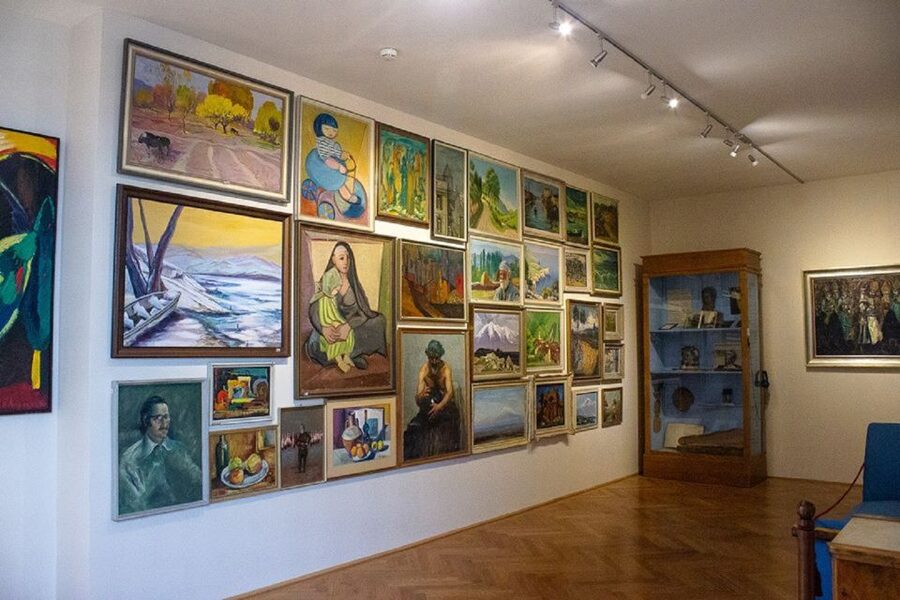
Then there’s the gallery of paintings by Armenian artists, including three paintings by Aivazovsky. This is a strong moment for you if you like recognizing names. It also helps connect the monastery’s cultural work with the wider world of European art.
Who Is the Guide, and Why Father Vahan’s Welcome Changes the Mood
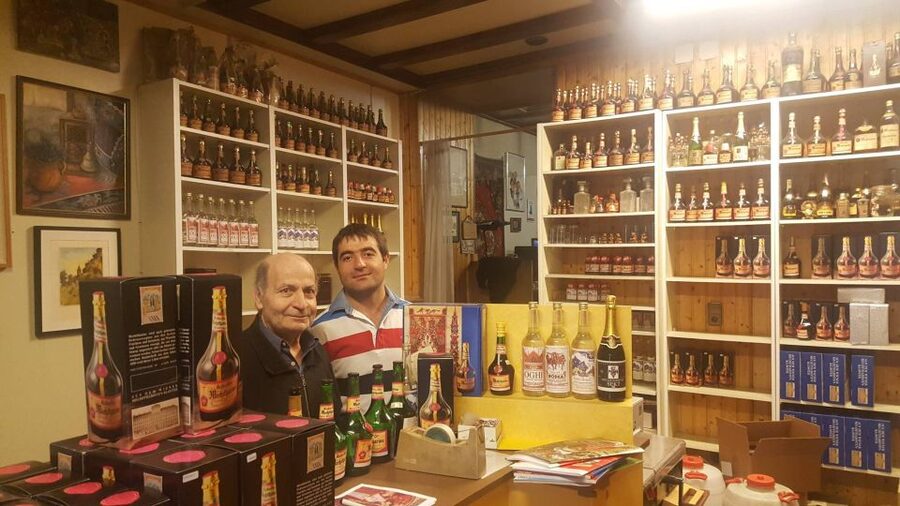
This tour stands out for atmosphere, and the guide is part of that. People specifically mention Father Vahan for being welcoming and for giving clear, direct answers during the walk through church, museum, and library. You’ll likely feel that warmth from the start, because the explanations land in a human way, not just a lecture.
One review included a memorable line said at the end, about the Armenian people adding an Armenian. I can’t verify the exact phrasing you’ll hear, but the spirit is consistent with what you’ll notice throughout: this is pride in culture, expressed with generosity.
If you are the kind of person who enjoys asking questions, this tour rewards you. The small group size helps keep things personal.
Mechitharine Liqueur Tasting, and What You Learn Beyond the Glass
The tour ends with a tasting of Mechitharine liqueur. This is not a random add-on. You’ll hear about the liqueur world, including its unique taste and history, plus the families and business behind it.
For a lot of visitors, a drink is an easy way to make the day memorable. For you, it can also be a final layer of cultural context. It’s one more way the monastery tradition connects to everyday life, not just historic relics.
Practical note: treat it like a tasting. You’re still in a travel mode with a 2-hour timeframe overall, so plan accordingly if you’re going to keep walking or taking transit right after.
Price, Timing, and How to Judge Value at $84 for 2 Hours
At $84 per person for 2 hours, this tour is not the cheapest way to spend time in Vienna. The value comes from what’s included and what’s actually inside.
You get:
- Entrance fees to the church and museum/library areas
- A live guide (Armenian, English, German)
- Liqueur tasting
You also get access to a focused set of experiences that would be hard to replicate on your own with the same level of pointed explanation. The scale of the library collections, the specificity of the artworks, and the named artists all support why the price is what it is.
Who it’s best for:
- You want Armenian culture in Vienna, not just a generic stop
- You enjoy art with real names and real stories
- You like libraries, manuscripts, and printed history
- You prefer small group tours where you can ask questions
Who might skip it:
- You want a broad overview of Vienna in a short time, with lots of streets and viewpoints
- You strongly prefer outdoor sightseeing only
Practical Details That Help You Show Up Ready
You meet in front of the main entrance of the Mekhitarist Monastery. Plan to arrive a few minutes early so you can settle before the guide starts. The tour runs 2 hours, and it moves from church to chapel and refectory, then into the museum and library, finishing with the liqueur tasting.
Languages offered by the guide include Armenian, English, and German. If you care about understanding every detail, pick your language carefully. This kind of tour is detail-heavy, and the guide’s explanations are part of the core value.
Should You Book This Vienna Small Armenia Tour?
Book it if you want a compact, well-guided look at Armenian history and culture in Vienna, inside the Mekhitarist monastery. You’ll get meaningful access to Maria Schutz Church, the Loretto-Chapel, a major reffetory painting, and the Mekhitarists Library with its huge Armenian manuscript and newspaper holdings. The liqueur tasting is the friendly finishing touch.
I’d skip it if your priority is broad Vienna highlights, because the focus is one site and its collections. But if you want something distinctive, educational, and unexpectedly moving, this is an easy yes.
FAQ
How long is the Vienna Armenia In The Heart Of Austria tour?
The tour lasts 2 hours.
How much does the tour cost?
The price is $84 per person.
Where do I meet the tour group?
Meet in front of the main entrance of the Mekhitarist Monastery.
What’s included in the price?
The tour includes entrance fees, guide service, and a liqueur tasting.
What languages is the live guide available in?
The guide offers Armenian, English, and German.
What will I see during the tour?
You’ll visit Maria Schutz Church (including its interior), the Loretto-Chapel with the Mary with the Rose picture, areas including the refectory, and the Mekhitarists Museum and Library, featuring major Armenian collections like manuscripts and publications, plus the museum’s coin, ceramics, carpets, and paintings, and then end with a Mechitharine liqueur tasting.
Latest Vienna reviews
- Private tour of Hallstatt and Salzburg through beautiful Alps★ 5.0 · 3 reviews
- Vienna: Vienna under the Nazis, Private Walking Tour★ 1.8 · 3 reviews
- Magical Vienna Christmas Market Tour – 2 Hours★ 2.7 · 3 reviews
- Vienna: Mythos Mozart Experience Ticket& Guided Walking Tour★ 2.5 · 3 reviews
- Vienna: Private tour Mauthausen and Linz★ 4.1 · 3 reviews
- Vienna Private Schönbrunn Palace Tour, Extra Rooms and Gardens★ 5.0 · 3 reviews
- Schoenbrunn Palace Skip-The-Line and Vienna Highlights Private Tour★ 4.5 · 3 reviews
- Skip-the-line Belvedere Palace Guided Tour with Transfers★ 5.0 · 3 reviews
Tours, compared.
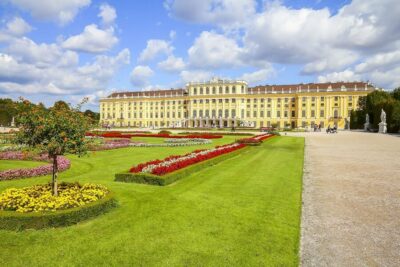
Schönbrunn Palace & Gardens Skip-the-Line Tour
Read our review →
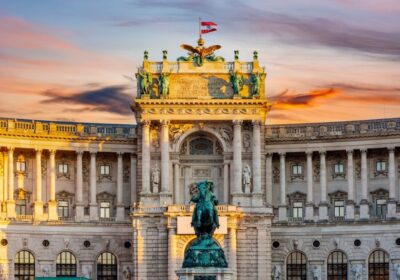
Skip-the-Line Sisi Museum, Hofburg and Gardens Tour
Read our review →
Skip-the-Line Schönbrunn Palace & Gardens Tour
Read our review →
Guided Walking Tour of City Center Highlights
Read our review →