
Reviewed · HOFBURG PALACE & SISI MUSEUM
Vienna: Imperial Treasury in the Hofburg Palace
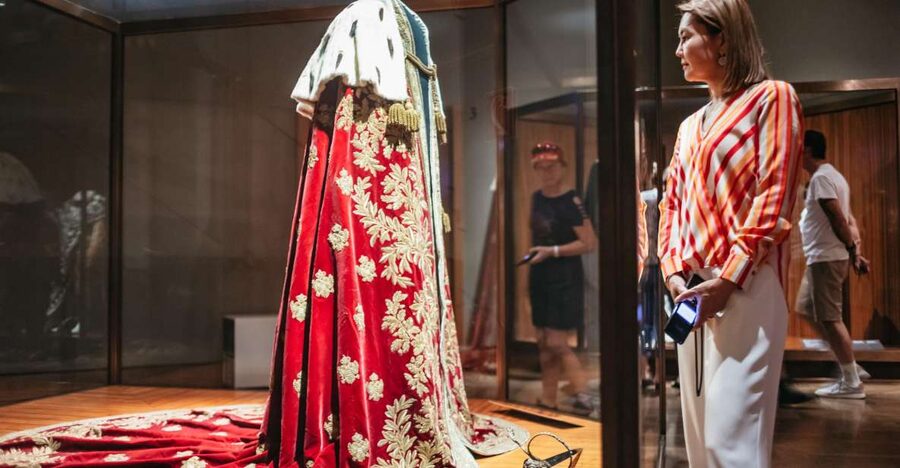
If you like objects that prove power was built in gold, glass, and stone, this is Vienna’s big moment. The Imperial Treasury lives in the oldest part of the Hofburg Palace, the Swiss Wing, and it strings together Habsburg wealth across centuries in one focused run of rooms.
I especially like the way the displays make the Habsburg story tangible. You get to stare at the Austrian Imperial Crown and the Holy Roman Empire regalia in the same breath, then shift to court jewels from Empress Elisabeth. One possible drawback: you will need to plan for ticket hassle, since a voucher and ticket counter steps can mean extra standing in line.
Key things to know before you go
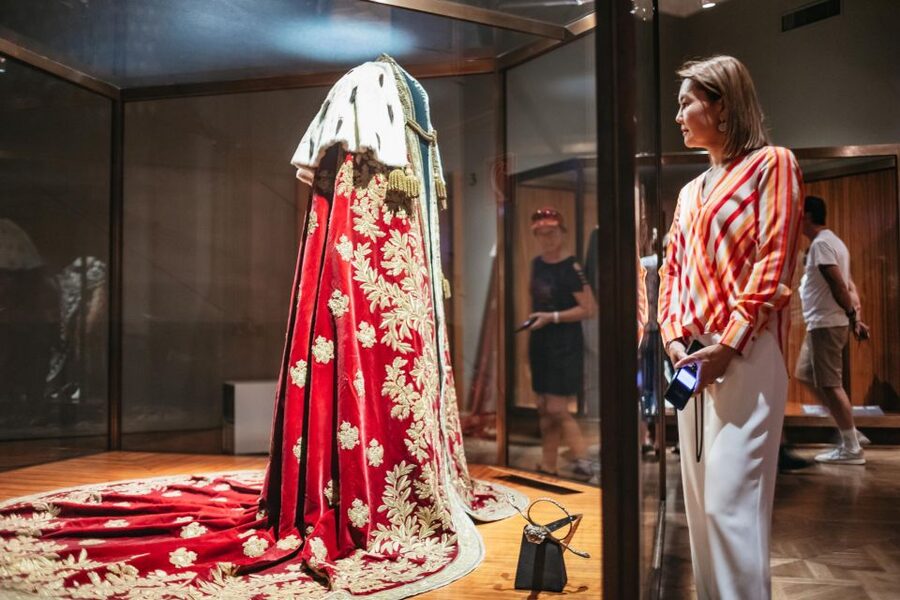
- Hofburg Swiss Wing setting keeps the experience in Vienna’s most “old palace” atmosphere
- Austrian Imperial Crown connects the Habsburgs to Holy Roman regalia
- Gem highlights include extremely famous emerald pieces and standout cut stones
- Legend items like the Holy Grail agate bowl, the horn of a unicorn, and the Holy Lance
- Small group feel with a limit of 10 participants, plus a visit that most people finish in about an hour to 1.5 hours
Hofburg Swiss Wing: why this treasury room feels special
The Imperial Treasury is not trying to be a huge, spread-out museum. It is a tight, high-impact collection in the Swiss Wing of the Hofburg, so you keep moving through eras without getting lost in empty hallways.
What makes it work is the mix of categories. You see court jewels, imperial regalia, and religious relics side by side. Then you also get legendary items that sound like they belong in a storybook, but they are presented as part of the collection.
More of the Hofburg and the Sisi rooms:
- Vienna: Skip-the-Line Sisi Museum, Hofburg and Gardens Tour
★ 4.8 · 5,918 reviews - Vienna: Hofburg and Empress Sisi Museum Guided Tour
★ 4.7 · 1,460 reviews - Vienna: Skip-the-Line Hofburg and Empress Sisi Museum Tour
★ 4.8 · 801 reviews
Price and timing: what you should budget for
The ticket price is $18 per person, and the experience is set as a 1-day entry. In practical terms, you should plan about 1 hour to 1.5 hours to see the essentials at a comfortable pace.
If you are the type who reads every label, pauses for details, and listens closely to explanations, give yourself more time. Several people loved the objects so much that they kept going past the fast viewing pace, especially when using an audio option.
Also, consider that this is not a guided tour by default. The ticket covers entry, and you can bring your own guide if you want a human thread through the collection.
Entering the Imperial Treasury rooms: what your visit flow should look like
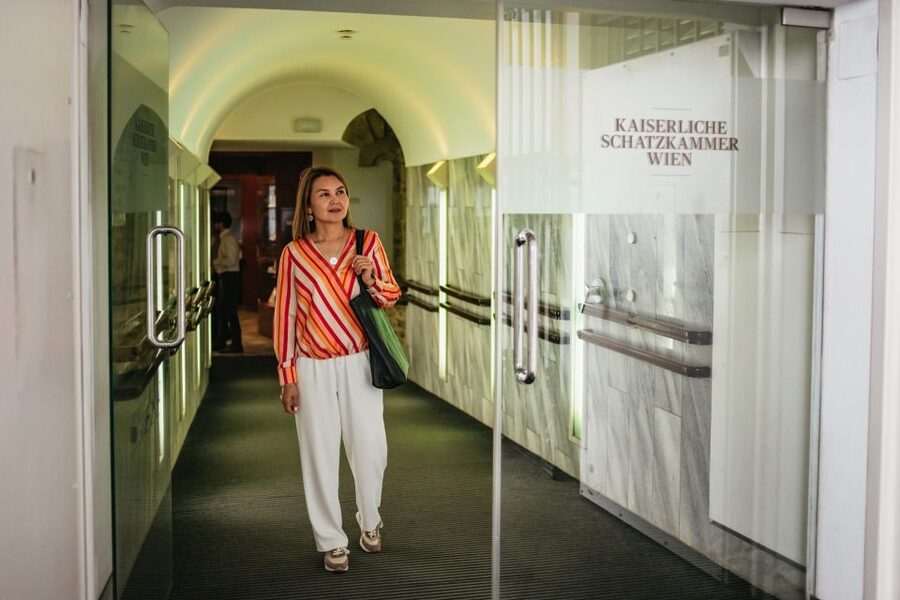
A good way to approach this collection is to think in “chapters,” even though you are walking through one continuous exhibit.
First, look for the sections that frame imperial identity: crowns, regalia, and authority symbols. Then shift into the gemstone and jewelry rooms, where the “wow” factor comes from size, cutting, and craftsmanship. Finally, end with the religious and legendary objects, which tend to land hardest if you let your eyes adjust after the glitter.
Even if the palace corridors around the museum feel confusing, once you are in the exhibition area, the layout generally works. People often describe the route as easy to navigate, and the displays are clearly marked once you find the right entrance area.
The Austrian Imperial Crown and Holy Roman regalia
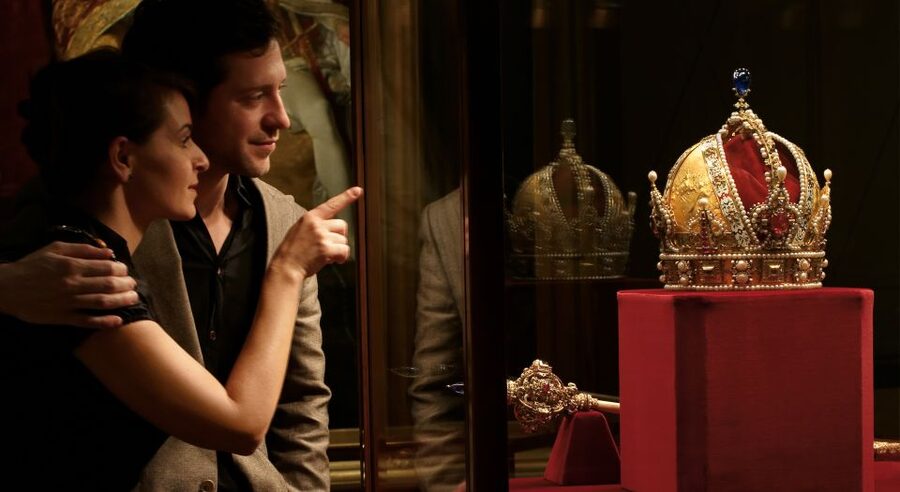
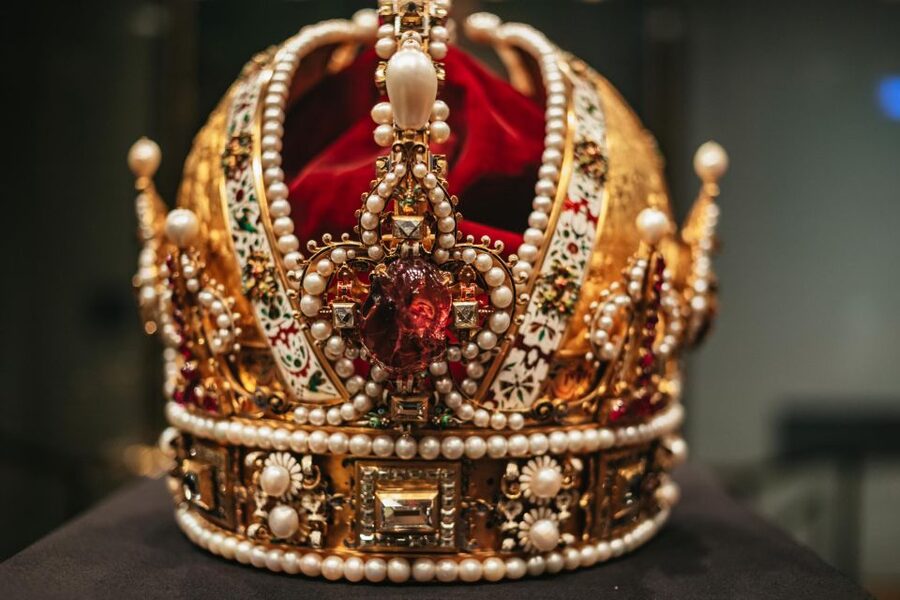
The headline jewel is the Austrian Imperial Crown, and it is shown as part of the Holy Roman Empire crown jewel story. That matters because it turns the crown from a standalone object into a symbol of political reach and continuity.
Look at it closely even if you have seen crown photos before. In real life, crowns like this are about construction and proportions, not just shine. The setting helps too: you are not looking at a crown in a vacuum, you are looking at it as the center of a collection.
This is one of the most frequently praised aspects for a reason. People consistently call it impressive, spectacular, and a must-see part of the Hofburg experience.
More days in Vienna:
- Vienna: Vivaldi’s Four Seasons Concert in Karlskirche
★ 4.7 · 14,951 reviews - Vienna: Spanish Riding School Training
★ 3.9 · 9,281 reviews - Vienna: Skip-the-cashier-desk-line Giant Ferris Wheel Ride
★ 4.5 · 7,859 reviews - Vienna: Schönbrunn Palace & Gardens Skip-the-Line Tour
★ 4.7 · 7,739 reviews
Empress Elisabeth jewelry fragments and the big gemstone moments
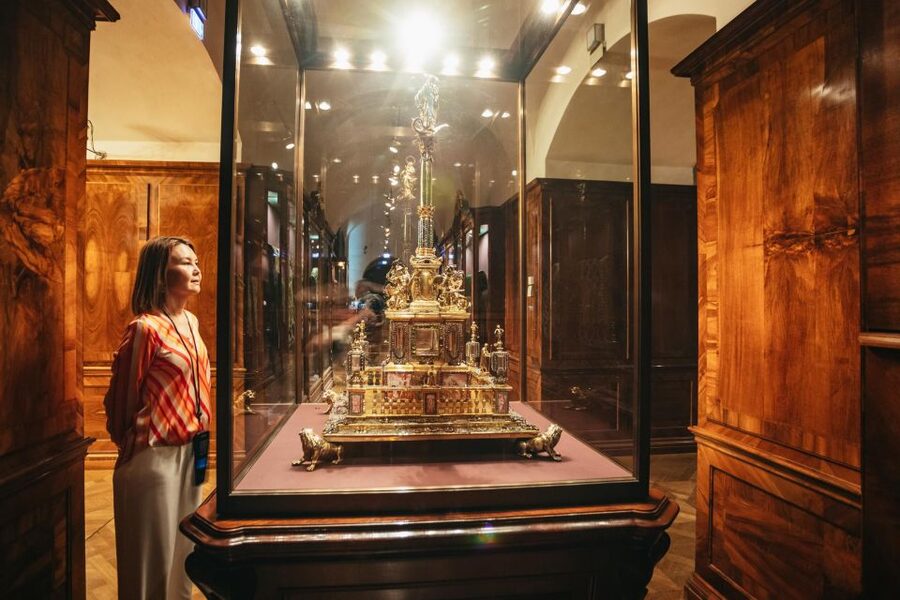
One of the most compelling parts of the treasury is how it moves from royal power to personal style. You can see jewels and diamonds, including parts connected to Empress Elisabeth’s original jewelry.
That’s a smart shift for your attention span. After the formal world of crowns and state regalia, Elisabeth’s pieces bring a more intimate kind of beauty. It also helps you understand that imperial identity was worn, not only displayed.
Gemstone highlights are a major reason people come. Expect to see extremely famous emerald pieces, including mentions of one of the largest emeralds in the world and the largest cut emerald in the world. The point is not just size, but the way different cuts change how light moves across the stone.
Legendary objects: Holy Lance, Holy Grail, and the unicorn horn
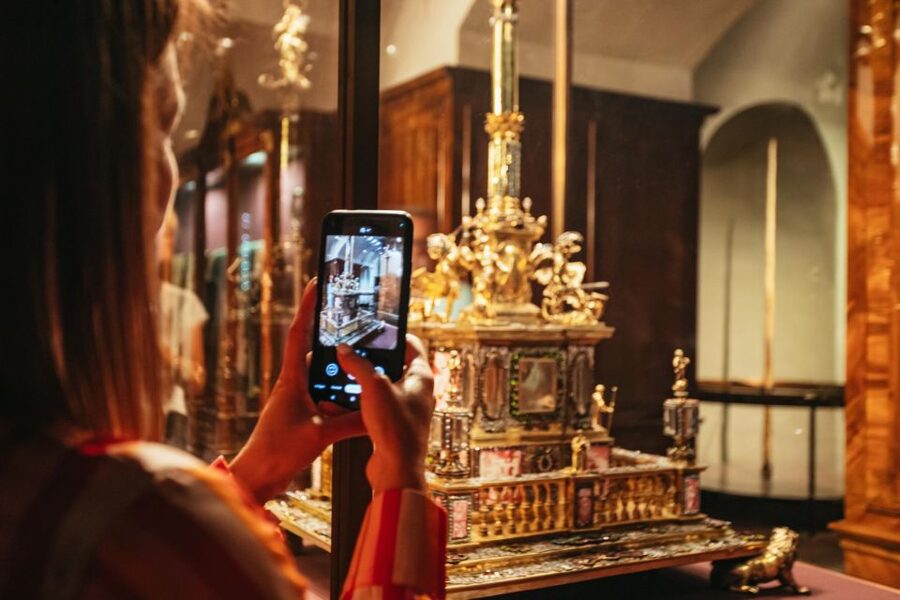
If you want objects that feel like legend made solid, this is where the collection gets fun. Among the most talked-about items are legendary treasures such as the Holy Lance from the 8th century, the world’s largest agate bowl known as the Holy Grail, and the horn of a unicorn.
Now, keep your expectations grounded. This is a museum display, so the objects are presented as part of the treasury tradition. What you get is the cultural idea, the craftsmanship, and the way power and belief were bundled together for centuries.
I like how these items change the mood. After crowns and jewels, you slow down and ask different questions: Why were these objects collected? How did people interpret them? The display style makes it easy to transition from dazzled to curious.
Order of the Golden Fleece: chivalry that shows up in gold and enamel
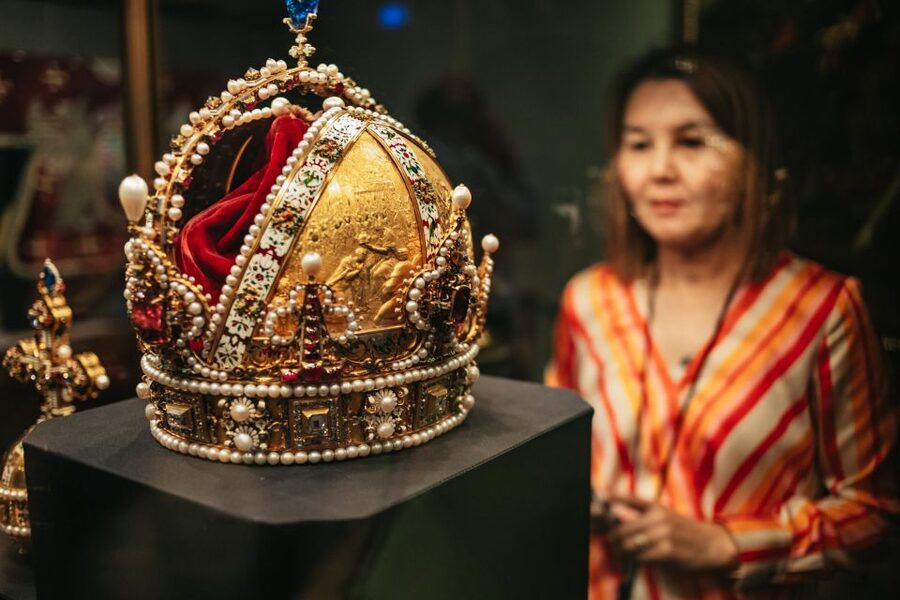
The treasure of the Order of the Golden Fleece is another strong stop. It is exactly the kind of item category that helps you read the collection faster because it follows clear signals: insignia, insignia-like structures, and ceremonial identity.
This is one of those areas where you can connect the dots. You are seeing how an order of chivalry became part of how the ruling class presented itself. It is status in wearable form.
15th-century Burgundy pieces and Napoleon II’s cradle
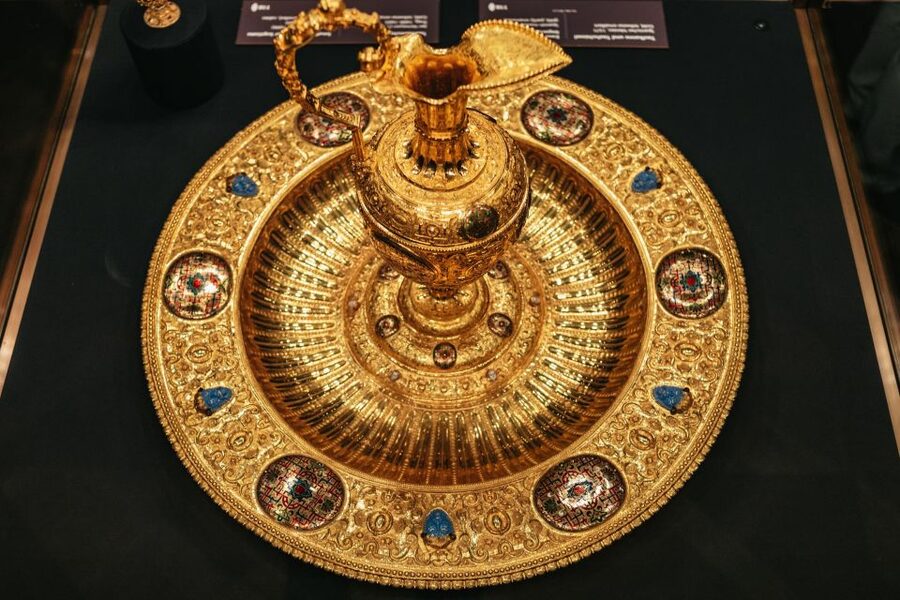
The treasury does more than glitter. You also get historical variety, including collections tied to 15th-century Burgundy. That broadens the story beyond a single dynasty and gives you a sense of how courts absorbed styles and artifacts from elsewhere.
Another standout is the cradle of the King of Rome, Napoleon II. It is a reminder that European political drama did not stay in one timeline. Even in a palace treasury, the collection can reflect shifting claims to legitimacy.
The small details that make the treasury feel real
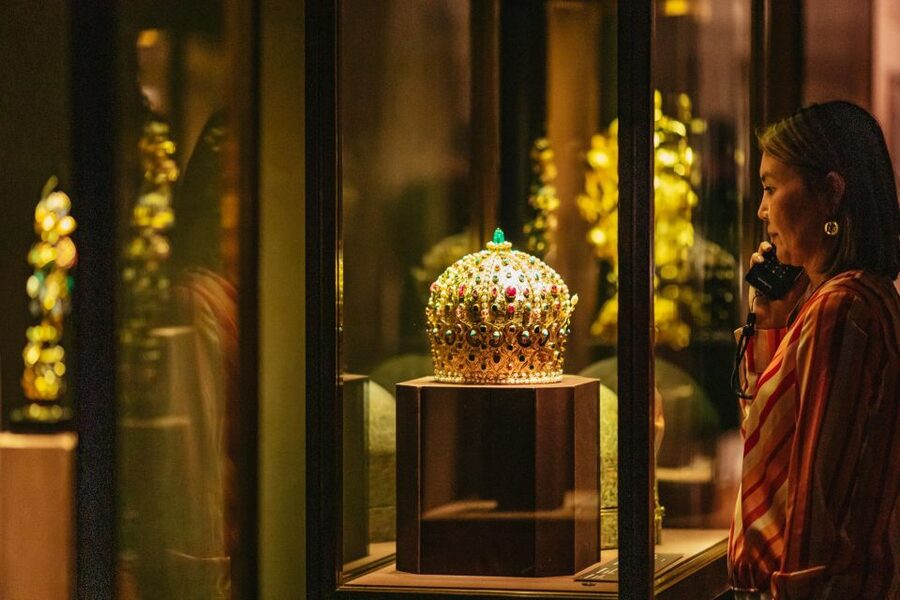
The headline objects get the photos, but the small items are what help the museum feel human.
One review highlighted chamberlains’ keys and tabards as unexpectedly interesting. I love that kind of detail because it moves the focus from royal display to daily ceremonial life. Keys, clothing fragments, and staff-related objects are how you feel the machinery behind authority.
So when you are walking, don’t just hunt crown-shaped displays. Take a minute at labels and look for the items that explain how court systems actually ran.
Audio guide and self-guided time: choose your pace
Audio guide is listed as not included with the ticket, but the option of using an audio headset is something many visitors praise. People noted that audio can add helpful context and make the visit more complete.
Here’s the practical tradeoff. If you use audio heavily and listen to everything, you might turn a quick visit into a longer one. That can be great, but if you only have a tight schedule, you may prefer a more label-based approach and skip the longest segments.
My advice: if you care most about the big iconic pieces, go self-guided and give yourself a timed pace. If you want a deeper understanding, use the audio for the sections that explain the symbolism behind crown and relic items.
Ticket logistics: printed voucher, QR code exchange, and where time goes
This is the part that can slow you down.
Your ticket booking requires a printed voucher. If you arrive without the printed document, you may end up sorting it out at the counter. Some visitors also reported that they had to stand in a ticket line to exchange a QR code for actual tickets, which makes the “skip-the-line” benefit less clear.
So do this: arrive with extra buffer time. If you are planning lunch or museum hops right after, treat the treasury entrance as a bottleneck.
Also, the palace area can feel confusing at first. One review complained about poor signage around the palace grounds. I recommend that you decide your exact meeting route before you go, so you do not waste your ticket time walking in circles inside a huge complex.
Accessibility and group size: what to expect on the ground
The experience is wheelchair accessible, and that matters because palace interiors can be tricky. It also is offered as a small group limited to 10 participants, which generally helps the visit feel calmer and less like a cattle line.
If you prefer a quick, focused museum moment rather than a long lecture, this format fits well. People often describe the visit as relatively quick, with around an hour or so being enough to see the main displays.
Who this Imperial Treasury visit is best for
This is a strong choice if you are into:
- Crown jewels and royal regalia, especially if the Habsburgs and Holy Roman Empire connect for you
- Gemstones and the craft behind historic cutting and setting
- Religious relics and legend items, including the Holy Grail agate bowl and horn of a unicorn
- People who want a high-impact museum visit that does not require half a day
It is less ideal if you need lots of room to wander freely for hours, or if you are extremely sensitive to low light. One review noted that the lighting could be hard for seeing details clearly. If that affects you, plan short pauses and do not force yourself to read every tiny label.
Book or skip? My honest recommendation
I would book this if you want a concentrated dose of Viennese imperial drama in one place. For $18 and about 1 day entry, you get a real mix of crowns, court jewelry, gemstone showpieces, and relic legends in a compact run.
I would hesitate only if you hate ticket counter lines or you are traveling with very tight timing. The printed voucher requirement and the possibility of QR code ticket exchanges can cost time, even if the exhibit itself is quick.
If you are balancing options in Vienna and want the one museum stop that screams monarchy without dragging on forever, this is a solid pick.
FAQ
Where is the meeting point for this experience?
The meeting point is the Swiss Wing in the Vienna Hofburg Palace.
How long is the visit?
It’s valid as a 1-day entry. Many visitors finish the experience in about an hour to 1.5 hours.
How much does it cost?
The price is $18 per person.
What’s included in the ticket?
The entrance ticket is included.
Is an audio guide included?
No. The audio guide is not included.
Do I need a printed voucher?
Yes, a printed voucher is required.
Is the experience wheelchair accessible?
Yes, it is wheelchair accessible.
Is this a guided tour?
A guided tour is not included. You can come with your own guide.
Is there a small group limit?
Yes, it is limited to 10 participants.
Can children get free admission?
Children and young people under 19 generally enjoy free admission.
Latest Vienna reviews
- Vienna Food Tour: Dishes, Wine, Street Food & Culture★ 4.7 · 12 reviews
- eBike Vienna 90min guided tour – use ebike for the whole day★ 4.0 · 13 reviews
- A box for a romantic walk in the city center of Vienna★ 5.0 · 13 reviews
- Vienna: mumok Museum of Modern Art Entry Ticket★ 3.8 · 13 reviews
- Vienna: Austrian Wine Tasting★ 4.8 · 13 reviews
- Bratislava Private Tour from Vienna★ 4.5 · 13 reviews
- Private One Day Trip to Bratislava from Vienna★ 4.5 · 13 reviews
- Best of Vienna Tour in TUK TUK!★ 5.0 · 14 reviews
Hofburg Palace & Sisi Museum, compared.

Skip-the-Line Sisi Museum, Hofburg and Gardens Tour
Read our review →
Skip-the-Line Hofburg and Empress Sisi Museum Tour
Read our review →
Combo Ticket: Kunsthistorisches Museum & Imperial Treasury
Read our review →
“Sisi’s Amazing Journey” Virtual Reality Experience
Read our review →
Imperial Treasury & New Hofburg Palace Combo Ticket
Read our review →
New Hofburg Palace Audio-Guided Tour & Entry Ticket
Read our review →
Skip-the-Line Sisi Museum, Hofburg and Gardens Tour Vienna
Read our review →Browse the lists this tour appears in