Reviewed · TOURS
Vienna: Sightseeing Tour in an 8 seats electric classic car
Seeing Vienna from an electric old-timer is an easy way to feel the city without the usual walking fatigue. I like that you get driver audio commentary while you glide past the major sights, and it stays relaxed even if the weather turns. One drawback to plan for: the back seats can make it harder to hear, especially if you are facing the wrong way.
This tour is built for comfort and for keeping the group together. It is also surprisingly fun when the driver brings energy, including lighthearted moments at the meetup that set the tone right away. If you care about crystal-clear explanations, sit closer to the front where you can follow the story without straining.
What You Get in This 60-Minute Electric Car Sightseeing Ride
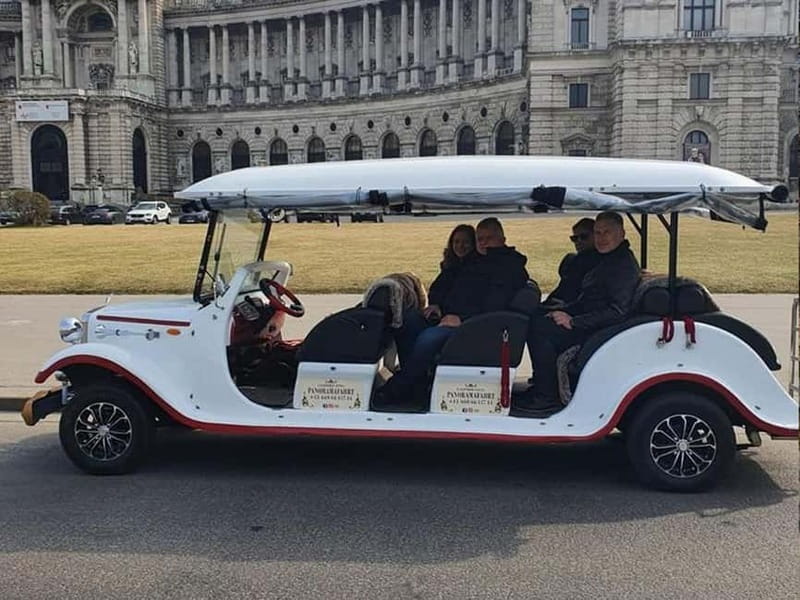
- An emissions-free classic-car style tour through the center, with an easy pace.
- Audio commentary by your driver, in English or German, so you get context, not just landmarks.
- A single compact route that hits big-city icons and postcard details in about one hour.
- Family-friendly group time, with seating described as up to 8, and notes about up to 10 people, so confirm your exact group size when booking.
- All-weather sightseeing, because you are not doing a long walking day.
- A return to the same area, making it simple to continue your evening around the Albertina and historic core.
A 60-Minute Vienna Loop in a Classic Electric Car
This is the kind of tour I recommend when you want the overview fast, without turning Vienna into a marathon. In one hour, you are driven through the areas most people picture when they hear Vienna: grand boulevards, imperial buildings, and the old-town landmarks you recognize even from photos.
The key idea is the ride itself. The electric power keeps the experience clean and quiet enough to make the narration enjoyable. The car also gives you consistent views of the streets and facades as you roll by, so you can actually connect what you hear with what you see.
And you do not need perfect weather. Rain, cold, or heat are still real, but you are mostly staying covered and moving at a steady pace.
More days in Vienna:
- Vienna: Vivaldi’s Four Seasons Concert in Karlskirche
★ 4.7 · 14,951 reviews - Vienna: Spanish Riding School Training
★ 3.9 · 9,281 reviews - Vienna: Skip-the-cashier-desk-line Giant Ferris Wheel Ride
★ 4.5 · 7,859 reviews
Where the Tour Starts: Cafe Mozart and the Albertina Neighborhood
Your tour starts and ends at Cafe Mozart, Albertinaplatz 2. The meeting point is Herrengasse 12, in front of the Radisson Blu Hotel, which is in the same Albertina-adjacent zone, so you are not crossing the city to begin.
I like this setup because it anchors you in the heart of things. The Albertina area is practical: you can grab coffee before the ride, and after the loop you can keep exploring on foot with a strong sense of direction.
If you are traveling with kids or a multi-generation group, this kind of central starting point matters. Less time spent figuring out transit means more time spent seeing Vienna.
The Big Showpiece Streets: Albertina, Ringstraße, and the Operatic Skyline
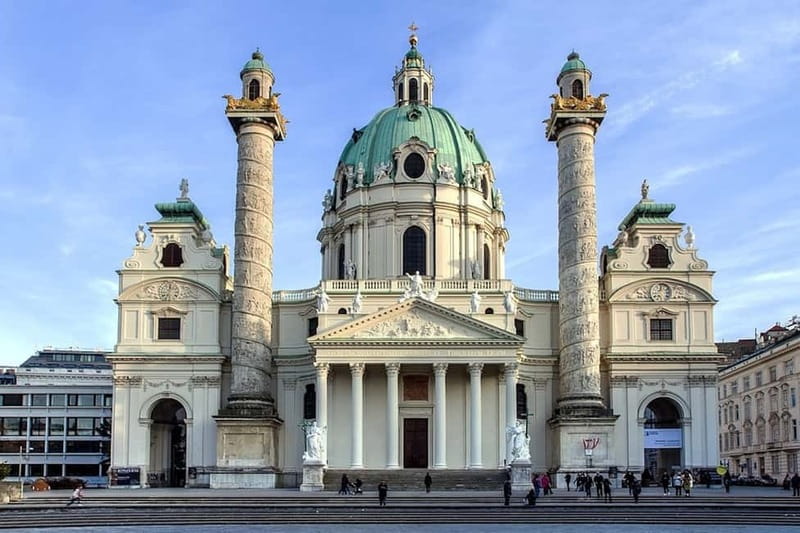
The route has a classic Vienna backbone, and the first big payoff is the Ringstraße corridor. This is where the city puts its most theatrical face forward, with long stretches of impressive architecture, monuments, and cultural institutions.
From your car, you can look for the way Vienna “changes costumes” as you move along. You start with the Albertina area, then roll toward the grand boulevard and the major cultural institutions that make the Ringstraße feel like a moving museum.
On this tour, you pass highlights tied to the arts and theater world, including:
- Albertina as your starting anchor
- Staatsoper (State Opera), a must-see even if you are not catching a performance
- The Ringstraße itself, often described as the longest boulevard-style street in the world, and it helps to see it from the road to understand the scale
- Akademie der bildenden Künste (Academy of Fine Arts) and nearby cultural facades
- Palais Schy, plus the cluster of statues and memorials that give the route personality
I especially enjoy seeing the monuments in context. You might have read names like Goethe and Schiller before, but when you spot Goethe Denkmal and Schiller Denkmal along the way, they feel less like textbook entries and more like part of how Vienna frames identity.
From here, the narration typically flows into the parks and museum edge of the Ringstraße mood. You go through areas such as Burggarten, where the gardens sit close to the ceremonial core, and you can spot features like Palmenhaus and Schmetterlingshaus. Even from a car, it helps to clock where these spaces sit relative to the major buildings.
Practical tip for this section
If you want the best “wow” moments from this portion of the loop, try to position yourself for clean lines of sight to the boulevard. The front half of the car is usually easiest for spotting details, and it also tends to make hearing better.
A different sort of Vienna day:
- Vienna: Schönbrunn Palace & Gardens Skip-the-Line Tour
★ 4.7 · 7,739 reviews - Vienna: Light of Creation Votive Church Immersive Light Show
★ 4.8 · 6,779 reviews - Vienna Spanish Riding School Guided Tour
★ 4.7 · 6,765 reviews - Vienna: Classical Concert in the World-Famous Musikverein
★ 4.6 · 6,673 reviews
Imperial Vienna in Motion: Hofburg, Heldenplatz, and the Museums of Power
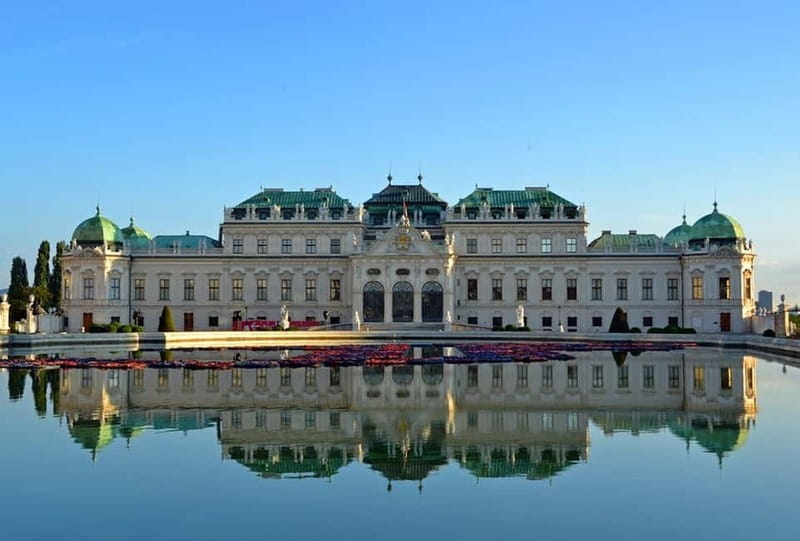
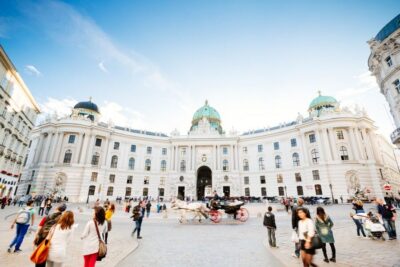
Once the tour turns from grand boulevard energy to imperial gravitas, you hit the Hofburg orbit. This is where Vienna stops feeling like a collection of buildings and starts feeling like a seat of government, ceremony, and tradition.
From the car, you can take in:
- Heldenplatz and the adjacent ceremonial approach
- Hofburg, the imperial palace complex
- Nationalbibliothek (Austrian National Library)
- Welt Museum (world-focused museum building)
- Burgtor and nearby gates and transitions, including neues Burgtor
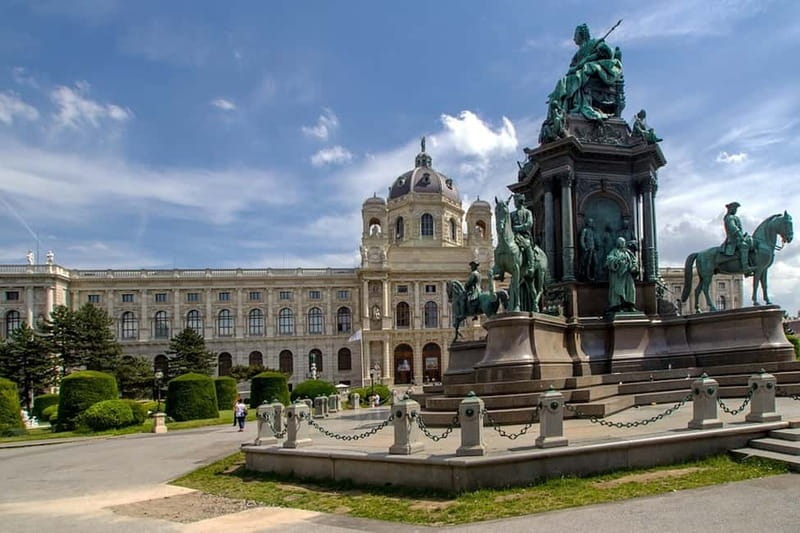
This part of the route is also where statues and civic symbolism show up clearly. You will pass Prinz Eugen Statue, Erzherzog Karl Statue, and Maria Theresia Statue. I like these because they turn “history” into visible material. You are not just hearing names. You are seeing how Vienna places those figures in the city’s visual story.
You also get a snapshot of the museum-and-arts block where major institutions sit close to the imperial center, including Naturhistorisches Museum and Kunsthistorisches Museum. Even without going inside, you can learn what people mean when they say Vienna is all about design discipline and long views.
What this section means for you
If you only have a short amount of time, this imperial chunk is the best use of it. It condenses the biggest “Vienna identity” images into one loop. You come away with the mental map you need to navigate the rest of your trip with less guesswork.
From Parliament to Concert Halls: Rathaus, Musikverein, and Grand Hotel Vienna
After the imperial core, the route widens again into civic and cultural Vienna. This is where your car ride becomes a tour of systems: government buildings, educational institutions, and the venues that define Vienna’s music brand.
Key sights on this portion include:
- Parlament
- Burgtheater
- Rathaus (City Hall)
- Universität (the university area)
- Liebenberg Denkmal
You also pass through a stretch associated with Vienna’s famous music life. Look for the cluster around Schwarzenberg Platz, and the cultural landmarks that include the Musikverein. This is one of those moments where you might already have heard of the venue, but seeing it in real street context makes it stick.
Along the way, you will also pass grand hotel icons such as Hotel Imperial, Grand Hotel, Hotel Bristol, and Hotel Sacher. I like that the tour does this, because it shows another layer of Vienna: the city as a meeting place for decades of visitors, dignitaries, and performances.
And if you like orchestral culture, you may also spot Kursalon Hübner and get close to Café Schwarzenberg. This is the Vienna that feels like it has a program running even when you are just sightseeing.
Old Town Details You Can Actually Spot: Stephansdom, Wollzeile, and the Historic Stream
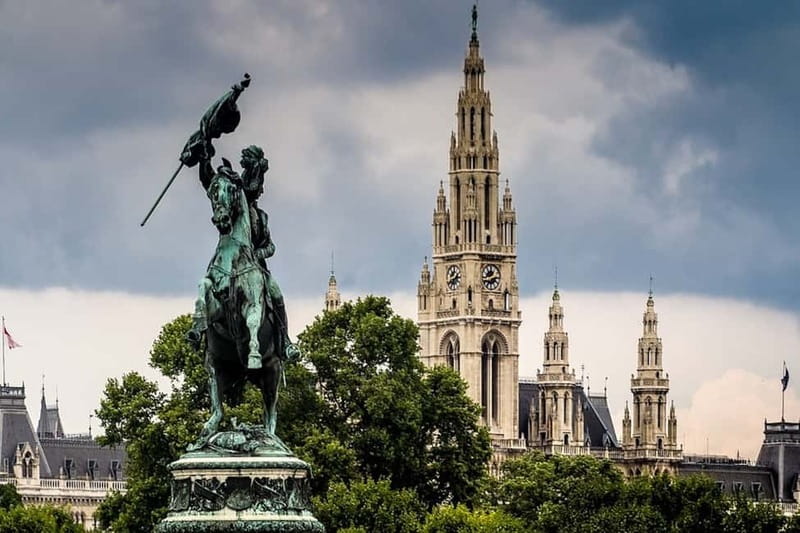
Vienna’s old town is where the city gets intimate, and this tour gives you that shift. Even though you are riding, the route still includes the historic core streets where you can connect church-and-market Vienna with the larger ceremonial roadways outside.
Some of the standout old-town landmarks on this loop include:
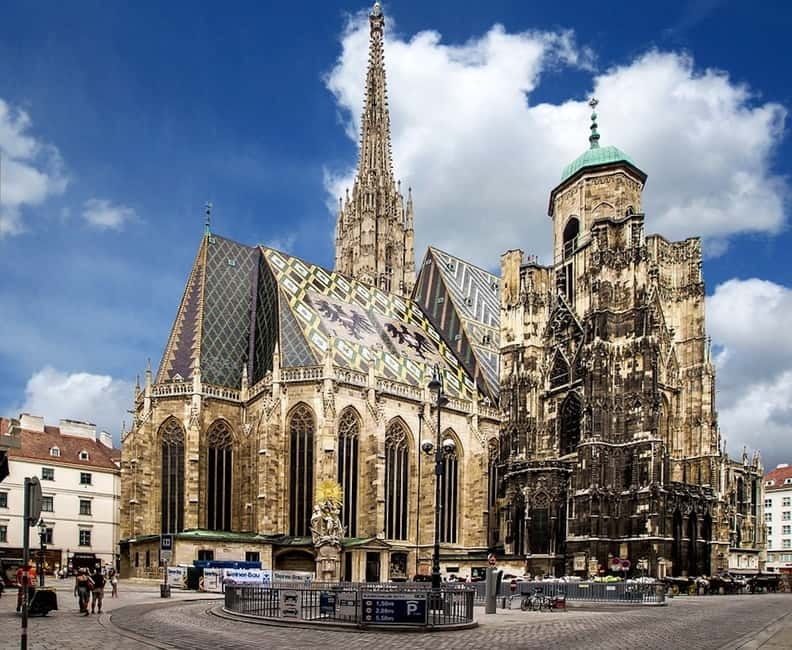
- Stephansdom (St. Stephen’s Cathedral), the visual anchor for so much of Vienna
- Wollzeile
- Am Hof
- Hohe Brücke
- Salz Gries
- Marc Aurel Straße
- hoher Markt
- Hochzeitsbrunnen
- Ankeruhr
- Stadtpark, plus Johann Strauss Denkmal
- Kursalon Hübner again, as the music and promenade mood returns
I especially like the old-town details like Ankeruhr and Hochzeitsbrunnen. They are the kind of things you might miss if you are only scanning big sights. From a car, you can clock them as “there it is,” and that helps when you later decide where to walk on your own.
This is also where you can sense the city’s layered past, including references to alte Stadtmauer and places that connect to historic walls and older urban fabric. Even if you do not go inside any buildings, the streets and transitions give you clues about how Vienna expanded.
The In-Between Stops: Squares, Palaces, and Small Street Stories
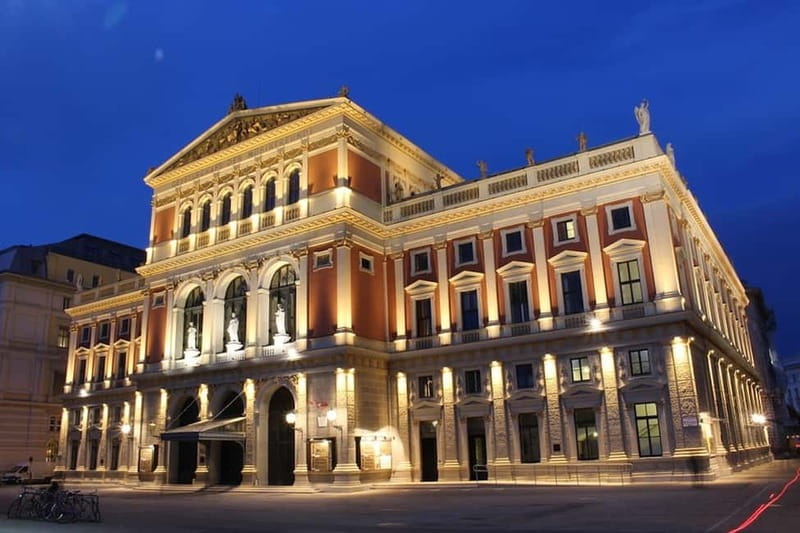
A big part of what makes this tour feel worth it is that it does not only do the big-ticket photo spots. The route includes plenty of palaces and institutional buildings that help you understand why Vienna looks the way it does.
Examples you will pass include:
- Palais Epostein
- Präsidentenpalast
- Palais Harrach
- Palais Daum Kinski
- Palais Ferstl, with Café Zentral noted as part of the location mix
- Palmenhaus and Schmetterlingshaus near the garden areas
- References to Beethovenhäuser, plus other location notes like drei Mädel Haus
This kind of stop matters because Vienna’s identity lives in the facades. The story is not only in names, it is in building style and street placement. When you connect the narration to what you see outside the window, the city starts making sense.
One practical note: on a car tour, you are not going to linger at each location. That is not a flaw. It is the point. You get the orientation and the key impressions in a tight time window, then you can return later to whatever you care about most.
How to Sit for Better Hearing in an 8-Seat Old-Timer
This is the one detail I would treat as important. The car is small, and the narration is delivered by the driver with audio commentary. In a tight vehicle, position matters.
If you sit in the back rows, you may find it harder to hear. There is also a consideration for seats that face away from the driver, where it can be tougher to catch the explanation. The solution is simple: choose the front seats if you can, especially if you want full comprehension rather than partial.
Also, if you are traveling with a group that includes people who need clear audio, prioritize seating with the best view and sound. It makes the difference between a fun overview and an okay one.
Price and Value: Is 259 Per Group Worth It?
The price is $259 per group up to 8, for one hour. On paper, that can feel like a lot if you are thinking in per-person terms. But I think the value works out best when you do the math like this:
- You are paying for a private group experience, not shared transit with strangers.
- You are paying for guided context without the time cost of multiple bus or tram rides.
- You get an efficient way to see a lot of key locations in one go, which can save you energy for the parts you will walk later.
Where the money tends to feel most worth it is for families, friend groups, and travelers who want a calm start. If you are in a bigger group and everyone benefits from not having to walk constantly, this can be a smart use of limited time.
If you are traveling solo or as a couple, it can still be a great way to get orientation, but the per-person cost will naturally be higher than group-sharing options. In that case, I would ask yourself whether you want guidance or whether you are comfortable building your own route.
Who This Tour Fits Best
This tour is a strong match if you:
- Want a short, guided overview of central Vienna
- Prefer sitting and rolling rather than doing lots of walking
- Travel with a family group and want everyone together
- Care about hearing the story while seeing the sights, not just reading signs
- Need an option that works no matter the weather
It is not a perfect match if you are the type who needs to stop, photograph up close, and linger in each spot. This is a drive-and-learn style experience. It is built for impressions and orientation.
Should You Book This Electric Old-Timer Sightseeing Tour?
I’d book it if you want the Vienna overview without the stress of logistics, and you like the idea of learning as you ride past Ringstraße, Hofburg, and the old-town anchors like Stephansdom. The value gets especially strong for a group, because you are not just buying transport, you are buying narration and a clear loop.
If you are sensitive to audio clarity, plan to sit toward the front. Do that, and you will get more out of the driver’s explanations.
If you are on a tight schedule, this one hour can give you the map in your head that makes the rest of your trip easier.
FAQ
How long is the tour?
The tour duration is 1 hour.
Where does the tour start and end?
It starts and ends at Cafe Mozart, Albertinaplatz 2, 1010 Vienna.
Where should I meet before the tour?
The meeting point is 1010 Vienna, Herrengasse 12, in front of the Radisson Blu Hotel.
What group size does the electric classic car hold?
The tour is described as an 8-seat electric classic car, with a private group price up to 8. Notes also mention a capacity up to 10 people, so confirm the exact fit for your group.
Is the tour private?
Yes, it is listed as a private group.
What languages are offered by the driver?
The driver provides commentary in English and German.
What does the tour cost?
It costs $259 per group up to 8.
FAQ
Can I cancel for a full refund?
You can cancel up to 24 hours in advance for a full refund.
What if the weather is bad?
The tour is designed so you can go sightseeing regardless of the weather, since you are riding in the car.
What are the main sights included on the route?
The route includes landmarks such as Albertina, Staatsoper, Ringstraße, Hofburg, Heldenplatz, Nationalbibliothek, Stephansdom, Stadtpark, Musikverein, and more stops around the center.
Latest Vienna reviews
- Private tour of Hallstatt and Salzburg through beautiful Alps★ 5.0 · 3 reviews
- Vienna: Vienna under the Nazis, Private Walking Tour★ 1.8 · 3 reviews
- Magical Vienna Christmas Market Tour – 2 Hours★ 2.7 · 3 reviews
- Vienna Private Schönbrunn Palace Tour, Extra Rooms and Gardens★ 5.0 · 3 reviews
- Vienna: Mythos Mozart Experience Ticket& Guided Walking Tour★ 2.5 · 3 reviews
- Vienna: Private tour Mauthausen and Linz★ 4.1 · 3 reviews
- Skip-the-line Belvedere Palace Guided Tour with Transfers★ 5.0 · 3 reviews
- Schoenbrunn Palace Skip-The-Line and Vienna Highlights Private Tour★ 4.5 · 3 reviews
Tours, compared.
Schönbrunn Palace & Gardens Skip-the-Line Tour
Read our review →
Skip-the-Line Sisi Museum, Hofburg and Gardens Tour
Read our review →
Skip-the-Line Schönbrunn Palace & Gardens Tour
Read our review →
Guided Walking Tour of City Center Highlights
Read our review →