
Reviewed · SELF-GUIDED TOURS
Vienna: The Great Plague Exploration Game
This Vienna experience is interesting because it turns famous landmarks into a phone-led quest where you chase answers across real streets, not a lecture. I love that it skips the usual guide rhythm, you get no guide and instead follow puzzles on your smartphone. I also like the audio stories, which keep you moving without feeling rushed. One possible drawback: if you want deep, face-to-face history explanations all the way through, the self-guided format may feel like a tradeoff.
You spend about 1 hour 30 minutes working through the game, yet you can pause, take breaks, grab coffee, and continue later without needing a reschedule. That flexibility is a big deal in Vienna, where a perfect espresso moment can derail any tight itinerary in the best way.
You start at Ruprechtskirche and end at the Hofburg, solving clue after clue in English. It is private for your group, so you can play at your own speed, and even book multiple slots if you have more than 15 people.
Key points to know before you play
- No physical guide, just your smartphone for questions, audio stories, and next steps
- Self-paced timing with flexibility to stop, eat, and restart without rescheduling
- Family-friendly format with free spots for kids and shorter “find the answer” moments
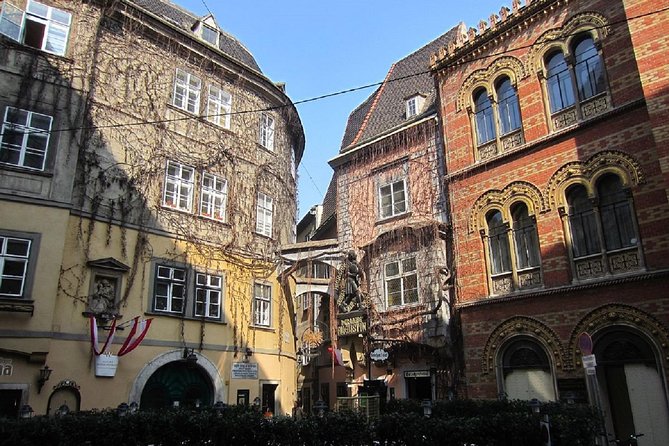
- A smart mix of icons and side streets, from Ruprechtskirche and Stephansplatz to Bäckerstraße courtyards
- Cultural beats you actually stop for, including Griechenbeisl and a classic coffeehouse moment
- Built-in “choose your pace” staying power, because you can linger at key sites like the cathedral and Hofburg
A plague-themed quest that turns walking into a game
Vienna can feel like a museum you walk through. This game flips that. Instead of collecting facts, you collect clues. You look closely at buildings, signs, and small details that a normal stroll would miss.
I like the way the format nudges you into slower noticing. At each stop, you are not just looking, you are hunting for an answer in the scene right in front of you. That means the city is not something you consume, it is something you actively read.
You also get a built-in reason to wander off the main drag. The route strings together major landmarks with quieter streets like Bäckerstraße, including those charming interior courtyards that make Vienna feel old in the best way. It is the kind of route you could walk on your own, but the game makes you actually do it.
More Self-Guided Tours in Vienna
- Vienna: Tickets for Mozarthaus Vienna with Audio Guide
★ 4.2 · 2,344 reviews - Vienna: New Hofburg Palace Audio-Guided Tour & Entry Ticket
★ 4.1 · 566 reviews - Vienna: Schlumberger Wine Cellar Guided or Self-Guided Tour
★ 4.8 · 285 reviews
Start at Ruprechtskirche, then work your way toward the center
The adventure begins at Ruprechtskirche (Ruprechtspl. 1, 1010 Wien). This area is a great first step because it sets the tone: old stone, medieval layers, and a sense that you are close to Vienna’s roots.
At Stop 1: St. Rupert’s Church (Ruprechtskirche), the big draw is the age and materials. The church is about 13 centuries old, and it was built using stone taken from an ancient Roman settlement. You also get a specific reason to look again and again: there is an older stained-glass window that depicts Christ on the cross, with the Madonna and Child below, and it is described as still standing since the 13th century. Then there is the other “find it” feature: the oldest bells in Vienna.
In game terms, you spend around 10 minutes here, and you are asked to search around for an answer that advances you to the next location while teaching you a story related to a café connected to the area. That small twist is clever because it ties the church vibe to everyday city life.
A quick practical note: since you are reading clues while you stand on-site, bring your patience. If you try to speed-run every stop, you might miss the very details the game wants you to notice.
Griechenbeisl: famous musicians, and the fun of tracing stories
Next you head to Greizenbeisl (Stop 2: Griechenbeisl), a tavern with serious music history. This is one of those Vienna places where big names are part of the furniture. The game context points out that Mozart, Beethoven, and Schubert dined here.
If you want a concrete detail to anchor the atmosphere, this is it: there are framed signatures of famous people served in the Mark Twain room. The list in the description includes people beyond the classical giants, including Luciano Pavarotti and Johnny Cash, which is a fun reminder that famous diners kept coming long after the composers.
You also learn why the name matters. The tavern’s name is explained as tied to Greek tradesmen and Levant travelers who settled in the area, earning it the feel of a Greek Inn. In the game, you spend about 15 minutes, and you solve a look-around challenge or puzzle to move on.
This is a great stop for families too, because the setting is inviting and the clue-based format turns “looking” into “doing.” Even if kids lose interest in the story, they can still get satisfaction from finding the answer.
Bäckerstraße courtyards and the puzzle mural on No. 2
Then the game takes you through Bäckerstraße, a street known for its older façades and interior courtyards. You do not just pass through. You get a reason to stop at a specific artwork.
At Stop 3: Backerstrasse No. 2, the focus is a peculiar mural on the façade of the Hasenaus (Hare House). The image described is a wolf and a cow wearing spectacles, playing backgammon. The fun is that it is not just one neat explanation. You get at least two interpretations: some say it connects to an earlier depiction of medieval life, others read it as an allegory linked to the conflict between Protestants and Catholics.
In game time, this is short, around 5 minutes, which is perfect if you do not want a long museum-style stop. It is also a good lesson in why the quest works: it trains your eyes to notice art that looks like decoration until someone points out what it could mean.
As you walk along Bäckerstraße, the game also nudges you past other impressive façades. The description calls out places like No. 8, linked to the Palace of Count Seilern (1722), and No. 16, plus a spot noted as Schwanenfeld Haus near a Renaissance courtyard with arcades and galleries. You get the advantage of those “passing glances” turning into “wait, look at that” moments.
A different sort of Vienna day:
- Vienna: Vivaldi’s Four Seasons Concert in Karlskirche
★ 4.7 · 14,951 reviews - Vienna: Spanish Riding School Training
★ 3.9 · 9,281 reviews - Vienna: Skip-the-cashier-desk-line Giant Ferris Wheel Ride
★ 4.5 · 7,859 reviews - Vienna: Schönbrunn Palace & Gardens Skip-the-Line Tour
★ 4.7 · 7,739 reviews
Stephansplatz: solve your way to the next piece of Vienna
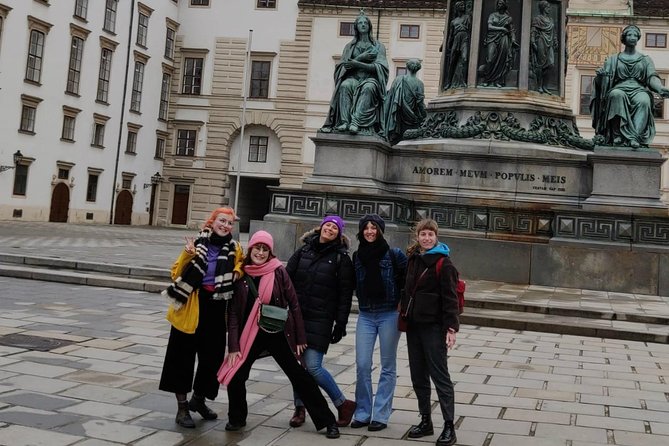
From there, you reach Stephansplatz (Stop 4: Stephansplatz) by following a clue and solving a puzzle. This part is useful because it prevents that classic tourist problem where you stand in the middle of a big square and think, okay, now what?
Instead, the game gives you indications to continue the game while also teaching you about what you have just found. You spend about 10 minutes here, likely short enough to keep energy up and long enough to actually take in the space.
Stephansplatz is one of those squares that can feel chaotic if you just arrive cold. The clue format helps you approach it with purpose, and that tends to improve your photos, too, because you are not just reacting to crowds, you are looking for something specific.
Stock im Eisen: nails, luck, and a legend you can test
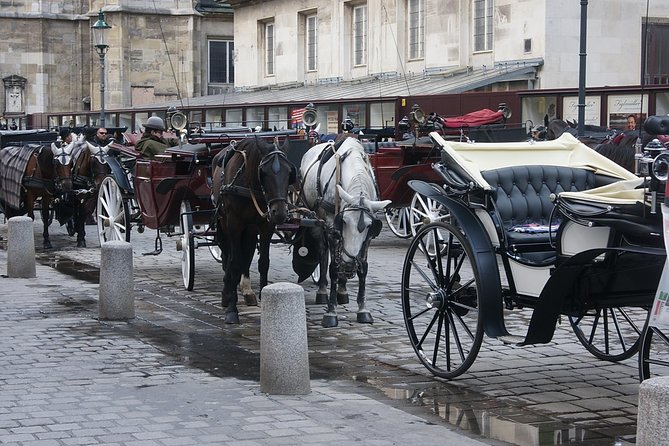
At Stop 5: Stock im Eisen (Nails Tree Vienna), you get a strong opening image. The tree trunk is surrounded by iron hardware, and it is covered with hundreds of nails.
The game context includes an old rumor too. It says the nails were once thought to be the work of Satan. In reality, the description ties the nails to a good luck tradition: people hammer nails into the tree over generations, believing it brings luck.
You also get a specific physical layout to look for. The description says the medieval tree trunk sits in the middle on a 1.5 meter high pedestal, surrounded by an iron ring with a lock dummy. That detail matters because it gives you landmarks to orient yourself while you search for the clue answer.
In practice, this stop is a nice reset. You are still inside the game, but the atmosphere is more playful than solemn. You spend about 10 minutes, and you can take time when you want before moving to the next clue.
St. Stephen’s Cathedral and the rooftop view you pay for separately
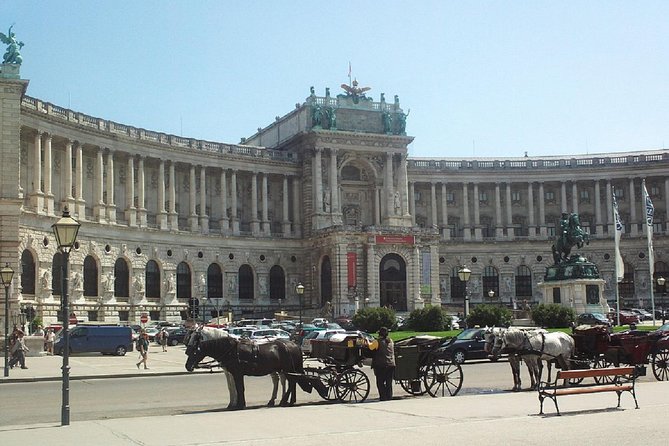
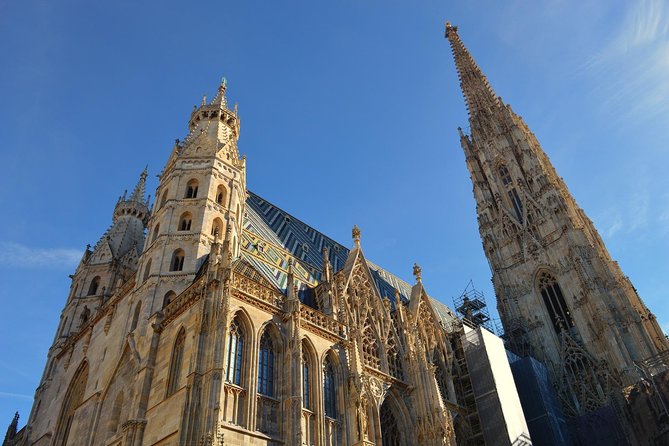
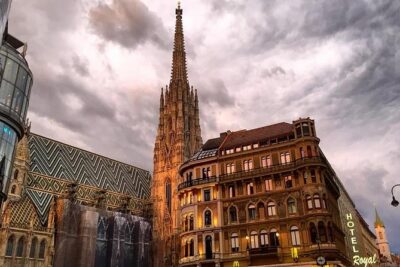
Now you hit the big one: Stop 6: St. Stephen’s Cathedral (Stephansdom). This is described as standing since the 12th century and as one of Austria’s key Gothic buildings.
The game timing here is about 15 minutes, but the site has more than enough to hold you longer. The cathedral is the kind of place where the famous exterior can pull you in fast, yet the details are what keep you there.
The description calls out the tower room with a breathtaking view of Vienna, and it says the tower room includes 13 bells. It also emphasizes the roof, which it describes as 38 meters high and made of 230,000 glazed tiles forming patterns. That number is hard to forget once you notice the roof.
Then there are the symbols: mosaics described include a double-headed eagle associated with the Austrian empire under Habsburgs. The two eagles on the north side of the roof carry coats of arms representing the City of Vienna and the Republic of Austria.
One important value point: the description states that the admission ticket is not included for this cathedral stop. So your total budget depends on whether you choose the tower room and related paid areas. If you want the rooftop views and bell tower perspective, factor that into your planning.
The game adds one more fun element here: like other stops, you look around to find an answer to advance to the next location and to learn the story behind the pieces you are seeing.
Café Frauenhuber: the coffeehouse break that fits the puzzle pace
Right after the cathedral, there is a coffeehouse stop: Café Frauenhuber on Rauhensteingasse. This is not listed as a paid museum stop in the description, but it is part of the experience flow, and it is a great place to regroup.
The details given are classic Vienna stuff. The coffeehouse is described as the oldest in Vienna, dating back to 1746. It is also known for having hosted table music by Mozart and L. van Beethoven between 1782 and 1791.
There is also an atmosphere clue: it is described as unpretentious and historically known for being peaceful. If you are traveling with kids or anyone who gets tired of standing, this is your moment to sit down and reset.
Albertina’s drawings and prints, plus a finish at the Hofburg
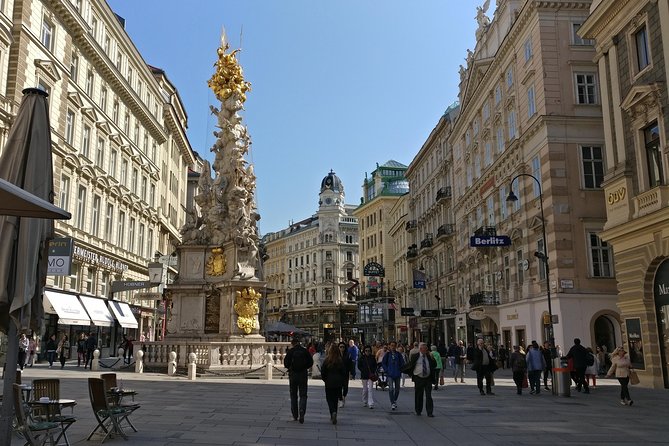
Next you go to Stop 7: Albertina. This is a smart change of pace because the earlier stops are mostly street-level and architectural. Albertina is where Vienna’s art side comes in.
The description says the museum has over 50,000 drawings and over 1 million master prints on a rotational display. It also notes that the museum has been part of Vienna’s cultural fabric since 1805, located in the largest Habsburg residential palace, the Hofburg complex.
The collections are described across modern art, graphic art, architecture, and photography. You also get an anchor title: it specifically mentions Monet’s The Water Lily Pond.
Admission for this stop is also listed as not included. So again, your final cost depends on what you choose to enter versus view outside the museum. If you love art, this is often worth paying for. If you are mainly in it for the city-walking game, you can treat it as a look-around moment and decide based on your energy.
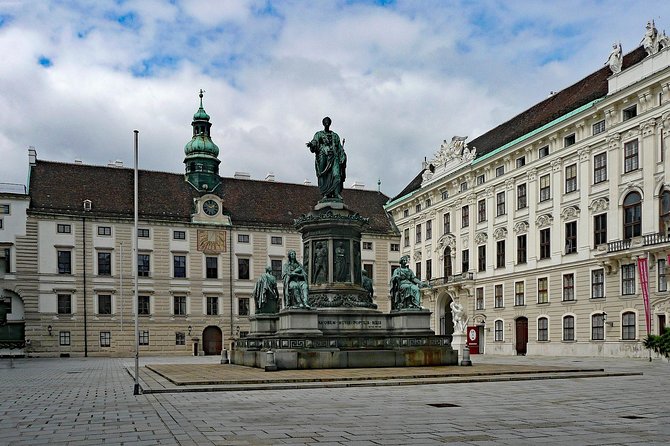
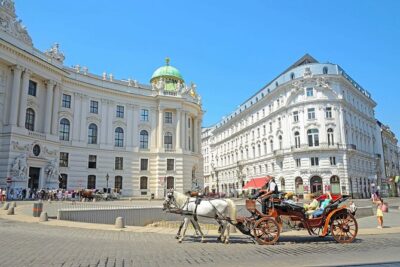
Finally, you reach Stop 8: the Hofburg. This is where the game ends, at a place that feels bigger than it needs to. The Hofburg is described as the heart of power in Vienna since the 13th century, and as the former residence and seat of government of the Habsburg emperors until 1918.
The description also points to real highlights inside the complex, including Imperial apartments totaling 24 rooms, the Sisi Museum, and lavish silver collections. It also notes the National Library is found here, plus the Hall of Ceremonies, used nowadays for Viennese balls.
You spend about 10 minutes here within the game, and then you can keep exploring on your own. That ending matters. It sets you up to continue in the area without feeling like you must stick to a rigid itinerary.
Price, time, and what makes the value feel real
At $7.23 per person, this is priced like an activity, not a full-day guided tour. The value is not just the cost. It is that you get a structured route that pulls you through multiple major stops in about 1 hour 30 minutes, with the option to pause.
A few features drive the value:
- Audio stories keep the experience moving even when you are standing still.
- Free for kids reduces the “this is too pricey for a family” problem.
- Group discounts help if you travel with friends or siblings.
- Private for your group means you are not negotiating crowd pace.
If you have a bigger group, the description notes that if your group is larger than 15 people, you can make multiple bookings. Also, it says it is easy to start at your preferred time, since it can be played anytime after booking without rescheduling.
One practical consideration: the experience is powered by your smartphone and there is no guide. That means battery life matters. Bring a charged phone, and consider a power bank if you plan to linger at paid sites like the cathedral tower room.
What I’d watch for before you book
The main “watch out” is straightforward. You are relying on app-based clues. If the app setup is frustrating for you, the whole game can feel like a speed bump.
That also means the best way to enjoy this is to approach it like a light scavenger hunt with breaks, not like a guided lecture. If you want lots of continuous narration, you may find yourself wishing for more direct, human explanation. If you like to read small details and you enjoy puzzles, you are in the right mood.
The other consideration is paid admissions. The cathedral stop and Albertina stop are listed as ticket not included. Everything else in the clue flow is listed as free, which helps your budget, but you should still plan for those two if you want the full experience.
Should you book this Vienna plague exploration game?
Book it if you want a fun, self-paced way to see Vienna’s major landmarks plus side streets, and you like learning by noticing details. The route from Ruprechtskirche through Greizenbeisl, Bäckerstraße, Stephansdom, Café Frauenhuber, Albertina, and ending at the Hofburg makes a good “starter map” for people who want structure without a rigid tour pace.
Skip it, or plan differently, if you want nonstop, in-depth history from a person. Also reconsider if you know you have trouble with phone apps in the field. In that case, either budget time to get set up calmly or look for a traditional guided tour instead.
FAQ
Where does the game start and end?
It starts at Ruprechtskirche (Ruprechtspl. 1, 1010 Wien, Austria) and ends at the Hofburg (1010 Vienna, Austria).
How long does the experience take?
It is listed at about 1 hour 30 minutes.
Is there a guide during the game?
No. It is described as having no physical tour guide, and you use your smartphone instead.
What do I need to play?
You need your smartphone. The experience includes audio stories and uses clues, questions, and puzzles you solve on-site.
What language is it offered in?
It is offered in English.
Are tickets included for St. Stephen’s Cathedral and Albertina?
For St. Stephen’s Cathedral, admission is listed as not included. For Albertina, admission is also listed as not included.
Is it suitable for families and kids?
Yes. It is described as ideal for families with easily distracted children, and it is free for kids.
Can I play at any time after booking?
Yes. It says you can play anytime after booking without rescheduling, and you can take breaks and continue later.
What is the cancellation policy?
It offers free cancellation. You can cancel up to 24 hours in advance for a full refund.
Is this experience private for my group?
Yes. It is described as a private tour/activity, meaning only your group participates.
Latest Vienna reviews
- Vienna Food Tour: Dishes, Wine, Street Food & Culture★ 4.7 · 12 reviews
- A box for a romantic walk in the city center of Vienna★ 5.0 · 13 reviews
- Vienna: mumok Museum of Modern Art Entry Ticket★ 3.8 · 13 reviews
- eBike Vienna 90min guided tour – use ebike for the whole day★ 4.0 · 13 reviews
- Bratislava Private Tour from Vienna★ 4.5 · 13 reviews
- Vienna: Austrian Wine Tasting★ 4.8 · 13 reviews
- Private One Day Trip to Bratislava from Vienna★ 4.5 · 13 reviews
- Best of Vienna Tour in TUK TUK!★ 5.0 · 14 reviews
Self-Guided Tours, compared.
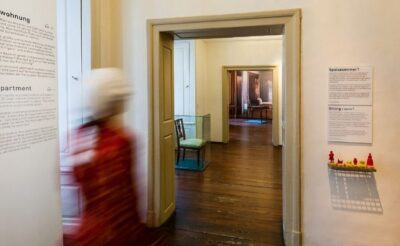
Tickets for Mozarthaus Vienna with Audio Guide
Read our review →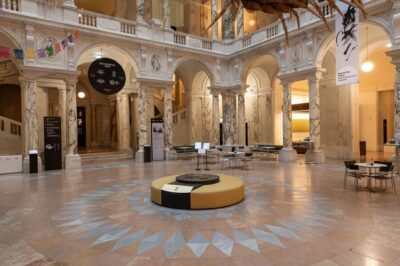
New Hofburg Palace Audio-Guided Tour & Entry Ticket
Read our review →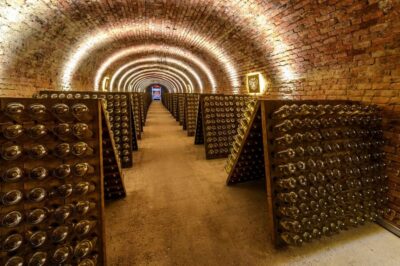
Schlumberger Wine Cellar Guided or Self-Guided Tour
Read our review →
Vienna Walking Tour with Audioguide on Your Smartphone
Read our review →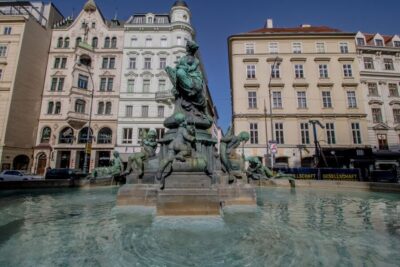
Browse the lists this tour appears in