
Reviewed · WALKING TOURS
Salzburg Oldtown: Sightseeing Walking Tour with Licensed Local Guide
Salzburg Old Town is a joy because it is compact, walkable, and packed with Mozart clues tucked into everyday streets. This tour is interesting because you get a guided way to connect the dots across the old center, from Mozart’s former home area to the big squares that shaped the city.
I like that you get a clear orientation fast, without feeling rushed. I also like the built-in take-home value: a printed Salzburg city map plus a postcard, so you can keep moving after the last stop.
One consideration: you mainly admire big religious and monumental sights from the outside. The Salzburg Cathedral is facade-only, and entry into other buildings can depend on whether doors are open that day.
Key things to know before you go
- Fast 90-minute format that fits cleanly into a longer Salzburg itinerary
- Mozart-focused stops that help you understand why the city is tied to him everywhere
- Small group size with a maximum of 25 people
- Free access at listed stops, so you can budget just for meals and coffee
- Route ends at Mozartplatz, right by the cathedral area and tourist info
- Your guide matters, with guides such as Johannes, Brigit, and Sonja cited for pacing and storytelling
Why a Salzburg Old Town walk is the best start
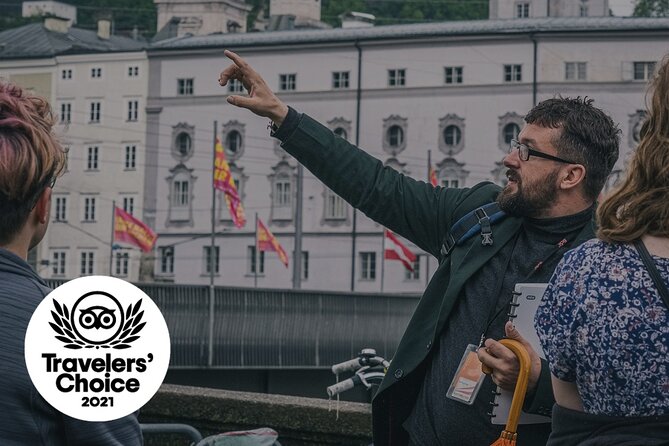
Salzburg can feel like two cities at once: the postcard old town on the surface, and the practical city underneath where locals actually move through daily life. A good walking tour helps you read that map in your head. You start noticing how streets bend toward viewpoints, how squares link to power and religion, and why Mozart’s name shows up again and again.
This one is built for getting your bearings fast. In about 90 minutes, you cover a strong loop through the center. You are not trying to see everything. You are learning what to prioritize later, and that is what makes the time feel useful instead of just busy.
The other reason I like this style of tour is the balance between major icons and the “in-between” streets. Getreidegasse is famous for a reason, but you also get stops that explain how Salzburg works as a city, including university areas and river crossings.
More Walking Tours in Salzburg
- Salzburg 2.5-Hour Walking Tour: Mozart, Old Town & More
★ 4.2 · 987 reviews - Salzburg: Old Town, Mozart, & Mirabell Gardens Walking Tour
★ 4.8 · 461 reviews - Salzburg Old Town Walking Tour, Mozart, Mirabell Gardens
★ 4.5 · 201 reviews
Price and what you actually get for $10.89
At about $10.89 per person, the cost is low enough that you can treat it like a smart investment in orientation. And you are not just buying narration. You get:
- A city walking tour map (printed)
- A postcard
- A mobile ticket (so you are not scrambling on your phone)
- A licensed local guide in English
- A walking route designed for about 1 hour 30 minutes
Another quiet value point: the tour includes sights where the listed admission is free. That means you can keep your spending focused on things that really cost money, like meals, a museum ticket you choose, or a concert ticket if you want to go all-in on classical music.
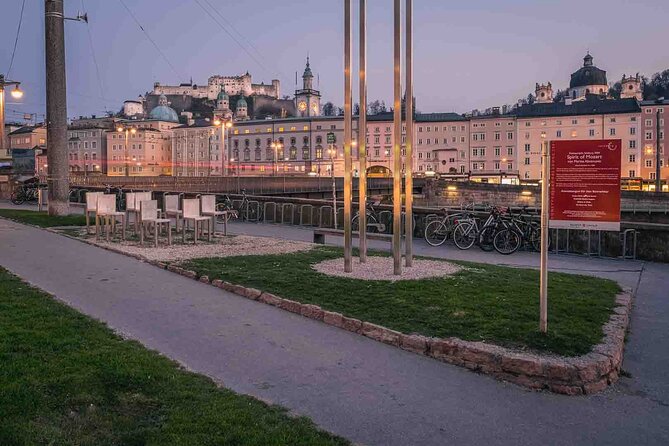
Meeting point at Spirit of Mozart, and why the finish is convenient
You start at Spirit of Mozart, Imbergstraße 33A, 5020 Salzburg. The walk ends at Mozartplatz, right by the Salzburg Cathedral and Residenzplatz area, and close to the tourist information. That ending location is practical because it keeps you near major sightseeing and transit, without you having to backtrack.
The start time is 10:00 am. That is a strong option for most people. You beat the worst crowds, and you still have the whole rest of the day to use the map you brought home.
If you are traveling light, this is easy to manage. It is a walking tour with a maximum of 25 travelers, so it does not feel like a constant bottleneck.
Stop 1: Mozart Wohnhaus, plus the Rome of the North angle
Your first stop is Mozart Residence, Mozart Wohnhaus. You view the house from the opposite side of the square. That detail matters. You are not stopping at a single doorway and spending time arguing about where the exact entrance is. Instead, you get an orientation to the area where Mozart lived starting at age seventeen, and you hear the story connected to Salzburg’s identity.
One of the better concepts the guide is set up to explain here is why Salzburg is known as the Rome of the North. That phrase can sound dramatic until someone ties it to architecture, faith, and the city’s historic role. Once you understand the comparison, other buildings across the route start to make more sense, even if you are not studying them like a scholar.
If you love Mozart, this is a helpful opener. It frames the rest of the walk so you are not just collecting random Mozart stops.
A different sort of Salzburg day:
- The Original Sound of Music Tour in Salzburg
★ 4.5 · 6,129 reviews - Salzburg: Original Sound of Music Tour
★ 4.8 · 5,059 reviews - From Salzburg: Half-Day Tour to Hallstatt
★ 4.6 · 3,596 reviews - Salzburg: Mozart Concert at Mirabell Palace
★ 4.8 · 3,498 reviews
Stop 2: Schloss Mirabell and Mirabellgarten, a garden you can revisit
Next you take a glance at Schloss Mirabell and Mirabellgarden. The tour gives you the overview, then encourages you to come back later to explore the garden in more detail.
That approach is smart. Gardens are hard to fully enjoy on a tight schedule, especially when you are part of a moving group. So you get what you need now: what it was in history and what it is today. Later, you can slow down and wander without listening to a guide.
In practical terms, this is where you start feeling the walk shift from “landmark viewing” into “city understanding.” You see how Salzburg uses planned spaces and scenic routes, not just one-off attractions.
Stop 3: Getreidegasse, walking toward Mozart’s birthplace
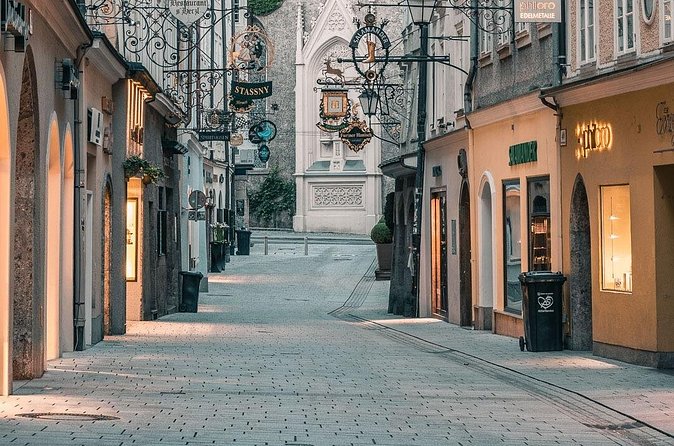
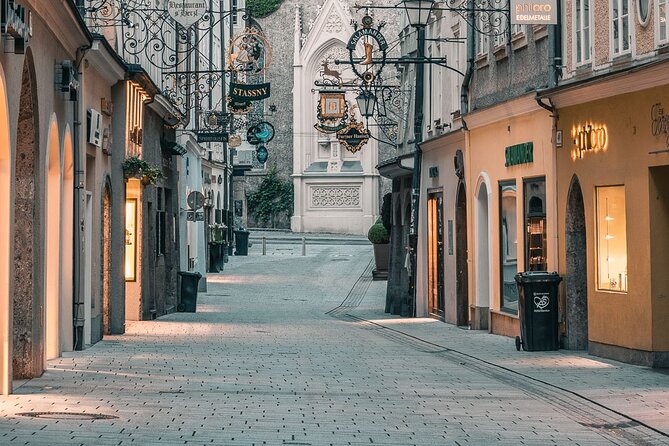
From the river crossing you reach Getreidegasse, the most famous street in Salzburg. This is the kind of street where the buildings feel like they are holding stories in their fronts. The walk down the street is short, but it is designed to point you toward Mozart’s birthplace.
I like this stop because it shows you what kind of Salzburg you came for: historic street life mixed with heavy Mozart branding. Even if you are not a museum person, the street level details are the whole point.
After this, you have a mental map for why this area feels central. The city’s most famous pedestrian route is not random. It connects the story you heard at the start to the sights you will want to chase afterward.
Stop 4: Universitatskirche and the outside vs inside reality
Universitatskirche is next. This university church is described as the last historic building in Salzburg, and it is not used as a church anymore. The tour includes a big practical detail: you can enter as a group as long as it is not closed.
So plan for two outcomes:
- If it is open, you get the extra step inside.
- If it is closed, you still get the stop and explanation, just without the interior time.
That is why this tour still works even when conditions change. The route is designed so you are not stranded if a door is shut.
Stop 5: Wilhelm-Furtwängler-Garten, Furtwänglerpark, and the canal-and-university thread
At Wilhelm-Furtwängler-Garten, you learn about Furtwänglerpark, described as a monastery garden. Today it is part of Salzburg University. Before moving on, the guide also talks about the University, modern art, and Salzburg’s canal system.
This is one of the stops that makes the whole tour feel more like “how the city functions” and less like a simple list of statues. Once you connect monastery gardens to today’s university grounds, the city’s layers click into place.
Even if you do not care about universities, the canal system is the kind of local detail that changes your walking perspective. You start spotting how water shapes the city, not just the buildings.
Stop 6: Grosses Festspielhaus and the Salzburg Festival in summer

Grosses Festspielhaus is where the Salzburg Festival focus comes in. The guide explains that the Salzburg Festival is considered the most prestigious classical music festival in the world, and that the concert hall is where most concerts and opera take place during a six-week summer period.
You will not spend long here, but the stop gives you the key context. Salzburg’s reputation in music does not float in the air. It is anchored in specific venues, specific schedules, and that summer rhythm when the city leans into performance.
If you are visiting in summer, you might already be thinking about whether you can get tickets. If you are visiting in off-season, this is still valuable because it helps you understand why the city invests so much energy into arts infrastructure.
Stop 7: Stift St. Peter’s Abbey, founded 696, with the “yard view” rule
The walk continues to Erzabtei Stift St. Peter Salzburg. This is described as the place where Salzburg was founded in 696, and it is also noted as the oldest monastery in the German-speaking region.
Important detail: you do not enter the church or the cemetery because the monastery and church are still active and guided tours are not allowed there. Instead, you visit the yard of the monastery, and the guide shares what they know.
This is a good example of a tour staying respectful while still giving you something meaningful. You get the spiritual and historic weight without turning the place into a “walk-through attraction.”
If you like seeing how religion and education coexist in old cities, this stop lands well. It also helps you understand Salzburg as a place where history is not just museum glass. It is part of everyday institutions.
Stop 8: Salzburg Cathedral facade, and what you should plan to see later
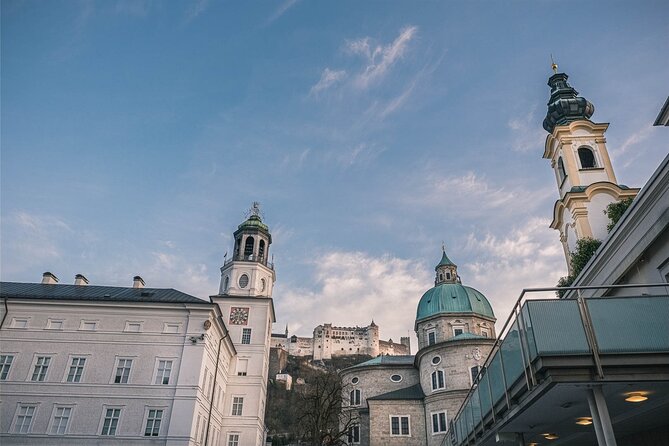
Salzburg Cathedral is the most important church in the city. Here, the tour has a clear boundary: you do not enter. You admire the facade and learn the history.
This is where you should adjust expectations. If you want interior photos, you need to plan a separate visit after the tour. The cathedral is so central that it is worth giving it its own time slot.
Still, seeing the facade is not a waste. The building’s front tells you a lot about style and importance, and it sets up the rest of your old-town views around Residenzplatz and the cathedral area.
Stop 9: Kapitelplatz and Kapitelschwemme, fortress views and the oldest bakery
Kapitelplatz and Kapitelschwemme bring in several interesting details in a short stop. You get a view of Hohensalzburg fortress, plus mentions of modern art and the oldest bakery of Salzburg.
This is a great “pause and orient” area. Fortress views help you connect the flat walking routes to the higher landmark that dominates the skyline. Once you have that connection, you are less likely to feel lost later when you turn corners and suddenly see the fortress again from another angle.
Also, hearing about the oldest bakery gives you a practical lead. Even if you do not go immediately, you will know there is an old-school food story here, not just tourism signage.
Stop 10: Makartsteg love locks, the river, and the buildings along the water
Then you pass Makartsteg, the love lock bridge. The guide explains the love locks, plus the bridge, the river, and the buildings along the river.
This stop is quick but very useful because it forces you to look sideways at Salzburg. Many people only look forward at the next postcard building. The river does a lot of shaping here, and the canal talk earlier helps you appreciate why this water edge matters.
If you want photos, this is where you can get them without racing through the crowd.
Stop 11: Residenzplatz, the heart of the old town
Residenzplatz is described as the main square and the heart of the old town. It is called Residenzplatz because that is where the archbishop’s residence was located historically.
This is one of those facts that makes the square feel more real. You stop seeing the square as scenery and start seeing it as where power sat, where decisions happened, where people moved for church and governance.
After this stop, you are positioned well for the final Mozartplatz area, and you have a better sense of why these open spaces exist.
Stop 12: Mozartplatz statue, the Mozart cult, and your next step
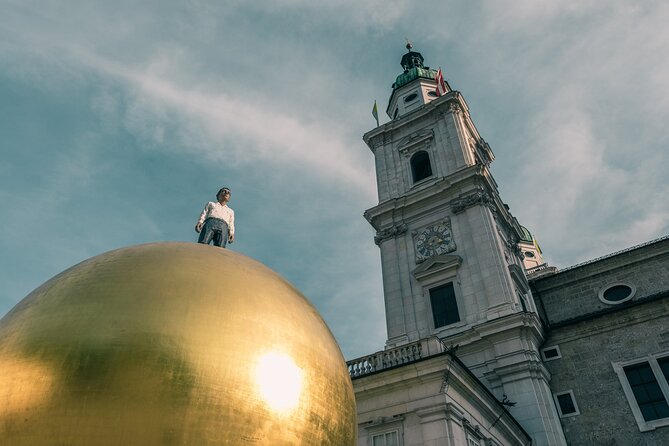
Mozartplatz is where the Mozart cult began in the 19th century when they erected the Mozart statue. The tour ends with a look at the statue and a reveal of some mystery surrounding Mozart.
That “mystery” phrasing matters because it hints the guide is not only listing dates. It is about how the city shaped Mozart’s image after his lifetime, and how that local myth-making became part of tourism and identity.
When you finish, you are by Mozartplatz near the cathedral and Residenzplatz. This is a strong finish because you can immediately extend your walk into side streets, cafés, and shops. You also have the printed map in hand, so you can pick what you want next instead of wandering randomly.
Guide style, pacing, and why the stories land
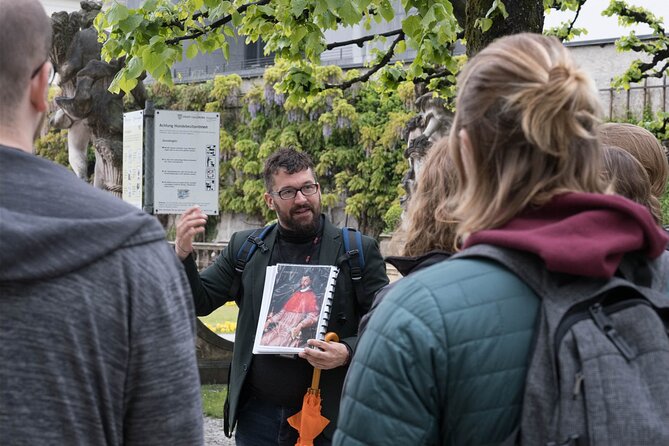
The most praised part of this experience is the guide approach. People describe Johannes as entertaining, funny, engaging, and great at balancing information with story. Others highlight Sonja for being concise and interesting, and Sonya for delivering an excellent 1 hour 30 minutes at the right pace. Brigit is also noted for keeping people moving briskly in cold mist, including being easy to spot in a bright red coat.
Two practical takeaways for you:
- Expect a storytelling pace, not a lecture. The goal is to help you remember what you saw.
- Build in some flexibility for weather. If it is cold or misty, wear layers and move with the group.
With a maximum group size of 25, you are still able to hear and keep up without feeling like you are just a number.
How to use the map after the tour ends
The printed city map and postcard are not just souvenirs. They help you turn the tour into a plan.
Here is how I would use it:
- Circle the areas that felt most interesting while you were walking.
- Use Mozartplatz and Residenzplatz as your anchor points for your next stroll.
- If you wanted to see cathedral interiors or the monastery spaces you could not enter, schedule those as follow-up stops when you have more time.
Because this tour ends where major sights cluster, you can keep your momentum instead of starting from scratch later.
Who this tour is best for
This is a great fit if you:
- Want a short, high-impact orientation to Salzburg
- Like Mozart and want to understand how the city wraps him into everyday places
- Prefer walking plus interpretation over sitting for a long time
- Need an easy day structure that does not steal hours
It also helps if you are the kind of traveler who loves to pick your next stops from what a guide points out. The tour is built to make you want to return to places, especially the garden areas.
If you are only interested in entering major sites and spending time inside, you might find the outside-focused approach frustrating. The cathedral and monastery areas are not entered on the tour.
Should you book this Salzburg Old Town walking tour?
Book it if you want a smart first step into Salzburg. For roughly $10.89, you get a licensed local guide in English, a focused 90-minute loop through the old town highlights, and take-home materials that help you keep exploring.
Skip it only if you already have a very strong grasp of Salzburg layout and you do not need orientation, or if your top priority is interior access for the cathedral and monastery sites during the same visit. In that case, you may prefer spending your time on your own inside ticket plans.
If you are deciding between “wander alone” and “get oriented,” I would pick oriented. Salzburg is too easy to get turned around in, and this tour gives you the shortcuts your future self will thank you for.
FAQ
Is this tour offered in English?
Yes. The tour is offered in English.
How long is the walking tour?
It runs for about 1 hour 30 minutes.
Where does the tour start and end?
It starts at Spirit of Mozart, Imbergstraße 33A, 5020 Salzburg, Austria. It ends at Mozartplatz, Mozartpl., 5020 Salzburg, Austria.
Does the tour include entrance fees for the stops?
The stops listed on the tour are marked as free admission tickets.
Will we enter Salzburg Cathedral and St. Peter’s Abbey?
No. The tour does not enter the Salzburg Cathedral, and it does not enter the church or cemetery of St. Peter’s Abbey. You admire the cathedral facade, and you visit the yard at St. Peter’s.
What is included in the price besides the guide?
You get a walking tour city map and a postcard, plus a mobile ticket for the experience. Service animals are allowed.
Latest Salzburg reviews
- Wachau, Melk Abbey & Salzburg (Sound of Music & UNESCO)★ 5.0 · 23 reviews
- Werfen World’s Largest Ice Caves and Golling Waterfalls Tour★ 4.5 · 7 reviews
- Private Werfen Ice Cave and Golling Waterfall from Salzburg★ 5.0 · 15 reviews
- Viator Exclusive: ‘The Sound of Music’ Private Tour★ 5.0 · 28 reviews
- Public 8h tour to sites of “The Sound of Music Movie” & Hallstatt★ 5.0 · 219 reviews
- Private transfer from Salzburg to Vienna, 2 hours for sightseeing★ 4.5 · 7 reviews
- Private Transfer from Salzburg to Munich with 2 hours for sightseeing★ 5.0 · 8 reviews
- Public 4h tour to filming locations of “The Sound of Music Movie“★ 4.5 · 323 reviews
Walking Tours, compared.
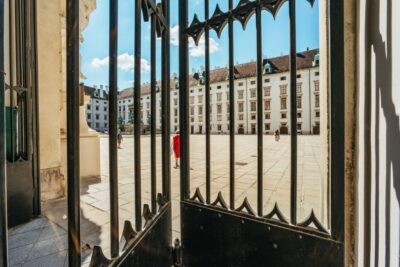
Guided Walking Tour of City Center Highlights
Read our review →
Guided Walking Tour of City Highlights & Hidden Gems
Read our review →
Vienna Historic Center Small Group Walking Tour
Read our review →
Browse the lists this tour appears in