
Reviewed · WALKING TOURS
Vienna Historic Center Small Group Walking Tour
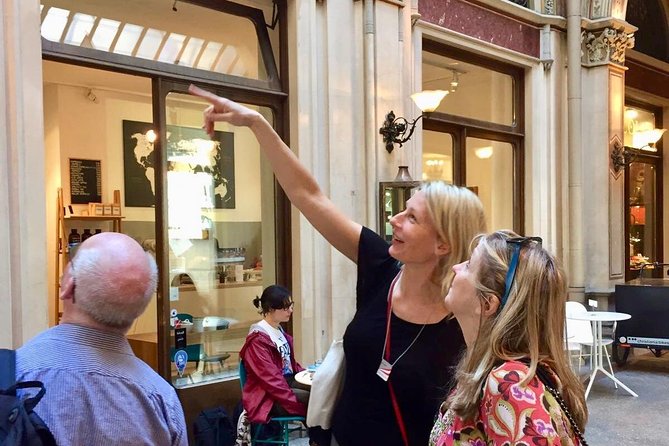
Vienna’s Historic Center can feel big on your first day, so I like tours that turn the city into a clear route. This one hits the Ringstrasse showpieces, the Hofburg power center, and ends at Stephansplatz, so you can keep exploring right after.
I also like that the group is capped at just 15 people, and you get audio devices so you can actually hear your guide in crowded spots. The main thing to consider is that this is a mostly outside-the-buildings tour, with no museum interiors, so it is for the people who want context and orientation more than ticketed sights.
Quick hits
- Small group, max 15 keeps the pace human and questions welcome
- Audio devices help you hear the guide even in tight streets and squares
- UNESCO Ringstrasse sights in one efficient loop without juggling multiple tickets
- Hofburg stories include court life and major 20th-century turning points at key spots
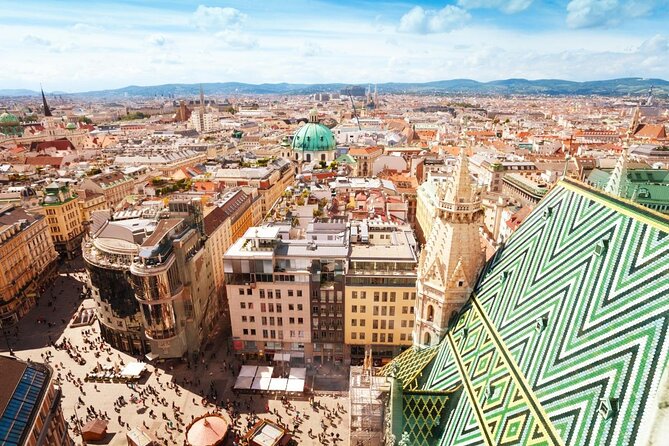
- Ends at St. Stephen’s Cathedral area so you can roam afterward without re-planning
- Mostly outdoors means it is weather dependent, but it moves fast and stays practical
A smart first-day walk through Vienna’s compact center
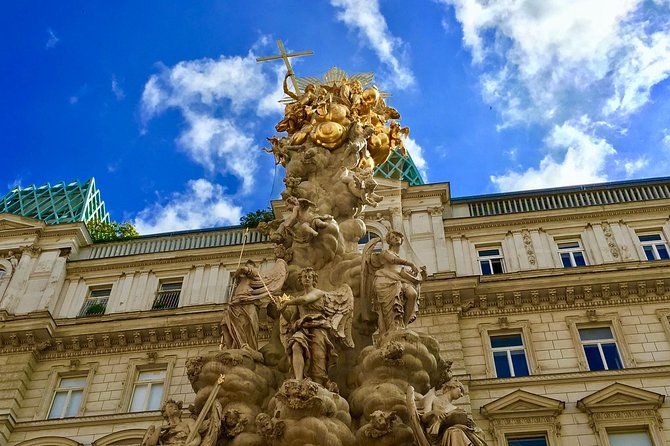
This tour works because it is designed like a map you can remember. In about 2.5 hours, you get a linked sequence of squares, grand facades, churches, and pedestrian streets, with a guide doing the translating from stone to story.
You start at Maria-Theresien-Platz, a wide, easy meeting area right between the MuseumsQuartier side and the Ringstrasse. The walk then builds outward, so by the time you reach the center around Stephansplatz, Vienna feels less confusing and more like a place you understand.
If you like to get your bearings fast, this is exactly that. One of the strongest themes you will hear is how Vienna grew from imperial power into a modern city, while still keeping those big architectural “statements” in view.
More Walking Tours in Vienna
- Vienna: Guided Walking Tour of City Center Highlights
★ 4.7 · 4,989 reviews - Vienna: Vienna Central Cemetery Guided Walking Tour
★ 4.8 · 3,307 reviews - Vienna: Guided Walking Tour of City Highlights & Hidden Gems
★ 4.9 · 2,180 reviews
Small group rules: capped at 15, with audio headsets
Capped at 15 travelers is not just a number, it changes the vibe. You are not being rushed past facts to make room for the next crowd. And because the tour includes audio devices, you can keep your attention on the buildings instead of constantly straining to hear over other groups.
This also helps on days when the center is busy. Your guide can point and explain, and you can follow along without everyone turning into a silent traffic jam. It is a simple setup, and it is one of the reasons people consistently score this tour so high.
You will also get a local certified guide, and the tour includes insider recommendations for restaurants and cafés, plus tips on culture and traditions. That part matters, because Vienna is not a city where you can only rely on online reviews to find a great coffee break or a sensible meal location.
Maria-Theresien-Platz and the Ringstrasse grand boulevard
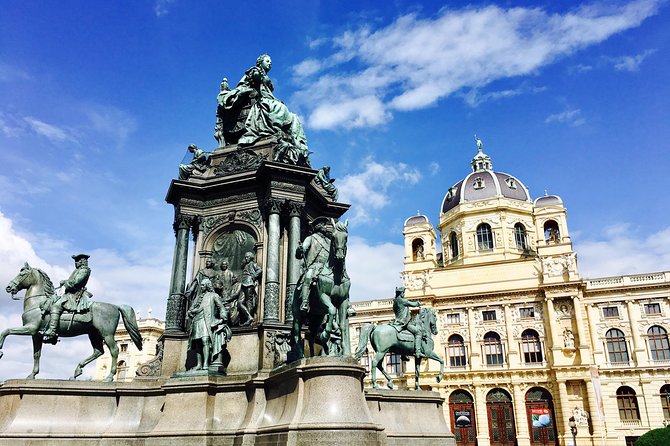
You begin at Maria-Theresien-Platz, the broad square facing the twin museum buildings: the Natural History Museum and the Art History Museum. Even without going inside, the setting is powerful, because you are standing in the space that frames the story of a city investing in art, science, and imperial identity.
Next up is the Maria Theresia Denkmal, a monument with Empress Maria Theresa and multiple figures linked to the era, including W. A. Mozart. It is one of those “don’t just walk by it” moments, because the statue helps you see why Vienna still talks about its rulers and cultural giants in the same breath.
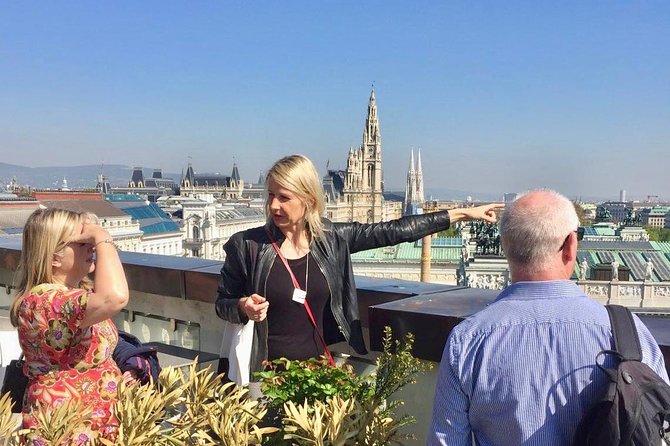
From there, the route introduces you to the Ringstrasse, the circular grand boulevard that replaced older medieval fortifications in the second half of the 19th century. Your guide will connect the architecture styles to what Vienna wanted to project, with Classical, Gothic, Renaissance, and Baroque features layered along the loop.
This is also where you start getting the UNESCO context. Ringstrasse is designated as part of Vienna’s World Heritage Site, which is a neat way to understand that you are not just strolling past pretty buildings, you are moving through a planned urban statement.
Along this stretch, you will see big civic and cultural landmarks that show up on postcards for a reason. You pass the neo-Gothic Town Hall, the Austrian Parliament Building, and major cultural institutions clustered along the Ring. Even if you later visit these inside, the tour gives you the big-picture relationships first, which makes everything feel more coherent.
The stop at the Kunsthistorisches Museum area also helps. It is right near your start, and it gives you a “royal collection” vibe without requiring museum time. Then you move to the Burgtor, a neoclassical gate marking the transition from the Ringstrasse world into the imperial Hofburg zone.
Hofburg and Heldenplatz: emperors, Nazi history, and court life
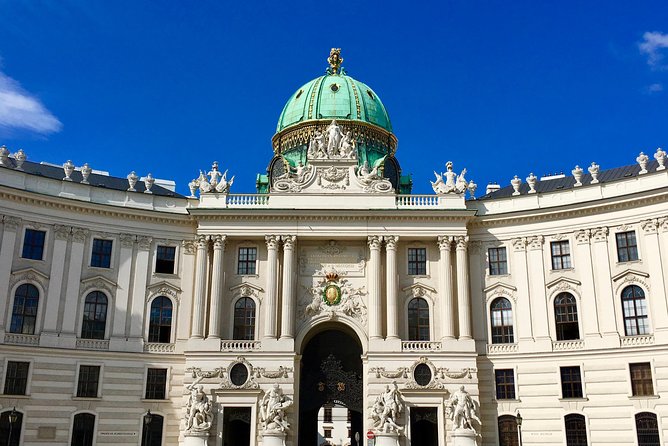
The Hofburg sequence is one of the core reasons to book this. You do not just see a palace, you learn how it functioned as a center of power for centuries, and how that power shaped daily life, ceremonies, and the public face of Vienna.
First, you pass by parts tied to the New Castle complex. The tour highlights how the area holds major institutions, including the Austrian History Museum, the World Museum, the Imperial Armoury, and the National Library. You also hear the darker, 20th-century thread tied to the balcony of the New Castle, where Adolf Hitler proclaimed the Anschluss of Austria into the Third Reich. That is heavy material, but it is also exactly the kind of location-specific history you can only absorb standing here.
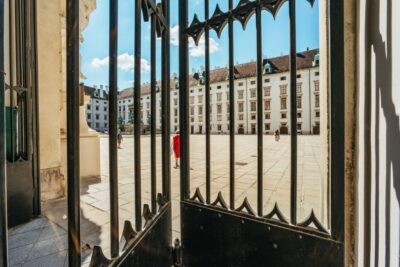
Then comes a longer look at the Hofburg itself, with emphasis on courtyards, façades, and stories about emperors and empresses. One of the most useful things your guide can do at this point is help you understand why the buildings feel theatrical. The Hofburg is not just architecture, it is a stage for authority.
A short walk gets you to Heldenplatz (Heroes Square), attached to the city after Napoleonic Wars-era changes. It is an open, green-feeling square that gives you a breather before the next cluster of streets and buildings.
The tour also references the Austrian National Library and the Winter Riding School at the Hofburg Palace, connected with the Lipizzan stallions and training performances. Even from outside, that spot is a reminder that Vienna is not only about emperors and parliaments. It is also about disciplined arts and traditions that keep running.
More Historical Tours in Vienna:
- Vienna: Time Travel and Magic Vienna History Tour
★ 4.6 · 3,879 reviews - Vienna: World War II Historical Walking Tour
★ 4.8 · 1,772 reviews - Time Travel-Magic Vienna History Tour Ticket
★ 4.5 · 1,099 reviews - Skip-the-Line Schonbrunn Palace Guided Tour and Vienna Historical City Tour
★ 3.5 · 940 reviews
Churchs and civic Vienna: St. Michael and the Rathaus area
After the palace zone, the tour pivots to church and civic life. It starts with St. Michael’s Church, which dates back to around 1220. Churches like this are useful on a walking tour because they give you a sense of continuity. Vienna’s “new” grandeur sits alongside medieval roots, and your guide helps you notice what changed and what stayed.
From there, you move through key governmental and civic buildings. One stop focuses on the Office of the Federal Chancellor of Austria, which gives you a modern political anchor while you are still in the historic-center mind-set.
Then you reach Rathaus (Vienna City Hall), a neo-Gothic building and seat of Vienna’s government. Even if you are not planning to enter, the façade tells you how civic power wanted to look when Vienna was redefining itself.
The route also includes Burgtheater, described as one of the best theaters in the world. That stop works well even from the outside, because it helps you connect the city’s authority to its arts scene. Vienna tends to treat theater as a serious part of identity, not just entertainment.
If you are the type who likes to see how government and culture sit side by side, this middle section delivers. If you want only scenic walking and no political framing, you may find some of the historical context intense, but it is presented in a way that keeps the walk moving and the stories anchored to specific locations.
Burgtheater, Volksgarten, and Beethoven Pasqualatihaus
You continue through areas tied to literature, music, and intellectual Vienna. There is a stop in Volksgarten, a park attached to the Hofburg area. You will learn about the Theseus Temple, described as a small replica originally tied to Canova’s sculpture influence, plus the park’s connection to cafés and musicians.
This is also where the tour links music culture to place. The Cortisches coffee house in Volksgarten is mentioned as a popular spot where Johann Strauss used to play his waltzes. That kind of detail makes you look differently at the park. It is not just green space, it is a backdrop for creative life.
Then you move toward Beethoven Pasqualatihaus, a former residence of Ludwig van Beethoven. The location on a ramp of the former town fortifications gives you a sense of how Vienna’s old defenses became today’s streets and neighborhoods. If you like composer-linked walking, this stop is a pleasant shift from royal and political zones.
The route also includes Palais Ferstel, originally housing the Austro-Hungarian National Bank and the Stock Exchange. That is a useful reminder that Vienna’s empire was run with money and institutions as much as with culture and ceremony.
Another stop focuses on the University of Vienna, with stories of groundbreaking minds like Sigmund Freud and Lise Meitner. Even without going inside, you get the idea that Vienna’s influence traveled through ideas, not only through buildings.
You then reach Freyung, one of the oldest squares in the city center, described as intimate and picturesque. That is a good “reset” point before the final shopping streets.
From Freyung to Graben, ending at St. Stephen’s Cathedral
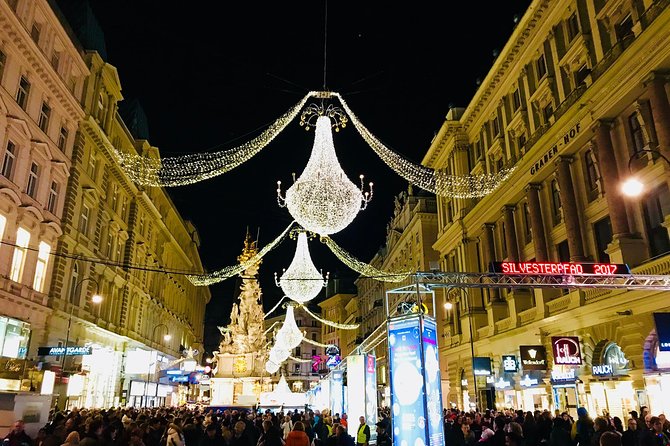
The last stretch is where the tour turns from monuments to daily life. Graben and Kohlmarkt are highlighted as elegant pedestrian streets, and they are exactly the kind of place you want to reach near the end of a tour. Your feet are tired, your brain is ready, and now Vienna looks like a place where people actually shop, snack, and wander.
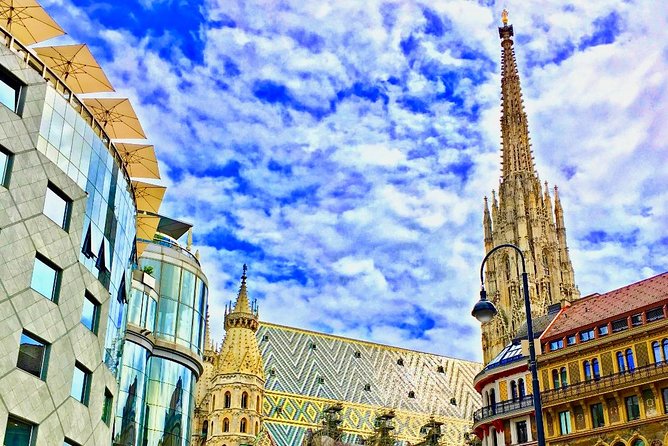
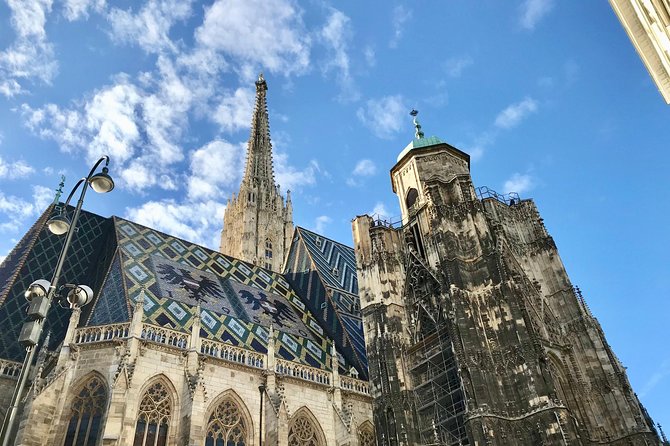
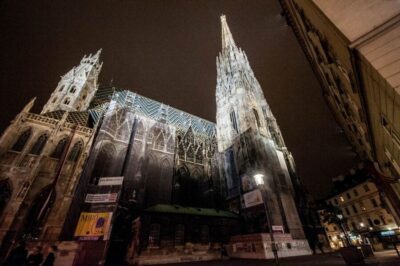
Then you arrive at Stephansplatz, the heart and soul of the area around St. Stephen’s. Ending here is smart, because the cathedral area is a natural hub for onward plans.
You finish at St. Stephen’s Cathedral, described as Vienna’s most famous landmark. The key point is that the tour ends at the cathedral zone, and you are free to explore further on your own afterward. That works well if you later decide you want to see the interior, climb up, or just take a slow lap around the square without the guide pulling you onward.
This ending also lets you adapt to your energy level. If you have energy, you can go explore more. If you are done with standing still, you can pivot to a café and people-watch on your own schedule.
Price and value: is this $72.56 worth your time?
At $72.56 per person for about 2.5 hours, you are paying for three things: a guide doing the storytelling, the efficiency of a tight route, and the small-group experience with audio devices. You are also not paying for museum entries because the tour does not visit the inside of any museum.
That makes the price feel more reasonable than tours that include ticketed interiors, especially if you already know you will want to pick and choose what you enter later. Think of it like buying orientation plus context, not buying a pile of admissions.
You also get multiple start times, which is valuable in Vienna. If you plan your day around a sensible start, you can use this tour to avoid spending your first morning guessing which streets matter most.
One more practical note: the tour runs on good weather. If your forecast looks iffy, have a backup plan for the rest of your day.
Who this tour fits best, and who should skip it
This is a strong fit for first-time or time-pressed visitors who want the city’s top sights explained without wasting hours lining up or buying separate tickets. It is also good for people who like structure, because the route is designed to keep you moving through major zones without backtracking.
It is also a good solo option, because the group is small and the end point at Stephansplatz is easy to use as a springboard. Solo travelers often appreciate being dropped in the center with clear next steps.
The main mismatch is for anyone who struggles with walking. The tour expects moderate physical fitness, and it is not recommended for travelers with walking disorders. Also remember it is mostly outdoors and involves a lot of seeing, less sitting.
If you want an ultra-interactive museum day, this is not that. If you want a brisk, story-led walk that helps you understand what you are looking at, it is a great match.
Guides seem to vary, but names like Dace, Giselle, Gabriela, Beatrice, and Annelie come up with strong praise. That suggests the guide quality tends to land well, especially for English speakers and people who value humor and clear explanations.
Should you book this Vienna Historic Center small group tour?
I would book it if this is your first trip, you want the biggest sights with the least planning, and you prefer learning while walking instead of reading maps for hours. The small group size, audio devices, and finish at Stephansplatz make it a practical start that pays off the rest of your stay.
I would skip it if you want mostly indoor experiences, if you cannot manage steady walking, or if you are only interested in museum interiors. In those cases, you will likely get better value picking specific attractions you can enter, then pairing them with a shorter self-guided stroll.
If you do book, wear comfortable shoes, bring layers, and go into it expecting quick looks plus smart context. By the time you reach the cathedral area, you should feel like Vienna just got a lot easier.
FAQ
How long is the Vienna Historic Center small group walking tour?
The tour lasts about 2 hours 30 minutes.
What is the group size?
The tour has a maximum of 15 travelers.
Is the tour offered in English?
Yes, it is offered in English.
Are museum entrances included?
No. The tour does not visit the inside of any museum.
What sights are included?
You see major historic-center landmarks such as St. Stephen’s Cathedral, Hofburg Palace, Ringstrasse buildings, Heldenplatz, Rathaus, and more, mainly from the outside.
Where do we meet and where does the tour end?
You meet at Maria-Theresien-Platz and the tour ends at Stephansplatz, near St. Stephen’s Cathedral.
Does the tour include audio devices?
Yes. Audio devices are provided so everyone in the group can hear the guide.
What if the weather is bad?
The tour requires good weather. If it is canceled due to poor weather, you will be offered a different date or a full refund.
Is it suitable if I have difficulty walking?
It is not recommended for travelers with walking disorders, and it requires moderate physical fitness.
Are service animals allowed?
Yes, service animals are allowed.
Latest Vienna reviews
- Vienna Food Tour: Dishes, Wine, Street Food & Culture★ 4.7 · 12 reviews
- A box for a romantic walk in the city center of Vienna★ 5.0 · 13 reviews
- Vienna: mumok Museum of Modern Art Entry Ticket★ 3.8 · 13 reviews
- eBike Vienna 90min guided tour – use ebike for the whole day★ 4.0 · 13 reviews
- Bratislava Private Tour from Vienna★ 4.5 · 13 reviews
- Vienna: Austrian Wine Tasting★ 4.8 · 13 reviews
- Private One Day Trip to Bratislava from Vienna★ 4.5 · 13 reviews
- Best of Vienna Tour in TUK TUK!★ 5.0 · 14 reviews
Walking Tours, compared.
Guided Walking Tour of City Center Highlights
Read our review →
Guided Walking Tour of City Highlights & Hidden Gems
Read our review →
Ghosts and Legends Guided Nighttime Walking Tour
Read our review →Browse the lists this tour appears in