
Reviewed · WALKING TOURS
Private Hidden Vienna Walk – Stories Behind Quiet Corners
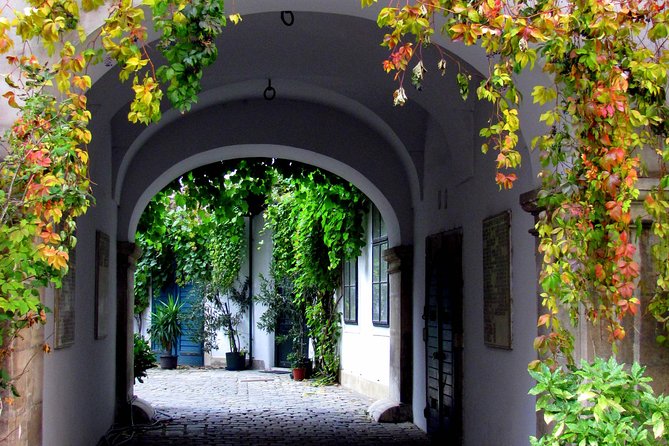
Vienna can look like a museum, but this private 3-hour walk is built around the stories hiding in plain sight, quiet corners and all. You get a real route through the center that connects big landmarks to the smaller, more human details that make Vienna feel like a lived-in city.
I especially like the way you blend major stops with street-level legends, including the Jesuit Church and the basilisk mural on Schönlaterngasse. I also like that the tour includes a secret rooftop viewpoint and food lore, including the area’s famous schnitzel tradition that dates back to 1905.
The one drawback to plan for is the pace. This is a walking tour with moderate fitness expectations, and from feedback linked to this experience, it can average about 8,000 steps, which may feel like a lot if you need frequent sitting or have trouble with stairs.
Key highlights you’ll feel on this walk
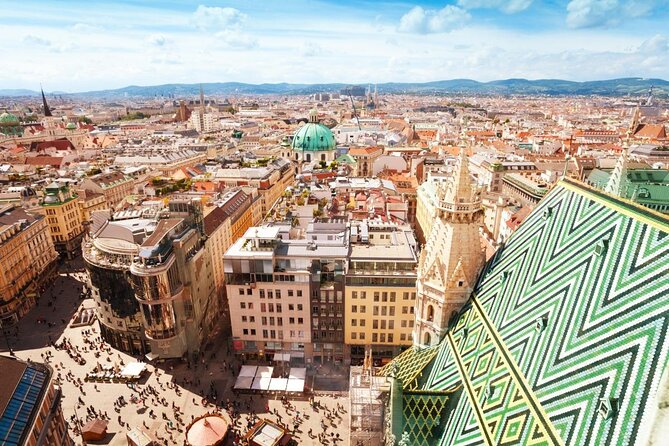
- Stubentor’s eastern gate starts you with Vienna’s defensive scale, not just pretty facades
- Jesuit Church architecture explained in a way that helps you see meaning in stone
- Schönlaterngasse stories including the basilisk mural and schnitzel lore since 1905
- Sala Terrena in the Deutschordenshaus ties architecture to music and an 18th-century moment
- Judenplatz and the Holocaust Memorial places modern memory in an old city square
- Secret rooftop views for a perspective you will not get from street level
Quiet corners, big moments: what this tour is really about
This private Vienna walk works because it does not treat the city like a checklist. You start with city walls and architecture that explain how Vienna defended itself, then you move into religious, cultural, and memorial spaces that carry weight without feeling heavy-handed.
What makes it different from the standard highlights circuit is that the guide’s stories connect the dots you might miss on your own. You do see St Stephen’s Cathedral and Judenplatz, but you also get the smaller visual cues, like murals and building details, that turn photos into understanding.
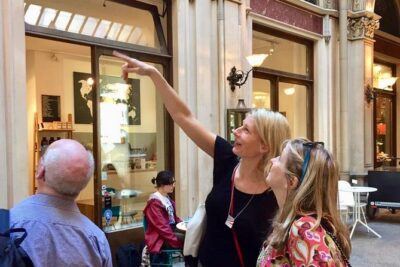
It is also private, so you get a conversation instead of a lecture line. In past experiences on this tour, guides like Walter, Sabine, Hannes (spelled Hannas in one review), Brigitte, and Danielle have been praised for being personable, funny, and flexible when you have questions or want to slow down at a stop.
More Walking Tours in Vienna
- Vienna: Guided Walking Tour of City Center Highlights
★ 4.7 · 4,989 reviews - Vienna: Vienna Central Cemetery Guided Walking Tour
★ 4.8 · 3,307 reviews - Vienna: Guided Walking Tour of City Highlights & Hidden Gems
★ 4.9 · 2,180 reviews
Meeting up smoothly: pickup, private group size, and timing
This is priced at $344.80 per group for up to 10 people, and it runs about 3 hours. You can also choose a morning or afternoon departure, which is handy if you are timing your day around a museum visit, a concert, or a train arrival.
Pickup is often the easiest way to start. The tour can meet you at your doorstep, pier, or train station, and other meeting points can be arranged inside Vienna. If you are on an A-ROSA ship, the provided detail is Pier Handelskai 265, 1020 Wien.
You will also get a mobile ticket, which makes check-in straightforward. The tour is offered in English, and it is private, meaning it is only your group.
One practical planning note: the tour is near public transportation. That matters because Vienna is compact on the map, but walking still adds up in real time.
Stop 1 at Stubentor: starting at an eastern gate instead of the usual postcard
The walk begins at Stubentor U, one of Vienna’s eastern gates. This is a smart first move because it frames the city as something built for defense long before it became a center of music and art.
From street level, it is easy to forget that Vienna’s look is shaped by walls, borders, and protection. Here you get a quick sense of scale and why the gate mattered, so the rest of the walk feels more grounded.
This stop is short, about 10 minutes, and admission is free. Expect this to be a “set the stage” moment, not the main visual thrill.
Jesuit Church and Schönlaterngasse legends: where architecture turns into story
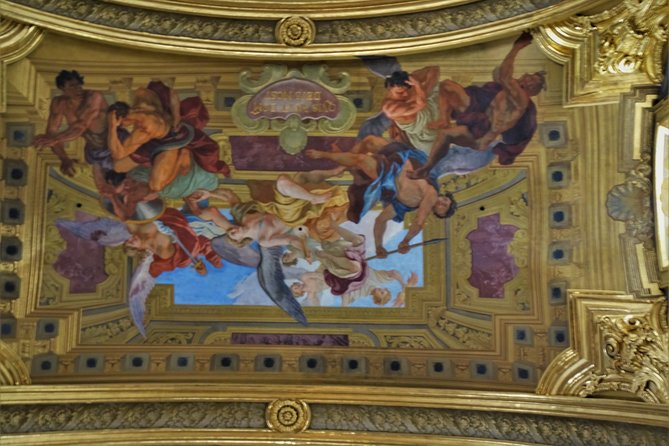
Next you head to the Church of the Jesuits. The focus here is how spiritual ideas show up in architecture and decoration. That might sound abstract until you realize how often people pass buildings in Vienna without noticing the logic behind the design.
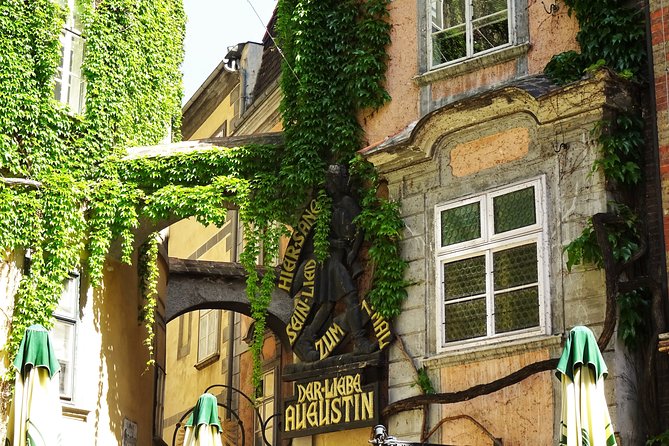
After the Jesuit Church, the tour shifts to Schönlaterngasse and the stories attached to the street. You will see a mural that illustrates the legend of the Vienna basilisk. It is the kind of detail that feels silly in a good way until you learn why it stuck in local memory.
You also get a food-related stop that locals actually talk about. The tour highlights the area as the since-1905 home of Vienna’s most famous schnitzel. Even if you already know the basics about schnitzel, this connection to a specific place and time makes the dish feel like part of the city’s everyday identity, not just a tourist default.
This section is usually quick, around 10 minutes per stop, with free entry listed for these points.
A different sort of Vienna day:
- Vienna: Vivaldi’s Four Seasons Concert in Karlskirche
★ 4.7 · 14,951 reviews - Vienna: Spanish Riding School Training
★ 3.9 · 9,281 reviews - Vienna: Skip-the-cashier-desk-line Giant Ferris Wheel Ride
★ 4.5 · 7,859 reviews - Vienna: Schönbrunn Palace & Gardens Skip-the-Line Tour
★ 4.7 · 7,739 reviews
Deutschordenshaus Sala Terrena: music, rooms, and Vienna’s 1781 atmosphere
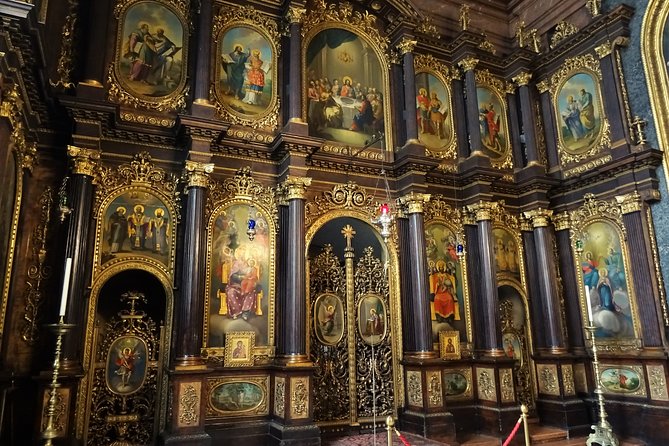
One of my favorite parts of this route is the shift into a less obvious building: the Sala Terrena in the Deutschordenshaus. The story centers on what was played while someone lived in the house of the Teutonic Order in 1781.
Even without getting lost in dates, this stop helps you understand Vienna as a city of spaces where music is not separate from daily life. You are looking at a room, but you are also hearing why the room mattered when culture and patronage shaped what people heard.
It is a brief stop, about 10 minutes, with admission listed as free. The payoff is the way the guide links architecture to lived experience.
St Stephen’s Cathedral: outside details, then inside time

St Stephen’s Cathedral is the big visual anchor on the tour. The approach here is practical: you get help noticing outside details first, then you find time to look inside.
You are not walking past St Stephen’s at full speed with a “see it, move on” vibe. In this format, the guide’s explanations help you avoid that common feeling of seeing a masterpiece but missing what makes it one.
The scheduled time is about 15 minutes for St Stephen’s, and entry is listed as free for the stop. Still, be aware that 15 minutes inside is enough for a focused look, not a slow cathedral daydream. If you want to linger for a long sit, tell the guide early so pacing can match your needs.
Judenplatz Holocaust Memorial: memory in the middle of the city
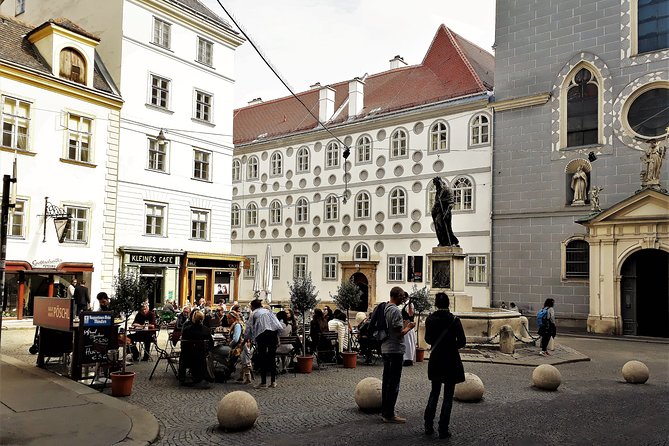
Judenplatz Holocaust Memorial is built into one of Vienna’s most atmospheric neighborhood squares, and the tour treats it with respect and context. You get about 10 minutes here, which is short, but it is the kind of stop where the guide’s framing changes how you read the space.
This is the section of the walk that helps Vienna feel real. You see the square and the memorial together, so it is not just a monument in isolation. Instead, it sits inside the everyday geography of the city.
The tour then continues through the older urban fabric, with more stories that bring nearby places to life. This area is also where you can hear how history moved through Vienna’s streets.
Café Central, Ferstel Passage, and the story behind friendships that never happened
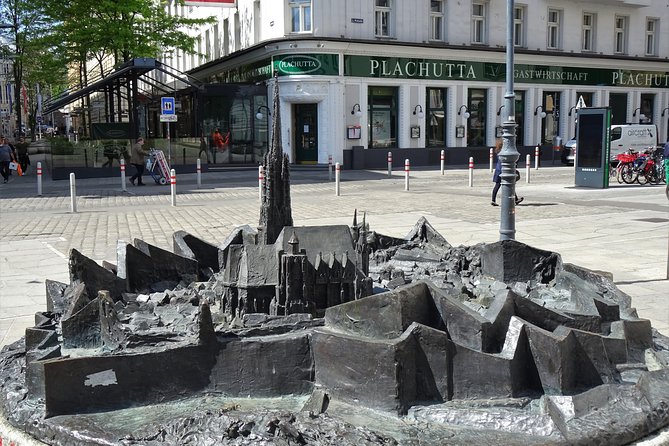
One of the more fun, brain-stretching stretches of the tour happens near Café Central and the Ferstel Passage. The tour includes a story about where Trotsky and Stalin did not become friends, tied to the broader social history of the area.
Even if you are not a political history person, this kind of urban legend works because it makes you look at the buildings and passages as meeting points. You are learning how Vienna’s public spaces shaped who showed up, and who did not.
This part is also a reminder that Vienna is not only about composers and empires. It is also about coffeehouse culture, writers, debates, and the way people used corridors and cafés as their versions of media.
Palais Daun-Kinsky: a palace stop with real dates and real people
Palais Daun-Kinsky is one of those stops that feels extra valuable because it comes with specific facts you can carry home. The palace was commissioned by Count Wirich Philipp von Daun. Construction started in 1713 under architect Johann Lucas von Hildebrandt.
You also hear a notable birth connection: Prince Józef Poniatowski was born there on 7 May 1763. It is a great example of how Vienna’s grand buildings keep pointing back to individuals, not just styles.
This stop is scheduled for about 10 minutes, with admission listed as free. The goal is not a palace tour. It is to help you understand why this building is where it is in the city’s story.
Rathausplatz and Café Landtmann: Freud’s favorite stop
You end up near Rathausplatz, and the tour includes Café Landtmann, described as Freud’s favorite. That single detail does a lot of work for your understanding of the city.
It nudges you to see Vienna as a hub of thought, not only a backdrop for performances. The guide’s story helps you understand why ideas gather in specific places, and why those places keep turning up in Vienna’s cultural memory.
This is another short stop, about 10 minutes, with admission listed as free.
The secret rooftop: views that feel like you found a door
A standout highlight on this tour is the head-up-to-a-secret-rooftop viewpoint for great views. Rooftop access is often what separates a standard city walk from something that feels personal, because it changes your angle on the streets below.
Expect this to be the payoff moment when you finally see how all the architecture you have been hearing about fits together. It also gives you a quick break from street-level walking.
Since rooftop details like exact stair counts are not specified in the provided info, plan with care if you have mobility limits. If stairs are a problem for you, ask the guide before booking and be very clear about what you can manage.
Price and value: why $344.80 can work for the right group
At $344.80 per group up to 10, this tour is often good value when you split it among friends or family. You are paying for a private, licensed guide and a focused route that mixes major landmarks and the smaller visual clues that make Vienna click.
Also, many of the listed stops show admission as free. That does not mean everything is free in Vienna, but it helps the tour stay “all in” as a cultural activity rather than turning into an expensive add-on day.
Where the value really shows up is the guide time. In feedback tied to this experience, guides have been praised for responding quickly beforehand and for offering practical suggestions after the tour, from food stops to extra things you can do with your remaining hours.
If you are traveling solo, the per-person cost will feel higher than a group bus tour. Still, if you like asking questions, want a flexible route, or are short on time and want a coherent storyline, the private format can be worth it.
Pacing and practical considerations: what to tell yourself before you go
This is a walking tour in Vienna’s inner districts. The tour notes moderate physical fitness, and feedback tied to the experience mentions an average around 8,000 steps. That is normal for a lively 3-hour walk, but it is not “sit at cafés all morning” energy.
If you have mobility challenges, you should communicate them early and clearly. One piece of advice: do not assume your needs will be obvious on the day. Tell the guide what you need, like frequent sitting, reduced stairs, or a slower pace, and agree on how the last parts of the walk should work.
Also remember: pets are not permitted in certain areas visited. Service animals are allowed, so if that applies to you, plan around the sites where pets are restricted.
Finally, the tour is private, which is great for tailoring, but it does require everyone to keep the group moving. If you have mixed mobility needs, a private tour can still work, but only if the plan is adjusted from the start.
Who this tour suits best
This experience fits you if you like history that connects to what you can actually see on the street. It is also ideal if you want a blend of Vienna’s famous names (cathedrals, memorials, palaces) and the smaller stories that make the city feel less generic.
It is a good match for first-timers who want more than the usual crowd route. It also works for repeat visitors because the route focuses on corners and context, not only the headline sights.
If you travel with kids, the private format can help because a guide can adjust pace and explanations. Just keep the walking expectations in mind, especially if everyone needs frequent rests.
Should you book this private Vienna walk?
Book it if you want a 3-hour private route that connects major sights like St Stephen’s Cathedral and Judenplatz with street-level stories like the basilisk mural and Vienna’s schnitzel lore. The payoff is the rooftop view and the feeling that Vienna has layers, not just highlights.
Skip it or ask for a more flexible format if you know you struggle with steps or long walking days. This is not a museum shuttle. It is an active walk, and the quality depends on pacing working for your group.
If you do book, your best move is simple: share what you care about (architecture, music stories, food history, or memorial context) and confirm how fast you want to go before you start the walk. That is how you turn a solid itinerary into a day that feels made for you.
FAQ
How long is the private Vienna walk?
The tour lasts about 3 hours.
What is the group size for this experience?
It is priced per group and can include up to 10 people.
Is pickup available?
Yes. Pickup can be offered from your doorstep, pier, or train station, and other meeting points in Vienna can be arranged.
Where does the tour start?
The walk starts at Stubentor U, one of Vienna’s eastern gates.
Is the tour offered in English?
Yes, it is offered in English.
Are tickets and entry fees included?
The listed stops show admission tickets as free for the places included on the route.
Is this tour wheelchair friendly?
The tour is listed for travelers with moderate physical fitness level, and the walking is part of the experience. If you have mobility concerns, you should check in before booking.
Are pets allowed?
Pets are not permitted in certain areas visited.
Is there a cancellation option if plans change?
Free cancellation is available up to 24 hours before the experience start time for a full refund.
Latest Vienna reviews
- Vienna Food Tour: Dishes, Wine, Street Food & Culture★ 4.7 · 12 reviews
- Vienna: mumok Museum of Modern Art Entry Ticket★ 3.8 · 13 reviews
- eBike Vienna 90min guided tour – use ebike for the whole day★ 4.0 · 13 reviews
- A box for a romantic walk in the city center of Vienna★ 5.0 · 13 reviews
- Vienna: Austrian Wine Tasting★ 4.8 · 13 reviews
- Bratislava Private Tour from Vienna★ 4.5 · 13 reviews
- Small Group Half Day Tour from Vienna to Bratislava★ 4.0 · 14 reviews
- Private One Day Trip to Bratislava from Vienna★ 4.5 · 13 reviews
Walking Tours, compared.
Guided Walking Tour of City Center Highlights
Read our review →
Guided Walking Tour of City Highlights & Hidden Gems
Read our review →
Vienna Historic Center Small Group Walking Tour
Read our review →
Browse the lists this tour appears in