
Reviewed · WALKING TOURS
Private Vienna Art Nouveau Walking Tour
Vienna’s Art Nouveau is often treated like a style you admire from the outside, but this private walking tour makes you read the city like a design book. I love tracing the movement from the Vienna Secession right into Otto Wagner’s work, and I love seeing how the Beethoven Frieze fits into the bigger story of rebellion and identity. One thing to consider: key museum and pavilion entry fees are not included, so you’ll want a little cash for tickets.
This is also a true private experience, so your pace and questions steer the day. Guides like Barbara are singled out for giving solid historical background and answering everything from Vienna’s art to the city’s past and present. You’ll check in with a mobile ticket, which keeps things simple.
The route runs about 3 hours and is mostly walking between metro stations and landmark buildings, so comfortable shoes help. If you dislike steps and short indoor stops, that’s the only real “fit” issue to think about.
Key highlights worth planning for
- Vienna Secession mission in stone, starting at the Secession Building and its Klimt connection
- Metro stations as architecture lessons, not just transit stops
- Otto Wagner in multiple roles, from transport buildings to postal and residential design
- A smart mix of indoor and outdoor time, so you can actually absorb what you’re seeing
- A break in the middle, including Stadtpark and time near the Naschmarkt market area
- A quirky ending with a tiny Emperor-focused stop, adding a fun historical twist to the rail theme
What makes this Vienna Art Nouveau tour feel different
Vienna has a habit of turning everyday infrastructure into design. This tour leans hard into that idea. Instead of only visiting famous palaces, you’re walking through the city’s visual “system,” where even metro-adjacent spaces reflect Jugendstil thinking.
I like that the private guide is doing the connecting. You’re not just shown buildings, you’re guided through why they look the way they do, and what Vienna was trying to say in the late 1800s and early 1900s. The best part is the conversations. In feedback, guides such as Wolfgang are described as making the whole nouveau movement click, even if you do not know the terms going in.
Your biggest decision is less about whether you’ll enjoy the theme, and more about how much you want to pay for optional entries. The architecture is mostly outside, but two key indoor moments can add cost.
More Walking Tours in Vienna
- Vienna: Guided Walking Tour of City Center Highlights
★ 4.7 · 4,989 reviews - Vienna: Vienna Central Cemetery Guided Walking Tour
★ 4.8 · 3,307 reviews - Vienna: Guided Walking Tour of City Highlights & Hidden Gems
★ 4.9 · 2,180 reviews
Price and value: what $490 per group really buys
The price is $490 per group (up to 10 people). That matters because you’re not paying “per person” in the usual sense. If you’re traveling as a small group or with family, it can turn into good value fast.
What you get for the money:
- a 3-hour private guided walk
- a professional guide
- a route designed around metro stations and Art Nouveau design
What costs extra:
- entrance fees for specific stops
- food and drinks unless you arrange them
This tour also mentions pickup as a feature, but hotel pickup and drop-off are listed as not included. So if you want door-to-door help, confirm what pickup means for your specific departure. If not, you’ll be using the meeting point near Operngasse and public transport anyway.
Stop-by-stop: the design story, piece by piece
Secession Building: where the Vienna Secession declares itself
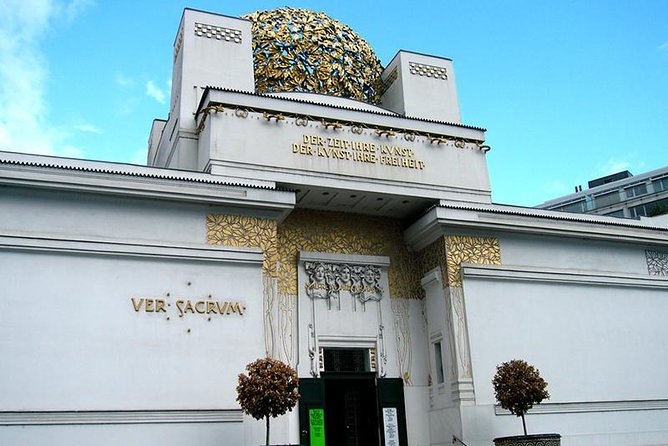
Your tour starts at the Secession Building (Secessionsgebaude), completed in 1898 by Joseph Maria Olbrich. This place is not just an exhibition hall. It was meant as a manifesto for the Vienna Secession, a group of artists who broke away from the older, established art order.
If you add the interior visit, you get one of the defining visual moments of the whole trip: the Klimt Beethoven Frieze. The idea matters as much as the art. This is where you see how art and architecture were used to push back, not just to decorate. It also gives you context for what you’ll see later with Otto Wagner, who approached modern design from a very practical, built-world angle.
How long you’ll likely spend here: about 30 minutes. Budget extra for admission if you want that interior viewing. It is not included.
A different sort of Vienna day:
- Vienna: Vivaldi’s Four Seasons Concert in Karlskirche
★ 4.7 · 14,951 reviews - Vienna: Spanish Riding School Training
★ 3.9 · 9,281 reviews - Vienna: Skip-the-cashier-desk-line Giant Ferris Wheel Ride
★ 4.5 · 7,859 reviews - Vienna: Schönbrunn Palace & Gardens Skip-the-Line Tour
★ 4.7 · 7,739 reviews
Stadtpark: a breather that also sets the tone
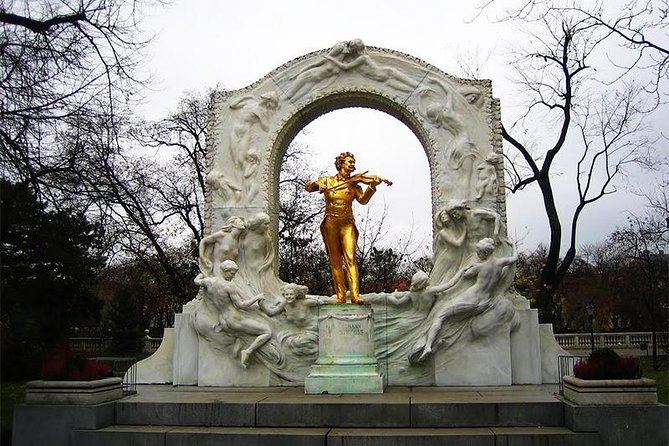
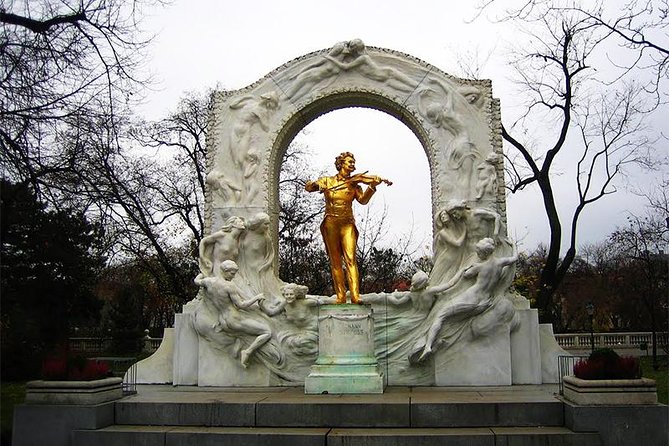
Next comes Stadtpark, Vienna’s municipal park stretching from the Ringstraße toward Heumarkt. It is a classic “reset button” in the middle of an architecture walk. You catch a different pace, you get a little shade or open-air time (depending on the day), and you look at the city with less tunnel vision.
This is also a good place to let your guide connect themes. If you’ve seen just facades so far, you’ll start noticing how public space fits into the Art Nouveau mindset. Park time is free, and it helps you stay fresh for the next big architectural stops.
Karlsplatz: the Jugendstil station buildings that made transport look artistic
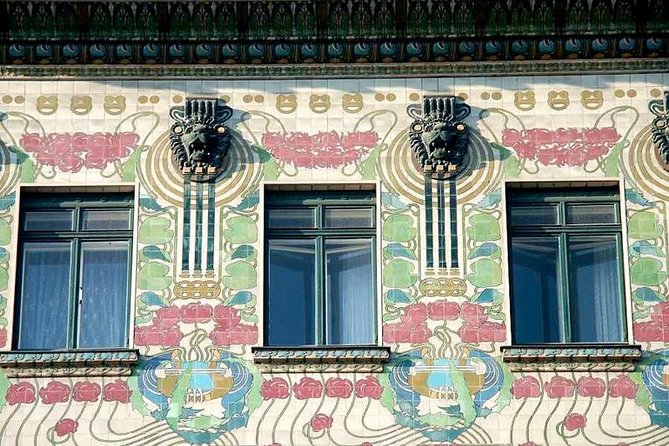
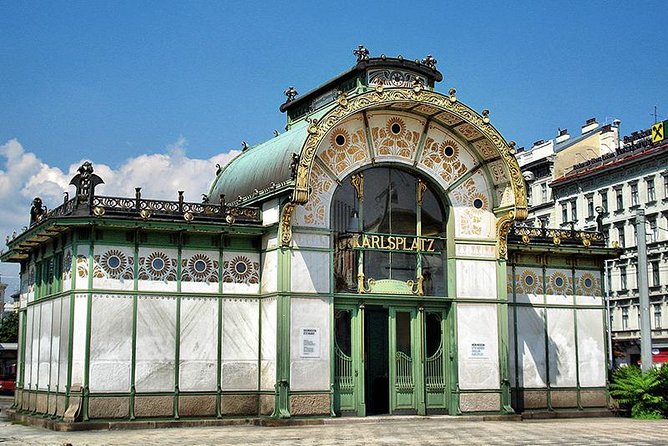
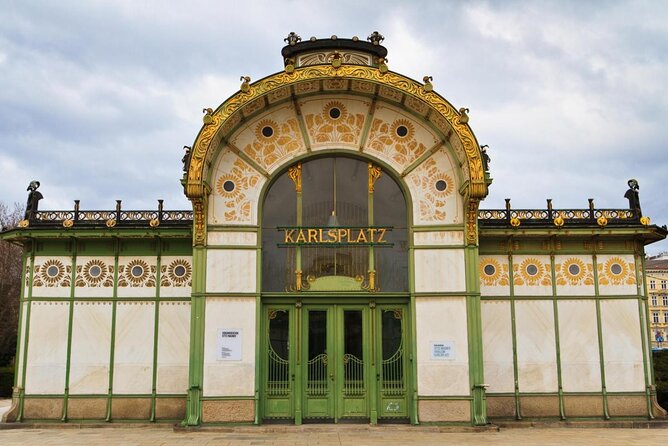
At Karlsplatz, you see why Otto Wagner’s transport work became art. The above-ground buildings of the Karlsplatz Stadtbahn station are known Jugendstil examples, designed by Otto Wagner with Joseph Maria Olbrich.
This is one of those stops where it helps to take your time and look at details, not just overall shapes. The whole point is how structure, function, and style got braided together. Metro stations and nearby rail architecture may sound boring on paper, but Vienna’s version is basically a design showcase.
Time here is listed at about 20 minutes, and the outdoor architecture is the star. Admission is not included for this stop.
Otto Wagner Pavillon Karlsplatz: a small building with a big personality
Right after Karlsplatz, you can visit the Otto Wagner Pavillon Karlsplatz, an 1898 Art Nouveau station building designed by Wagner. The pavilion is presented as an exhibit on Wagner’s life and work.
This is the moment where you might want to ask yourself a simple question: do I want the context? If you do, you’ll pay the admission listed for the pavilion. The tour notes that it fits into the schedule during the April to October season when the museum is open.
Ticket cost details:
- €5 general admission
- €4 senior citizens, students, holders of Vienna Card, and persons with disabilities
Admission is not included, and you pay on the day.
Postsparkasse: Otto Wagner’s postal building as a design landmark
Then you head to Postsparkasse, the Austrian Postal Savings Bank building, another Otto Wagner creation. This one is regarded as an important work tied to the Vienna Secession branch of Art Nouveau.
This stop works well because it shows Wagner in a different light. You’re not only seeing elegance. You’re seeing authority, a belief that public services should look modern and purposeful. If you pay attention to the building’s character, you start to understand why Vienna’s Art Nouveau is often described as both artistic and practical.
Time here is about 25 minutes, with free admission noted for this part.
Naschmarkt: market energy as a contrast to architecture
Next is Naschmarkt, Vienna’s best-known food market, with around 120 market stands and lively restaurants. Even if you do not eat during the tour, it changes the mood.
Naschmarkt is useful here because it adds everyday texture. Art Nouveau was not only for galleries. Vienna was experimenting in daily life too, including what people bought, cooked, and talked about.
You get a shorter stop, about 10 minutes, and admission is free. If you want a snack, plan it for nearby time, since food and drinks are not included unless a specific arrangement is made.
Otto Wagner’s apartment houses and the residential side of Jugendstil
The tour overview includes a pause to see two apartment houses designed by Otto Wagner, and some of the design lovers point out standout residential work nearby. When you shift from postal and transport buildings into housing, the tone changes.
You get to see a Vienna idea that feels very modern: the belief that a home and its facade should carry the same design identity as civic architecture. Ceramic-like surfaces, decorative structure, and the way buildings frame streets are part of why people remember these sections.
One feedback detail that’s worth your attention: people highlighted the Majolikahouses around the Naschmarkt area and also the Zacherl House. These kinds of stops are where you often stop trying to memorize names and start noticing patterns, like how color, ironwork, and form work together.
Since the apartment-house portion is tied to Wagner and the tour theme, if you’re the type who likes to photograph facades, this is where your camera will earn its keep. Give yourself permission to slow down for angles.
The ending: metro stations and the Emperor-style mini stop
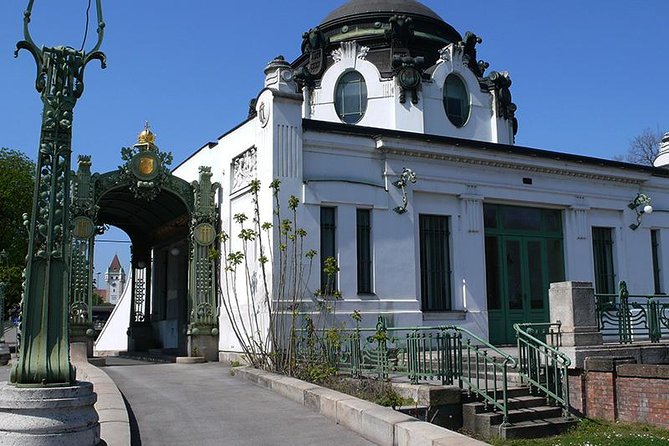
You finish at a pair of metro stations, with a final tiny stop described as being built for the Emperor. That detail alone makes the ending fun. It turns the rail theme into a mini story, not just a straight walking route.
Practically, this finish matters because it closes the loop: you started at Art Nouveau in an exhibition building, and you end back at transit spaces that quietly show how Vienna wanted modern life to look.
It also helps you plan the rest of your day. Once you’re at the final station area, you can head on with your own itinerary without needing to backtrack across town.
Guided by people who actually talk, not just point
A big strength of this tour is the guide quality. In feedback, Barbara is praised for thorough historical and artistic background and for answering questions that range from major art movements to Vienna’s broader past and present. Another guide, Wolfgang, is described as making the nouveau movement understandable even if you come in without much background.
There’s also mention of Annelie as a wealth of information on Vienna Secessionism and Vienna itself. That’s the right kind of expertise for this kind of tour. Art Nouveau can feel “pretty but abstract” if nobody explains the motives. Here, the guide gives you the meaning behind the shapes.
Who this tour suits best
This is a great fit if you:
- love architecture and want to see how style turns into real buildings
- enjoy the Vienna Secession story and want it connected to Otto Wagner
- like private touring and want your questions answered, not rushed
It’s also a good match for design-minded couples, small groups, and anyone who wants a focused theme without getting lost in too many stops.
If you hate paying for museum entries, or you only want outdoor photos, you can still enjoy parts of the route. Just know that the most famous interior moment, the Klimt Beethoven Frieze connection, requires extra admission. The same idea applies to the Otto Wagner Pavillon during its open season.
Practical tips before you book
Here’s how to make this tour smooth:
- Wear comfortable shoes. It’s a walking route with multiple station areas.
- Bring a little budget for entrance fees for Secession House and the Otto Wagner Pavillon during the open months.
- If you have an interest in Klimt and the Vienna Secession, plan to spend time on the indoor stop.
- If you want the apartment-house and residential design moments, bring your curiosity. These facades reward slow looking.
For cancellations, the policy is free cancellation up to 24 hours in advance for a full refund, which gives you flexibility if your schedule changes.
Should you book this Vienna Art Nouveau walking tour?
Book it if you want a guided way to understand Vienna’s Art Nouveau at street level. The value is strongest for small groups because the $490 per group format can spread out well, and the private setup makes it easier to ask real questions.
Skip or reconsider if you dislike paying separate admission for key interiors, or if you want a mostly food-and-views style day instead of architecture-focused time. You can still enjoy the outdoor Jugendstil sections, but the full “aha” moments are tied to the museum-style stops.
If you like the sound of seeing metro stations as art, and you want Otto Wagner and the Vienna Secession story woven together, this is a very sensible use of a half day in Vienna.
FAQ
How long is the Vienna Art Nouveau private walking tour?
It runs about 3 hours.
How many people are in each private group?
The tour is private and is priced for a group up to 10 people.
Where do we meet the tour?
The start meeting point is Operngasse 7, 1010 Wien, Austria.
Is the tour admission included?
No. Entrance fees are not included. Secession House admission is listed for Tuesday to Sunday, and the Otto Wagner Pavillon entry applies during April to October when it is open. Your guide helps with payment.
How much are the entrance fees for the Secession House and Otto Wagner Pavillon?
For Secession House (Tuesday to Sunday), it lists €9.50 for adults and €6 for students and seniors. For the Otto Wagner Pavillon (April to October), it lists €5 general admission and €4 for senior citizens, students, Vienna Card holders, and persons with disabilities.
Is food included in the tour price?
Food and drinks are not included unless specified.
Do I get a mobile ticket, and is pickup available?
A mobile ticket is included. Pickup is offered, but hotel pickup and drop-off are listed as not included, so it is smart to confirm what pickup means for your situation before you go.
Latest Vienna reviews
- Private tour of Hallstatt and Salzburg through beautiful Alps★ 5.0 · 3 reviews
- Vienna: Vienna under the Nazis, Private Walking Tour★ 1.8 · 3 reviews
- Magical Vienna Christmas Market Tour – 2 Hours★ 2.7 · 3 reviews
- Vienna: Mythos Mozart Experience Ticket& Guided Walking Tour★ 2.5 · 3 reviews
- Vienna: Private tour Mauthausen and Linz★ 4.1 · 3 reviews
- Vienna Private Schönbrunn Palace Tour, Extra Rooms and Gardens★ 5.0 · 3 reviews
- Skip-the-line Belvedere Palace Guided Tour with Transfers★ 5.0 · 3 reviews
- Schoenbrunn Palace Skip-The-Line and Vienna Highlights Private Tour★ 4.5 · 3 reviews
Walking Tours, compared.
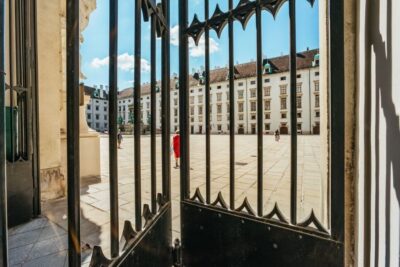
Guided Walking Tour of City Center Highlights
Read our review →
Guided Walking Tour of City Highlights & Hidden Gems
Read our review →
Vienna Historic Center Small Group Walking Tour
Read our review →
Browse the lists this tour appears in