
Reviewed · WALKING TOURS
A private Historical Walking Tour in Vienna
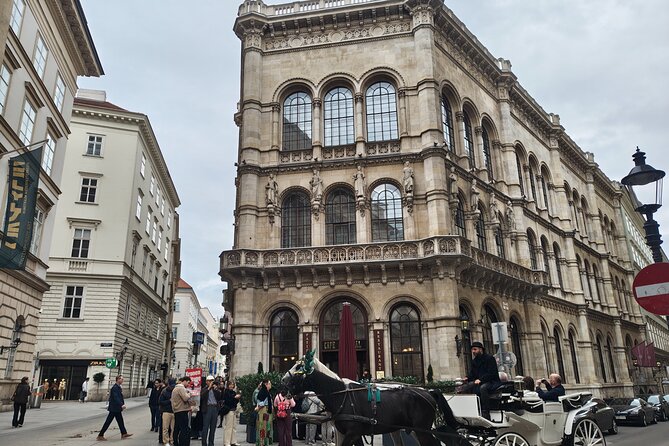
This private historical walking tour is interesting because it layers art, opera, and imperial Vienna into one efficient walk through the 1st district. You get a local guide to connect the dots, not just point at buildings.
I love the personal feel of a private group up to 15, with guides like Jeremy and Eszter who are known for tailoring the pace and focus to what you care about. I also love the way the route mixes big-name icons with practical street-level orientation, so Vienna starts to make sense fast.
One consideration: several major stops are exterior viewpoints, and some places you might want to go inside have admission fees that are not included. Also, it is still a walking tour, so plan for weather and comfortable shoes.
Key Highlights You Will Notice Right Away
- Private group up to 15 means you are not competing for attention in a crowd
- A tight 2 hours 30 minutes itinerary that hits the city center without dragging
- Guides who adjust to your interests, like Jeremy and Eszter tailoring the walk
- A smart mix of famous sites and calmer streets, useful even on busy days
- Multiple free-view stops, with only some museums or venues charging entry
- Mobile ticket and pickup option that keep logistics simple
Getting Oriented Fast in Vienna’s 1st District
This tour is designed for people who want Vienna to click quickly. In about two and a half hours, you move through the core of the city where power, culture, and everyday life sit on the same streets.
I like that the pace stays human. You will spend only minutes at each stop, but the guide should give you enough context to understand what you are seeing before you move on.
If you are visiting for the first time, this is a strong way to get your bearings. You also get a clean photo route through major landmarks that often confuse first-timers because they are close together but feel unrelated.
More Walking Tours in Vienna
- Vienna: Guided Walking Tour of City Center Highlights
★ 4.7 · 4,989 reviews - Vienna: Vienna Central Cemetery Guided Walking Tour
★ 4.8 · 3,307 reviews - Vienna: Guided Walking Tour of City Highlights & Hidden Gems
★ 4.9 · 2,180 reviews
Price and Value for a Private Group Up to 15
The price is $312.06 per group (up to 15 people) for about 2 hours 30 minutes. That pricing is what makes this tour make sense for families and small groups, since it is not priced per person.
At full capacity, you are looking at roughly $21 per person if you bring the maximum group size. If it is just two or three of you, the per-person cost jumps, but you still get the main value: a guide who can steer the walk and answer your questions in real time.
Also, it is listed as a popular booking, often reserved around 45 days in advance. If your dates are fixed, it is worth locking it in early rather than hoping for last-minute space.
Where You Meet and How the Walk Starts
You begin at Tourist-Info Wien Albertinaplatz 1, 1010 Wien, Austria. That is a convenient starting point because it puts you near a cluster of major sights without forcing you to navigate far from public transport.
Pickup is offered, which can be a lifesaver if you are arriving by train or you just do not want to think about where to meet. If you use pickup, confirm the exact pickup details with the operator when you book.
The tour ends in a different location, so plan for a quick transition to your next activity right after the walk. You do not want to schedule something too tight right at the finish.
What Your Guide Does With Stops Like Albertina and the State Opera
This is not a museum-only experience. It is a guided walk where the guide explains what the buildings mean, then you look, photograph, and move.
You can expect the guide to keep things lively and conversational. The names that show up in feedback include Jeremy, Eszter, and Horst, and the common thread is simple: they help you connect the city layout to the story. You get more than dates, you get meaning you can carry into the rest of your Vienna days.
If you have specific interests, this is also the kind of tour where you can usually steer. One guide style highlighted in feedback is asking what you want to see at the start, then adjusting the route accordingly. On snowy, windy days, you may even get help finding a short place to rest and warm up.
More Historical Tours in Vienna:
- Vienna: Time Travel and Magic Vienna History Tour
★ 4.6 · 3,879 reviews - Vienna: World War II Historical Walking Tour
★ 4.8 · 1,772 reviews - Vienna Historic Center Small Group Walking Tour
★ 5.0 · 1,746 reviews - Time Travel-Magic Vienna History Tour Ticket
★ 4.5 · 1,099 reviews
Albertinaplatz: The Walk Begins With Orientation
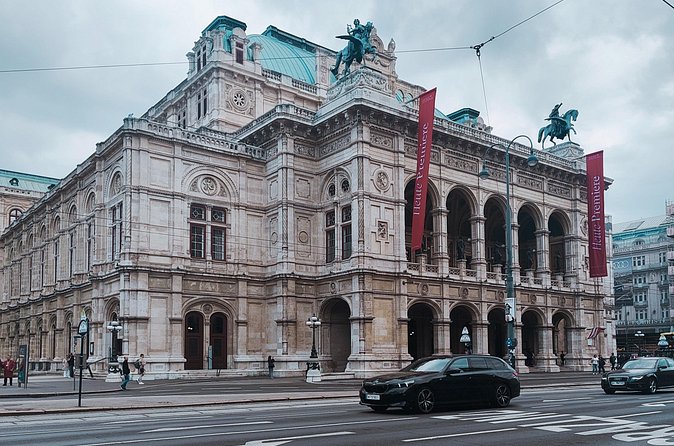
You start at Albertinaplatz, where the guide gives an introduction and points out what you are looking at around you. Since the meeting point is a plaza with major surroundings, it is a smart first stop. You get context before you start moving deeper into the center.
This stop is marked as free for admission. You are not losing time paying entry fees, and the guide should use the minute-by-minute flow to set expectations for the rest of the route.
The Albertina: Art Museum Energy Without the Long Detour
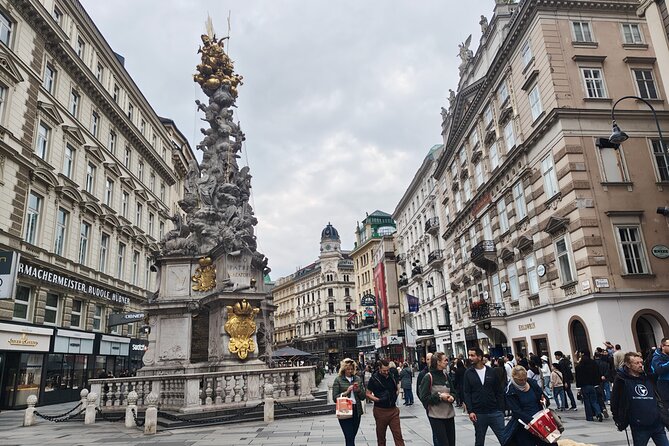
Next you reach the Albertina. Even if you do not step inside, this is a meaningful stop because it is described as one of Vienna’s key art museum spaces, with an international reputation.
The admission is not included here. That matters because, with only minutes at this stop, you probably will not get a full museum visit on this itinerary. If you want to go inside, you will need to plan a separate time and ticket.
Still, the exterior time is useful. The guide can give you a sense of why this is a major art collection and how it fits into Vienna’s cultural identity.
Wiener Staatsoper: Opera as a Vienna Symbol
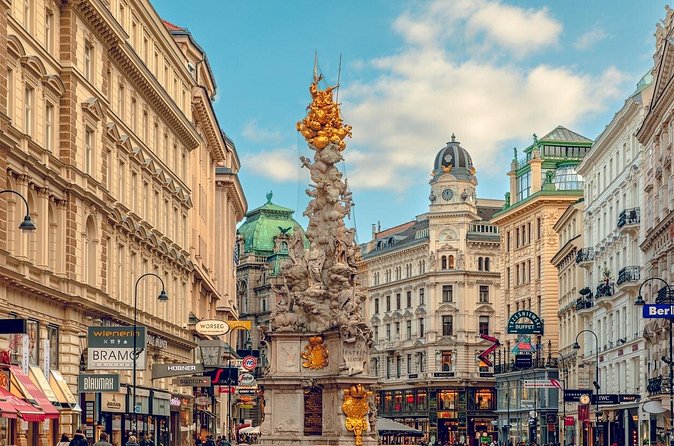
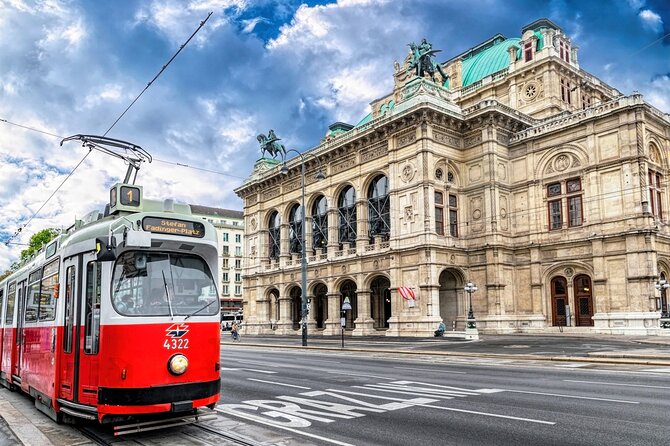
You then head to Wiener Staatsoper, the Vienna State Opera. This venue is not just for opera fans, it is treated as a cultural symbol of the city and an engine for classical music and opera as an art form.
Again, the admission is not included. In practical terms, that means you should treat this stop as a viewing and explanation moment, not a ticketed inside visit.
If you love opera, you may enjoy how the guide frames what the building represents in Vienna. Even without entry, it is one of those places that makes the city feel instantly specific.
Hotel Sacher Vienna: A Historic Landmark and the Sachertorte Story
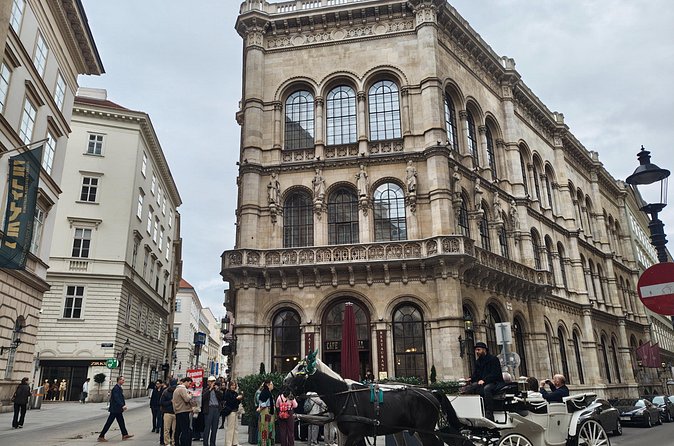
At Hotel Sacher Vienna, you get a different flavor of Vienna storytelling. This is a luxurious historic hotel, founded in 1876, and it is famous as the home of the original Sachertorte, created by Franz Sacher.
Admission is not included, but the stop works well because it connects Viennese history to something edible and iconic. It is the kind of moment that makes the walk feel memorable instead of only informational.
If you are planning your food schedule, this is a useful stop. You will leave with a stronger sense of why this hotel matters and what you are likely to hear about later in Vienna.
Burggarten and Ringstrasse: Gardens and the Grand Boulevard Era
You then move to Burggarten, a garden laid out in the 19th century as part of the Hofburg. This stop is described as originally designed for the imperial family, and it gives you a sense of how private imperial space became public-facing surroundings.
Admission is free, so it is an easy win for time on a walking tour. Use these minutes to slow down, look at the garden setting, and then get ready for the next wide-open streets.
After that comes Ringstrasse, created in the 1850s after the old city walls were demolished. This boulevard-style expansion transformed Vienna into a modern metropolis, and the guide can help you understand the meaning of that transformation while you walk along.
Maria Theresien Square: Museums Just Off the Main Thread
At Maria Theresien Square, you will see a cluster of major cultural institutions, including the Museum of Art History and the Museum of Natural History. This stop is a useful crossroad moment because it shows how Vienna concentrates museums near the center.
Admission is marked free. That means you can get the framing without committing to a timed ticket on the walk.
If you already know you want museum time later, this stop gives you a mental map. You can decide after the tour which museums feel most aligned with your interests.
Heldenplatz and the Hofburg: The Habsburg Core
Next is Heldenplatz, directly in front of the Hofburg. Heldenplatz is one of Vienna’s best-known landmarks, and it sets the scene for the next step.
Admission is free at this stage, and that is important because it lets the guide focus on the political and historical weight of the space. You are not buying entry just to understand what this place meant.
Then you reach the Hofburg, a palace complex served for centuries as the residence of the Habsburgs and as the center of power in Austria. This is one of the most “this is Vienna” stops on the entire walk.
Spending only minutes here can feel short, but with a guide who connects the dots, it becomes more than a quick glance. You should come away with a clearer idea of why Vienna’s central architecture feels like a single story.
Josephplatz: Small Square, Big Attention to Detail
You move on to Josephplatz, described as a small but striking square in the 1st district. It is known for historical significance and architecture, even though it is not as famous as some of the other names on the route.
Admission is free. That makes it an ideal stop for a guide to point out details you might miss if you were only speed-walking your way through.
This is also a good moment to check how your legs are doing. The tour is structured, but small pauses and short explanations help the time feel smoother.
Spanish Riding School Exterior Moments
The walk includes the Spanish Riding School (Spanische Hofreitschule). This is one of the oldest and most renowned riding schools in the world, known for classical horsemanship and the training of Lipizzaners.
Admission is not included. So plan on this being an outside look and explanation rather than a full stable experience.
Still, it is a great stop because it adds another angle to Vienna’s culture. It is not only art and architecture, it is also tradition and performance.
Graben and Kohlmarkt: Old Town Trading to Modern Shopping
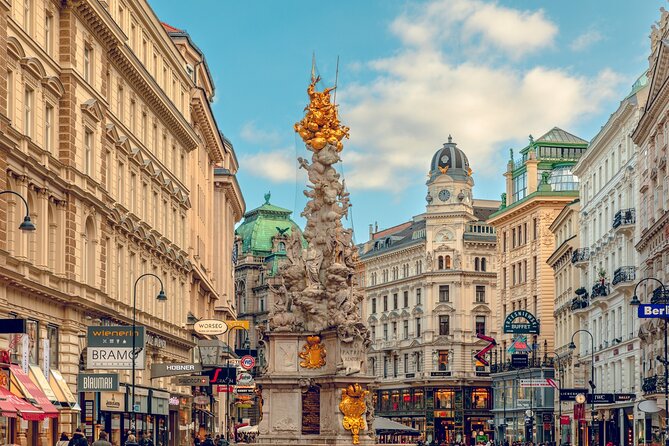
Next comes Graben and Kohlmarkt. The moat used to be part of medieval town fortifications. Over time, the surrounding area developed into an important commercial and shopping district.
Admission is free. This stop is perfect for feeling the everyday Vienna vibe, even if you are not shopping. The guide can help you understand how the street pattern links back to older city defenses.
One practical tip: if you are the type who hates big crowds, this portion can be more manageable than you might expect if your guide picks your walking line well.
Stephansdom and Stephansplatz: Vienna’s Gothic Anchor
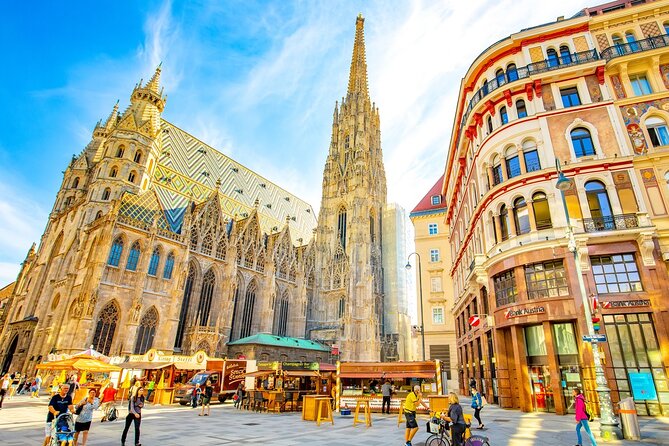
You then reach Stephansdom, St. Stephen’s Cathedral, and the area around Stephansplatz. This cathedral is the landmark of Vienna and one of the most important Gothic cathedrals in Austria.
Admission is not included, so treat this as a viewing and explanation stop unless you have planned a separate visit inside. Still, even standing outside can feel powerful when you know what to look for.
If your goal is to make Vienna feel real, this is one of the places where the city identity becomes obvious fast.
Mozarthaus Vienna: Mozart’s Only Surviving Home
After Stephansdom, you visit Mozarthaus Vienna, noted as the only surviving home of Wolfgang Amadeus Mozart in Vienna.
Admission is not included. That means you may not get enough time here for a full museum experience during this walk, but you can still get the important context.
This stop is especially good if you prefer music history that is connected to a physical place. Even a quick guided moment can make you want to return later with a dedicated ticket.
Ankeruhr Clock and Hoher Markt: The Fun Quirks of Old Vienna
The walk continues to Ankeruhr Clock, described as an astronomical clock in Vienna on Hoher Markt, known for colorful figures and moving representations.
Admission is free, and this is the kind of stop that breaks up the heavier imperial storyline with something playful. It also makes a strong photo pause without costing time on entry lines.
Then you visit Hoher Markt, one of Vienna’s oldest squares. Its history dates back to Roman times, when Vienna was an important settlement known as Vindobona.
Admission is free. The value here is that the guide can connect ancient settlement history to what you see now, without turning the walk into a lecture.
St. Rupert’s Church (Ruprechtskirche): A Quiet Historic End Note
Finally, you reach St. Rupert’s Church (Pfarrkirche St. Ruprecht), described as one of the oldest churches in Vienna, located in the 1st district.
Admission is not included. So once again, expect a guided viewing stop rather than a full interior visit on this itinerary.
If you want the tour to end with something calmer than the biggest crowds, this last phase is a good way to close. You get a final dose of old Vienna character without needing another ticketed stop.
Who This Tour Fits Best (And Who Might Want Something Else)
This private historical walking tour is ideal if you:
- want a strong first-time orientation to Vienna’s center
- care about art, opera, and Habsburg power
- are traveling with kids or teens and want a guide who can keep things moving and understandable
- want a private group feel without huge planning
The feedback also points to a family-friendly approach. In one New Year’s Eve experience, the guide was attentive to kids comfort and even worked in a quick stop for hot chocolate. The city was crowded for celebrations, but the guide helped find quieter streets to keep the pace enjoyable.
If you are the type who wants to spend long hours inside major venues like Albertina, the opera, or Stephansdom, you should treat this as the orientation layer. You will likely want to pair it with separate ticketed visits later.
Should You Book This Private Vienna Historical Walking Tour?
Book it if you want a smart, guided walk that helps Vienna make sense quickly, with stops like the Hofburg, Stephansdom area, Mozarthaus Vienna, and the Ankeruhr Clock all tied together by an attentive guide.
Skip it or consider a different format if your main goal is deep museum time inside major sites. This walk is structured for seeing, understanding, and getting oriented, not for long ticketed entries at every stop.
If you are traveling as a family or a small group, the private up-to-15 pricing can be excellent value. And if you care about having the itinerary shaped to your interests, the guide style highlighted in feedback makes this feel like more than a basic checklist.
Latest Vienna reviews
- Vienna Food Tour: Dishes, Wine, Street Food & Culture★ 4.7 · 12 reviews
- eBike Vienna 90min guided tour – use ebike for the whole day★ 4.0 · 13 reviews
- A box for a romantic walk in the city center of Vienna★ 5.0 · 13 reviews
- Vienna: mumok Museum of Modern Art Entry Ticket★ 3.8 · 13 reviews
- Vienna: Austrian Wine Tasting★ 4.8 · 13 reviews
- Bratislava Private Tour from Vienna★ 4.5 · 13 reviews
- Small Group Half Day Tour from Vienna to Bratislava★ 4.0 · 14 reviews
- Private One Day Trip to Bratislava from Vienna★ 4.5 · 13 reviews
Walking Tours, compared.
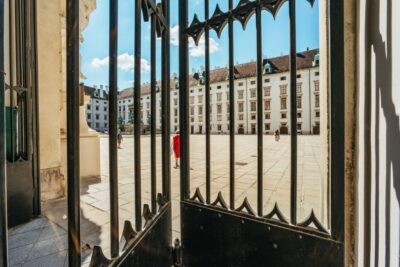
Guided Walking Tour of City Center Highlights
Read our review →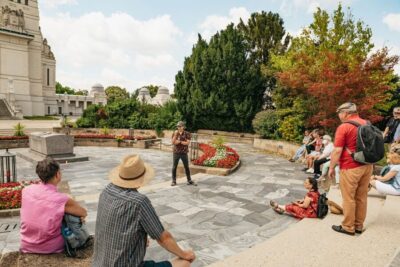
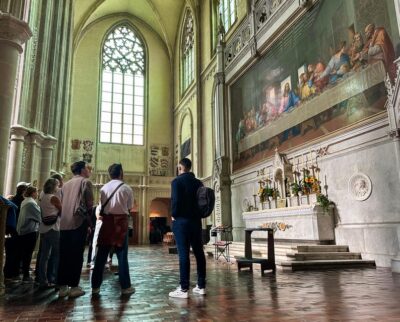
Guided Walking Tour of City Highlights & Hidden Gems
Read our review →
Vienna Historic Center Small Group Walking Tour
Read our review →
Browse the lists this tour appears in