
Reviewed · MUSEUMS
Vienna: Ticket to the Museum of Natural History
Vienna’s Natural History Museum is interesting because you are stepping into a real “palace,” not a spare box of exhibits. The building sits right on the Ringstrasse, and inside you get an earth-and-life time machine with over 30 million objects to explore.
I love two things most. First, the Venus Cabinet, where the Venus of Willendorf takes center stage beside other famous figurines. Second, the way the lower floor mixes gemstones, meteorites, and fossils so your brain keeps switching gears in the best way.
One thing to consider: the museum is huge, with 39 exhibition halls across two floors, so if you go in with no plan, you can lose an hour to the wrong room. You will still have a great visit, but you may not see your top picks unless you set a route early.
Key Highlights to Plan Around
- Venus of Willendorf in the Venus Cabinet, plus the older Venus of Galgenberg
- Meteorites and fossil dinosaurs on the lower floor, all in one long science walk
- Hallstatt salt mining finds, tied to 7,000 years of uninterrupted mining
- Prehistoric gold and silver in the Gold Cabinet, including a standout early gold find
- Rare and even extinct animal specimens on the upper floor
- Rooftop view option that can turn a museum visit into a Ringstrasse moment
Entering the Natural History Museum on the Ringstrasse

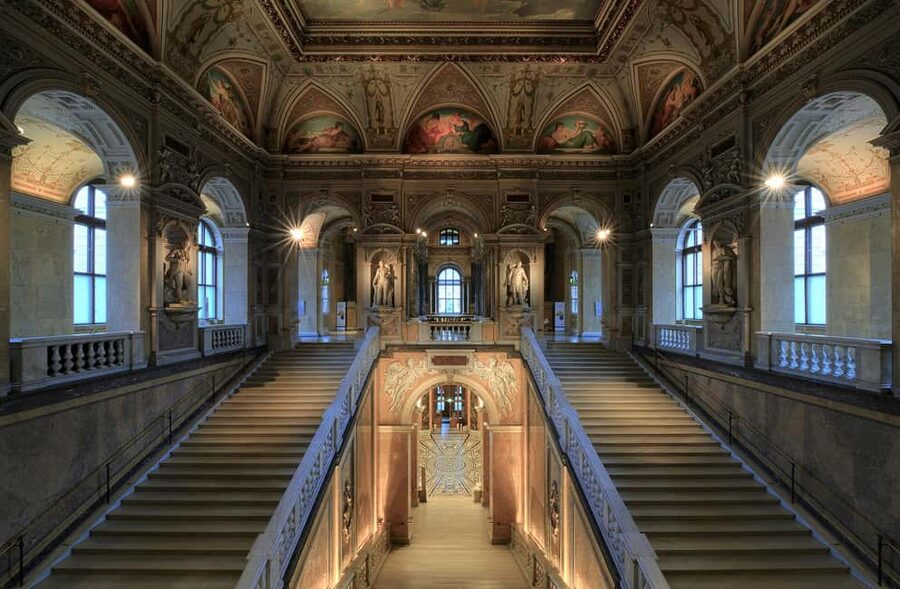
This ticket gets you into one of Vienna’s grandest science buildings, the Natural History Museum Vienna, designed as a Palace of Natural Science and Evolution. The architects Gottfried Semper and Carl von Hasenauer shaped the look, and it opened in 1889 under Emperor Franz Joseph I. The exterior matters here, because it sets the tone: you are not just visiting exhibits, you are entering a statement about science and discovery.
If you are arriving by foot, I suggest you do a quick “outside first” sweep, even if you only have a few minutes. The Ringstrasse setting helps you orient fast. Once you step in, the museum’s scale can still surprise you, so treat the exterior as a warm-up.
Also, the museum welcomes a lot of visitors each year, and that is a good sign. Big crowds often mean the core collections stay accessible and well organized, instead of feeling hidden or half-finished.
More Museums in Vienna:
- Vienna: Skip-the-Line Sisi Museum, Hofburg and Gardens Tour
★ 4.8 · 5,918 reviews - Vienna Kunsthistorisches Museum Day Admission Ticket
★ 4.6 · 3,690 reviews - Tickets for the Albertina Exhibitions
★ 4.7 · 2,126 reviews
Planning Your 1-Day Visit: Two Floors, 39 Halls, One Solid Route
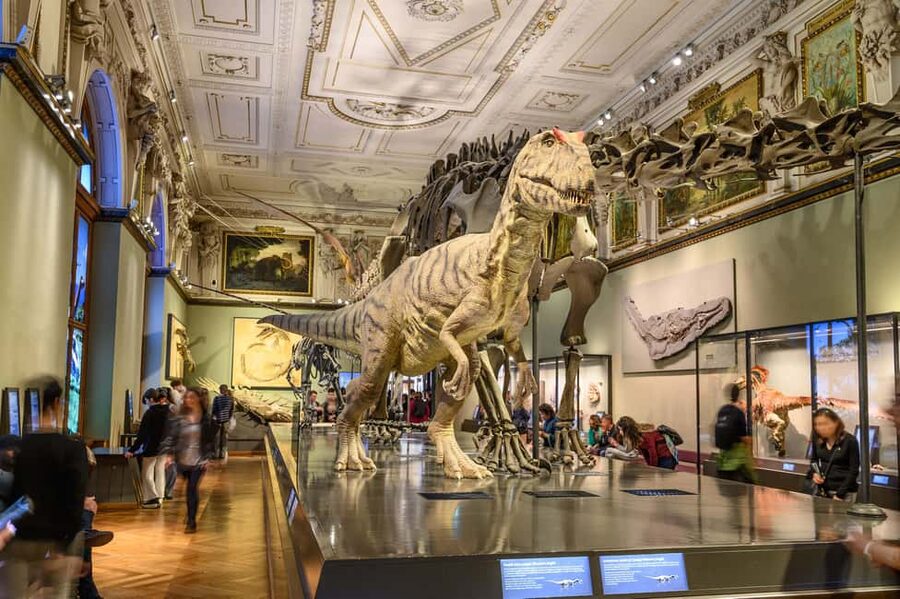
This is a one-day ticket, so you need a route that fits how you actually tour. The museum has two floors and 39 exhibition halls, covering natural science, prehistory, and anthropology. That means you can easily spend the whole day just walking, reading, and looking at cases without realizing you skipped the big objects.
Here is the approach I like for a 1-day visit:
- Start on the side of the museum that matches your top obsession first, then let curiosity carry you to the next section.
- Don’t try to “do everything.” Instead, pick 3 to 5 must-sees and give each one a realistic time block.
- Leave a little slack for special exhibitions and the rooms that pull you in.
The museum is also split by theme. The lower floor leans heavy on minerals, fossils, meteorites, and human origins. The upper floor shifts to animals, with mounted specimens and a long survey of life on Earth.
If you are the type who likes to read every label, plan for a slower pace. If you prefer highlights, you can still hit the museum’s key rooms in a day, as long as you do not get lost in the middle halls with no plan.
The Venus Cabinet: Why Willendorf Still Stops People Cold
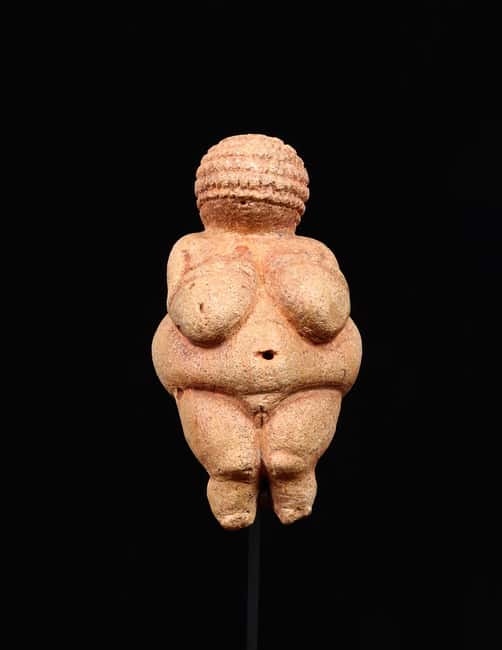
If you only visit one room at the Natural History Museum, make it the Venus Cabinet. This is where the Venus of Willendorf lives, a 29,500-year-old figurine. It is famous for a reason, and standing in front of it in person is a different experience than seeing it on a screen. The scale of time is harder to absorb when you are just scrolling.
What I also like is that the Venus Cabinet is not a one-object show. You also get the Venus of Galgenberg, dated to about 36,000 years old. The museum notes it as the oldest known human figure made of stone. That pairing does something useful for your understanding. It lets you compare two iconic pieces without needing to guess how different discoveries fit into the broader story.
Practical tip: when you enter a room like this, it is easy to rush. Don’t. Give yourself a few minutes to slow down, look at the figurines, then read how the museum frames the collections. You will understand the objects better once you see how they sit inside the museum’s approach to human history.
Lower Floor Power: Minerals, Meteorites, Fossils, and Giant Dinosaurs

The lower floor is where the museum flexes. It includes precious gemstones and minerals, rare fossils, and giant dinosaurs. It also houses the largest and oldest collection of meteorites in the world, which is exactly the kind of fact that makes you stand there longer than you planned.
I love how the exhibits build momentum. You move from the sparkle of minerals to fossils that hint at ancient life, then to meteorites that connect Earth to space. Even if you are not a science person, this flow makes the collection feel logical instead of random.
A few specific highlights to look for:
- The museum’s big meteorite display, tied to the claim of the world’s largest and oldest meteorite collection
- Fossil and dinosaur displays, including giant dinosaur material on the lower level
- An exhibition on the origin and development of mankind, which connects with the Venus Cabinet you saw earlier
One consideration if dinosaurs are your main reason for coming: the museum is broad. So you might find dinosaur-related displays are impressive, but they are spread within a bigger natural-science story. In other words, you will get dinosaurs, but you are not entering a dedicated dinosaur theme park.
If your goal is dinosaur-focused, I still recommend you go. Just do it with expectations that match the museum’s style. You will likely enjoy the dinosaur pieces more when you also see the minerals and fossils around them.
More Historical Tours in Vienna:
- Vienna: Time Travel and Magic Vienna History Tour
★ 4.6 · 3,879 reviews - Vienna: World War II Historical Walking Tour
★ 4.8 · 1,772 reviews - Vienna Historic Center Small Group Walking Tour
★ 5.0 · 1,746 reviews - Time Travel-Magic Vienna History Tour Ticket
★ 4.5 · 1,099 reviews
The Maria Theresa Gemstone Bouquet and Other Showpiece Cases
On the lower floor, there are displays that feel like they belong in a royal museum as much as a science museum. One standout is the gemstone bouquet: a gift from Maria Theresa to her husband, Emperor Franz I Stephan of Lorraine. It is the kind of object that makes you stop reading for a moment and just stare at the craftsmanship.
This room is valuable because it shows how natural materials traveled into human culture. You are not just looking at rocks and minerals. You are seeing how power, taste, and value got expressed through them.
If you enjoy objects with a story, build time for these showpiece cases. They can be quick to pass, but they are often the moments people remember later when the rest of the day becomes a blur of labels.
Hallstatt Salt Mining Finds: 7,000 Years You Can Walk Through
Another reason I like this museum ticket so much is that it covers human history, not just fossils and animals. Hallstatt is one of the headline areas inside, with finds from a prehistoric mine and burial ground. The museum notes 7,000 years of uninterrupted salt mining, leaving behind a wealth of archaeological traces.
What that means for your visit is simple: you get a tangible connection between geology and daily life. Salt was not a background detail. It mattered for food, trade, and survival, and the museum’s display approach ties that importance to what the ground preserved.
If you like anthropology, prehistory, or archaeological stories, this is one of the best parts of the lower floor. It is also a natural follow-up to the Venus Cabinet, because both areas push you toward questions about people and how they lived.
Gold Cabinet: Prehistoric Treasures and a Second-Oldest Mention
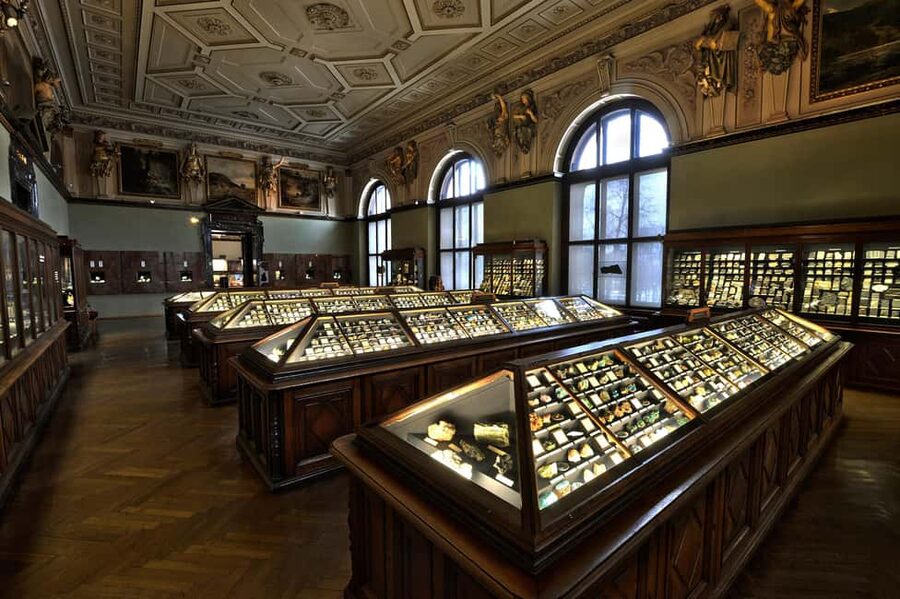
The Gold Cabinet is where the museum gets extra dramatic. You can see prehistoric gold and silver treasures, including what the museum describes as the second oldest gold find in the world. Even without chasing the exact date math, the room’s impact is immediate.
I recommend treating the Gold Cabinet as a contrast stop. After minerals, meteorites, fossils, and salt mining traces, you switch to precious metal objects made by humans. It is a reminder that natural science and human history keep crossing.
If you tend to skip rooms that sound too general, don’t skip this one. Gold and silver displays can be dry in other places, but in this museum they fit into a wider narrative about raw materials and human decisions.
Upper Floor Animal World: Rare, Extinct, and Surprisingly Personal
Once you move to the upper floor, the museum shifts focus from Earth materials and human origins to the diversity of life. This section spans everything from simple marine organisms to highly developed mammals. You will see mounted specimens, including extremely rare and even extinct amphibians, reptiles, mammals, and birds.
This is a great match if you like the big picture. You can watch evolution as a practical “compare and contrast” exercise: bodies adapted to different environments, and different branches of life surviving, changing, or disappearing.
I also like that the museum frames the animal world as part of a longer story, instead of isolated facts. When you spend enough time upstairs, you start linking the rooms you saw downstairs, like fossils and how they connect to animals you recognize.
One caution: upper floor rooms can run long. If you want to avoid fatigue, pace yourself and take breaks where you can. A museum like this rewards slow attention, but it also punishes stamina mistakes.
Rooftop Views Along the Ringstrasse: When Optional Tours Matter
There is an opportunity to take a guided tour to the rooftop. If you have time, I think this is a smart add-on, because it pulls you out of the museum’s enclosed world and back into Vienna.
From up top, you can enjoy a fantastic view of Vienna’s city center and the magnificent buildings along the Ringstrasse. It is a nice way to reset your brain after hours of close-up looking at small details in cases.
Because this rooftop tour is mentioned as something you can take, not stated as part of your basic admission, I suggest checking what is offered during your visit window once you are on site. That way you can decide whether it fits your energy level and your schedule.
Price and Value: Is $21 Worth It for a Full-Day Museum?
At about $21 per person, this ticket is priced as a solid museum day ticket, not a “nickel and dime” add-on. What makes it good value is not just that it gets you entry. It gives you access to a major collection spanning three big themes: natural science, prehistory, and anthropology.
If you care about at least one of these, the museum has enough depth that you can build a full itinerary around it. The Venus Cabinet alone can justify a visit for many people, especially because it includes both the Venus of Willendorf and the Venus of Galgenberg.
If you care more about science objects, the lower floor delivers with gemstones and minerals, the famous meteorite collection claim, fossils, and giant dinosaur material. If you care more about animals, the upper floor provides that rare and extinct-specimen experience.
Even if you are on the fence, the museum’s size is the value. You are buying time and variety. You will not feel like you rushed through a single attraction.
Who Should Book This Natural History Museum Ticket?
This ticket fits best if you:
- Want one museum day that covers human origins, the natural world, and deep time
- Love big iconic objects like the Venus of Willendorf
- Prefer self-guided wandering with room to follow your curiosity
- Like the feel of a historic building as part of the experience, not just a background
It may not be the best match if you want a short, fast, single-theme stop. The museum is broad. You can still enjoy it, but you should plan a route so your favorite topics get enough attention.
For families, it can work well too, because there is a mix of eye-catching fossils and animal specimens plus dramatic objects that draw kids in fast. The key is pacing, so you do not end up sprinting between rooms.
Should You Book This Ticket to Vienna Natural History Museum?
I say yes, especially if you want a museum day that feels like real discovery rather than a checklist. The Venus Cabinet is a must-visit, and the lower floor’s combination of minerals, meteorites, fossils, and giant dinosaur material gives you variety even when you think you already know what to expect.
Book it if:
- You want to see the Venus of Willendorf in person
- You like science and history that are connected, not separated
- You can give the museum a full chunk of your day
Skip or reconsider if:
- You only want one narrow topic and have limited time
- You are not in the mood for a large museum with many halls
If you do book, walk in with 3 must-sees, then let the rest of the day surprise you. This museum rewards that style.
FAQ
How long is the Vienna Natural History Museum ticket valid?
The ticket is valid for 1 day. You can check availability to see starting times.
What does the ticket include?
It includes admission to the Museum of Natural History in Vienna.
What are the top things you can see inside?
You can see major highlights such as the Venus of Willendorf in the Venus Cabinet, along with many natural science and prehistory exhibits. The museum also has minerals, meteorites, rare fossils, and giant dinosaur displays, plus animal collections on the upper floor.
Is there a rooftop option to add to your visit?
The museum offers the opportunity to take a guided tour to the rooftop, with views over Vienna’s city center and the Ringstrasse buildings.
Is the museum wheelchair accessible?
Yes, the activity is wheelchair accessible.
How does the price work for this admission ticket?
The price is listed as $21 per person.
Latest Vienna reviews
- Vienna Food Tour: Dishes, Wine, Street Food & Culture★ 4.7 · 12 reviews
- eBike Vienna 90min guided tour – use ebike for the whole day★ 4.0 · 13 reviews
- A box for a romantic walk in the city center of Vienna★ 5.0 · 13 reviews
- Vienna: mumok Museum of Modern Art Entry Ticket★ 3.8 · 13 reviews
- Vienna: Austrian Wine Tasting★ 4.8 · 13 reviews
- Bratislava Private Tour from Vienna★ 4.5 · 13 reviews
- Private One Day Trip to Bratislava from Vienna★ 4.5 · 13 reviews
- Best of Vienna Tour in TUK TUK!★ 5.0 · 14 reviews
Museums, compared.

Skip-the-Line Sisi Museum, Hofburg and Gardens Tour
Read our review →
Vienna Kunsthistorisches Museum Day Admission Ticket
Read our review →

Chocolate Workshop in Chocolate Museum w/ Tasting
Read our review →
St. Stephen’s Cathedral & Dom Museum Wien Tickets
Read our review →

Browse the lists this tour appears in