
Austria
Historical Hitler Walking Tour of Vienna
2 hours 30 minutes (approx.)
Vienna is full of music, grand buildings, and confident crowds. This walk is different. It uses real locations to show how the city’s culture and Jewish life were pushed into catastrophe, step by step through the historic center.
Two things I really like here are the way the route connects big moments to street-level scenes, and the high-quality guiding people have praised by name, like Dieter, Wolfgang, Stephan, and Siggy. A possible drawback: this is emotionally heavy history, and you will be on your feet for about 2.5 hours, often in cold weather.
Key things to know before you go
- Small-group feel with a maximum of 25 people, which helps the guide keep everyone together
- Mobile ticket and an English-led walk starting at Albertinaplatz and ending near Schwedenplatz
- Street-to-history pacing, moving through major sites and quieter reminders of fascism
- Major landmarks with context, including the Vienna State Opera and Heldenplatz
- Jewish Vienna and Holocaust memorial stops, plus a look at synagogue architecture hidden from street view
What this Vienna walking tour really teaches, beyond the headline
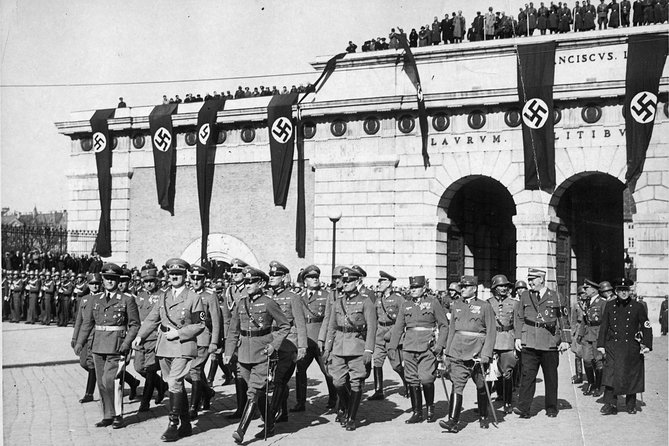
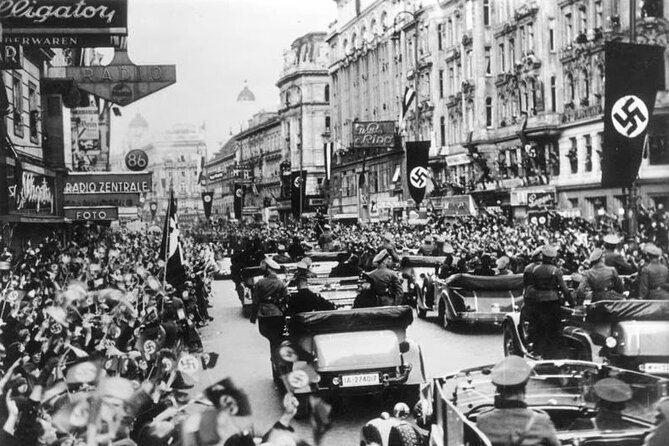
If you think you already know the broad story of Hitler and WWII, this tour can still hit hard because it frames Vienna as a living place, not a distant timeline. You walk through the city’s public face and then into the shadow side: where politics, anti-Jewish discrimination, and violence changed everyday life.
The tour’s strength is that it treats Vienna like the main character. You start at a landmark tied to the arts, then you keep moving toward the sites where propaganda and persecution left permanent marks. Along the way, you also get a guided sense of how prejudice became policy and how policy became brutality.
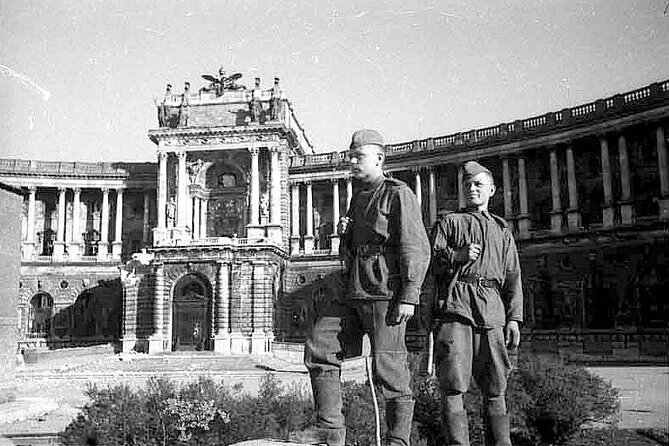
And yes, the topic is Hitler. But the practical value is broader: you see how a society’s cultural institutions can be reshaped, how war leaves physical scars, and how memorials keep memory alive.
More Walking Tours in Vienna
- Vienna: Guided Walking Tour of City Center Highlights
★ 4.7 · 4,989 reviews - Vienna: Vienna Central Cemetery Guided Walking Tour
★ 4.8 · 3,307 reviews - Vienna: Guided Walking Tour of City Highlights & Hidden Gems
★ 4.9 · 2,180 reviews
Starting at Albertinaplatz, then straight to the Vienna State Opera
Your meeting point is Albertinaplatz, right by the Albertina area. The tour begins at 2:30 pm, and the guide takes you out into the historic core to set up the story. That first push matters because you are not just sightseeing buildings, you are getting the political and cultural context that makes the later stops land.
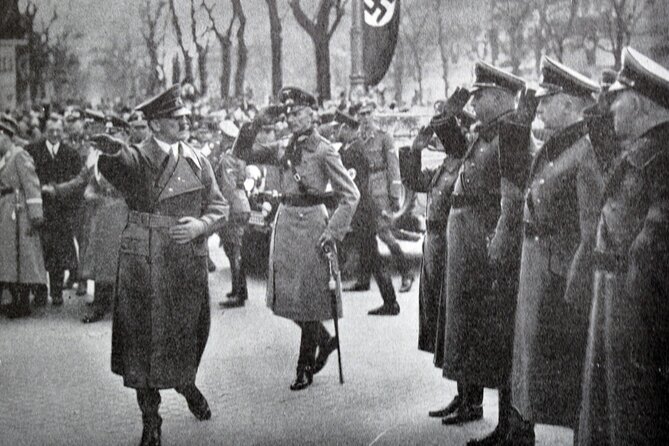
The first major stop is the Vienna State Opera. This is where the tour earns its keep. The opera house opened in 1869 with Mozart’s Don Giovanni, and it still feels like a temple of classical Vienna. Then the story turns: after Austria’s Anschluss in 1938, Hitler visited the opera (June 19 and October 27, 1938).
What I like about this stop is the clear cultural cause-and-effect. The period of National Socialism brought the departure, persecution, and murder of artists and employees. For some works, performances were banned. So you are not just hearing about a dictator visiting a building. You are seeing how control reached into rehearsal rooms, cast lists, and programming.
Even if you are not an opera person, the building helps you grasp scale. It is hard to reduce this kind of history to a few dates when the sites are still standing and still dramatic.
Memorial Against War and Fascism, Albertinaplatz version of a warning sign
Next you head to the Memorial Against War and Fascism, created by Austrian sculptor Alfred Hrdlicka. It has been in place since 1988 on Albertinaplatz (named after Helmut Zilk in 2009).
This stop is short, but it is purposeful. The memorial is dedicated to all victims of war and fascism, not just one event. For me, it provides a needed reset before the more specific sites about Hitler’s rise and the Holocaust.
If you’re the kind of person who needs to understand what a memorial is trying to do, take a minute here. Let the wording and form sink in, then keep walking with the guide.
The art school that rejected Hitler, early rejection and later consequences
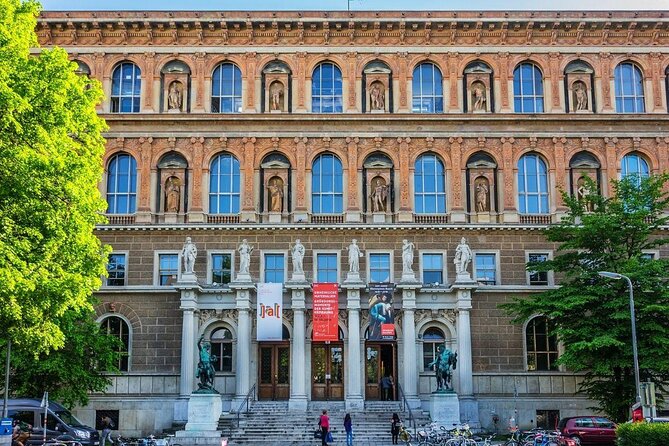
From the memorial, you move to an art school site linked to a rejection. The tour includes a stop at Akademie der bildenden Kunste, described as an art school that did not accept Hitler as a student.
This is one of those moments where history becomes personal. The tour’s goal is not to rewrite Hitler’s biography for entertainment. It is to show how his early experiences in Vienna fed into the next phases of his thinking, and how a city’s institutions could respond differently than the propaganda that later tried to rewrite reality.
Practical note: because this is a short stop, you may want to listen closely to how the guide connects this moment to what comes next at Heldenplatz.
More Historical Tours in Vienna:
- Vienna: Time Travel and Magic Vienna History Tour
★ 4.6 · 3,879 reviews - Vienna: World War II Historical Walking Tour
★ 4.8 · 1,772 reviews - Vienna Historic Center Small Group Walking Tour
★ 5.0 · 1,746 reviews - Time Travel-Magic Vienna History Tour Ticket
★ 4.5 · 1,099 reviews
Heldenplatz and the 1938 speech that became a symbol
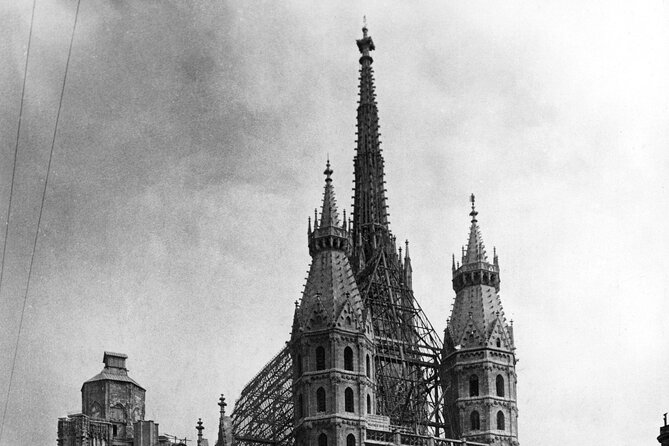
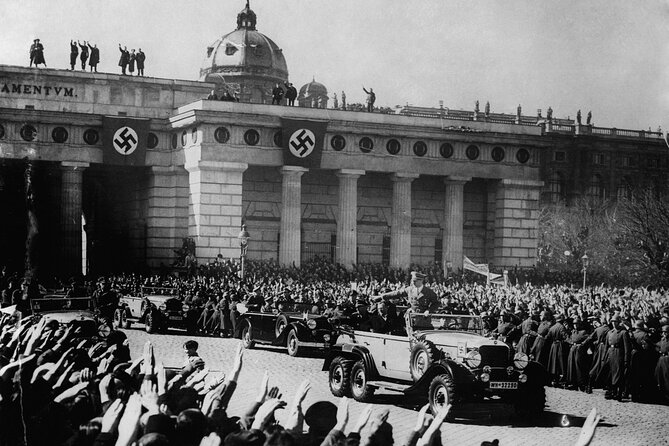
Then you reach Heldenplatz, and the tour turns sharply toward March 15, 1938. Here the key moment is Hitler’s speech from the balcony of the Neue Hofburg. The guide explains how the speech became the emblem of the National Socialist seizure of power and the wide approval that came with it, and how that approval left trauma for the Second Republic.
This part can feel almost too direct, because it is public space and it is a balcony. It is also why your guide’s framing matters. Done well, the stop helps you understand the psychology of mass politics, not just the event itself.
If you are taking photos, keep them quick. You’ll get more from watching and listening, and then letting the mood of the square do its job.
Judenplatz Holocaust Memorial, remembering Austrian Jewish victims where you can pause
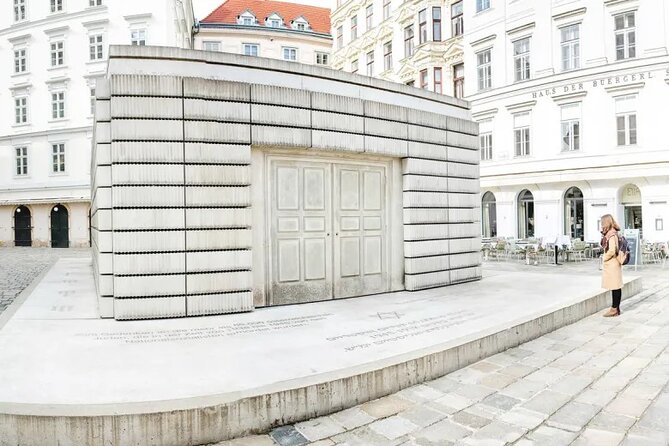
Across the historic center, the route brings you to Judenplatz Holocaust Memorial (Mahnmal für die österreichischen jüdischen Opfer der Schoah). This is dedicated to the Austrian Jewish victims of the Shoah, with the tour noting more than 65,000 Austrian Jews murdered by National Socialists between 1938 and 1945.
This is not a stop to rush through. The space gives you a chance to slow down for a moment inside the walk’s momentum. Even if you think you know the Holocaust story already, the location makes it feel immediate, and the guide’s focus on Austrian victims keeps it rooted in Austria, not only Germany or broader Europe.
If you want to do this tour well, treat this stop like a checkpoint. Breathe. Read. Then continue with your head up and your feet ready.
Morzinplatz, when violence moved into places of comfort
Next comes Morzinplatz, with a memorial tied to the former luxury hotel Metropole. The tour describes the Metropole as one of the most brutal Gestapo headquarters in the Third Reich.
This contrast is one of the tour’s most unsettling points. A luxury hotel suggests comfort, social life, and public prestige. Gestapo headquarters suggest secrecy, terror, and extraction of human dignity.
The guide uses this stop to help you see how occupation and authoritarian rule can repurpose normal spaces. The city you see in postcards can still have a second, darker layer underneath.
Schwedenplatz area and the hidden Stadttempel Synagogue behind tenements
The tour finishes near Schwedenplatz, with the option to grab dinner right after since it is a busy hub and a popular restaurant area. It also connects you to public transit, including U line 1 and 4.
One of the most interesting late-route stops is the hidden location of the Seitenstettentempel / Stadttempel synagogue area, described as being tucked behind a tenement building. The tour explains that, under regulations at the time, non-Catholic places of worship had to be hidden and could not be visible from the street. So the synagogue sits behind a five-story apartment building, with a gate inscription telling you to come to God’s courts with praise.
I like this stop because it shows how discrimination can be architectural. It is not just violence and deportation. It is also the slow shaping of visibility, power, and belonging.
When you understand that, you get more from Vienna as a living city, not just as a museum set.
How long it takes, and why the pace feels manageable
The tour clocks in at about 2 hours 30 minutes, with each stop usually around 10 minutes. That structure is helpful. It means you are not trapped for hours at one spot, and you get a steady rhythm of walking, listening, and brief pauses.
The group size is capped at 25 travelers, which keeps the movement controlled. Still, you are outdoors and on uneven city sidewalks, so comfortable shoes are a must.
A helpful detail from the experience itself: guides sometimes include a couple indoor pauses to warm up when the weather is brutal. In winter, that can be the difference between tolerating the cold and actually enjoying the walk.
Value for money: about $32.65 for a lot of grounded context
The price is $32.65 per person for a 2.5-hour walking tour. That is not a “cheap and cheerful” rate, but it is also not priced like a premium private tour. For your money, you get a licensed guide plus a route that hits both famous landmarks and sites that people often miss on their own.
What you are paying for is not just walking from point A to point B. You’re paying for interpretation. For example, the Vienna State Opera stop only becomes truly meaningful when someone connects it to the cultural bans, persecution of staff, and Hitler’s visits in 1938. The memorial stops only hit correctly when a guide explains what they remember and why that matters in today’s city.
If you enjoy history that has a physical map, this is good value. If you want entertainment or a light mood, this may feel heavy.
Who should book this tour, and who might want a different option
This is a great fit if you:
- love history and want it tied to real addresses, not vague context
- want to understand Hitler’s Vienna through the city’s institutions and public spaces
- care about Holocaust memory in Austria, including sites like Judenplatz
It might be a tougher fit if you:
- prefer upbeat sightseeing
- struggle with cold weather walking for around 2.5 hours
- want a tour that focuses only on Hitler personally, because the framing is broader and includes Vienna’s social and cultural shifts
The wording around the tour topic can create a mild expectation gap. The experience is inspired by the broader idea of Hitler’s place in Vienna’s story, not solely a parade of Hitler trivia. If you come for context and consequences, you will likely feel satisfied.
Practical tips so you get the most from the walk
- Wear comfortable shoes. You will be on foot for the full session.
- Bring a raincoat or umbrella and some water, because Vienna weather can turn quickly.
- If you are sensitive to cold, plan for it. Indoor pauses can help.
- Expect a guided setup that keeps the group together. The meeting point is busy, so show up a few minutes early.
If you can, keep your questions for moments when the guide is not moving. It’s usually easier to get a good answer when the group has stopped.
Should you book this Hitler in Vienna walking tour?
I think you should book it if you want Vienna to make sense as more than postcard prettiness. This walk connects the arts, architecture, and public space to the rise of fascism and the Holocaust memory that Austria keeps visible. When guided by people like Dieter, Wolfgang, Stephan, or Siggy, it turns a grim subject into a clear, walkable story.
Skip it if you want a light tour, or if you cannot handle a cold, history-heavy route with emotion-heavy stops. But if you can meet the tour where it is, you’ll finish with a sharper understanding of Vienna, and a stronger sense of why remembrance matters.
FAQ
Where does the tour start and where does it end?
It starts at Albertinaplatz (Albertinapl., 1010 Wien) and ends a few minutes’ walk from Schwedenplatz (Schwedenpl., 1010 Wien).
What time does the tour begin?
The start time is 2:30 pm.
How long is the walk?
It lasts about 2 hours 30 minutes.
What language is the tour offered in?
The tour is offered in English.
Is the ticket mobile?
Yes, you get a mobile ticket.
How big is the group?
The tour has a maximum of 25 travelers.
What should I wear or bring for the walk?
Wear comfortable shoes and clothes. Bring water and consider a sunblock, and also a raincoat or umbrella for Vienna’s unpredictable weather.
Is it worth going if I am worried about the tour topic being too focused on Hitler?
The tour is designed around Hitler’s connection to Vienna, but it also covers broader historical context, including the impact on Austria’s culture and Jewish sites and memorials.
Is it possible to cancel if plans change?
You can cancel for a full refund if you cancel at least 24 hours before the experience start time. If it is canceled due to poor weather, you will be offered a different date or a full refund.
Latest Vienna reviews
- Vienna Food Tour: Dishes, Wine, Street Food & Culture★ 4.7 · 12 reviews
- A box for a romantic walk in the city center of Vienna★ 5.0 · 13 reviews
- Vienna: mumok Museum of Modern Art Entry Ticket★ 3.8 · 13 reviews
- eBike Vienna 90min guided tour – use ebike for the whole day★ 4.0 · 13 reviews
- Bratislava Private Tour from Vienna★ 4.5 · 13 reviews
- Vienna: Austrian Wine Tasting★ 4.8 · 13 reviews
- Private One Day Trip to Bratislava from Vienna★ 4.5 · 13 reviews
- Best of Vienna Tour in TUK TUK!★ 5.0 · 14 reviews
Walking Tours, compared.
Guided Walking Tour of City Center Highlights
Read our review →
Guided Walking Tour of City Highlights & Hidden Gems
Read our review →
Vienna Historic Center Small Group Walking Tour
Read our review →
Browse the lists this tour appears in