
Reviewed · WALKING TOURS
Private Vienna Highlights History Walk – WWII and Post War Vienna
Vienna has a way of turning big history into something you can actually walk through. This private highlights route strings together the imperial sights and the WWII and post-war scars, with a guide who can make the timeline feel clear and human. You get a handy hotel pickup and a route built for 3 hours of efficient seeing.
I love the way it uses art and architecture to explain cause and effect, from imperial ambition to post-war Austria. I also like that it stays practical, with time built in for photos, short pauses, and even a quick coffee moment if your guide’s timing works out.
One possible drawback: it is a real walking tour with a few stops that are emotional, so if you want a purely light, romantic Vienna day, this one will hit heavier notes.
Key Highlights You Will Actually Feel
- Upper Belvedere panorama tied to the story of Austria’s Second Republic and the post-war shift in 1955
- Soviet War Memorial at Schwarzenbergplatz, a reminder that “liberation” and “occupation” can live in the same memory
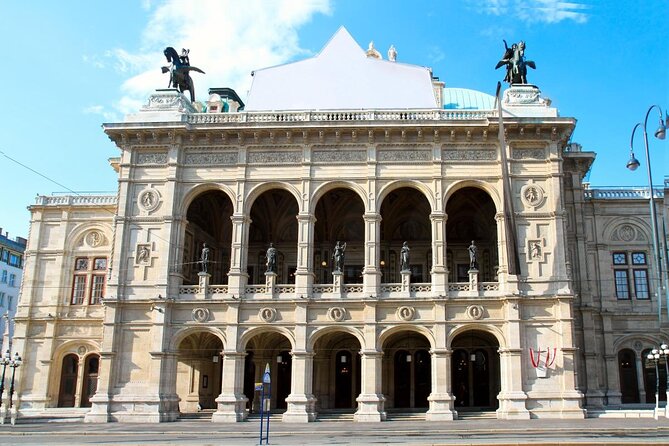
- Ringstraße by tram to connect the big civic sights, including the rebuilt State Opera
- Heldenplatz and the 1938 Anschluss speech told in context with the square’s imperial role
- Judenplatz Holocaust Memorial (Nameless Library) placed right where a medieval Jewish community was destroyed
- St. Stephen’s Cathedral with a WWII detail you may not expect, plus the Plague Column for Counter-Reformation context
Why This WWII and Post-War Vienna Walk Works in Only 3 Hours
If you only have a short time in Vienna, you need a route that gives you bearings fast. This one does. It strings together landmarks tied to power, propaganda, resistance, and memory, so you are not just collecting postcards.
The tour is private (up to 10 in your group) and built around a simple idea: history sticks better when you can see how it was staged. Vienna did not just suffer WWII. It also had a long habit of turning politics into street scenes. You see both sides of that habit as you move through terraces, palace squares, and memorial sites.
You also get the kind of guide help that matters on foot. Many groups end up with a plan that is too big for the day, or a map that gives you directions but not meaning. Here, a licensed guide handles the narrative and keeps the pace workable. In the past, guides such as Brigitte and Walter are known for mixing clear explanations with friendly, on-the-spot answers, not lecturing from behind a headset.
Consider this if you are sensitive to WWII and Holocaust topics. The stops are brief, but they are direct. Plan for it, and you’ll get more out of the tour. If you want a calmer day, you can still use this route as an overview, then pick lighter add-ons after.
More Walking Tours in Vienna
- Vienna: Guided Walking Tour of City Center Highlights
★ 4.7 · 4,989 reviews - Vienna: Vienna Central Cemetery Guided Walking Tour
★ 4.8 · 3,307 reviews - Vienna: Guided Walking Tour of City Highlights & Hidden Gems
★ 4.9 · 2,180 reviews
Belvedere Gardens and the View That Explains a Shift in 1955
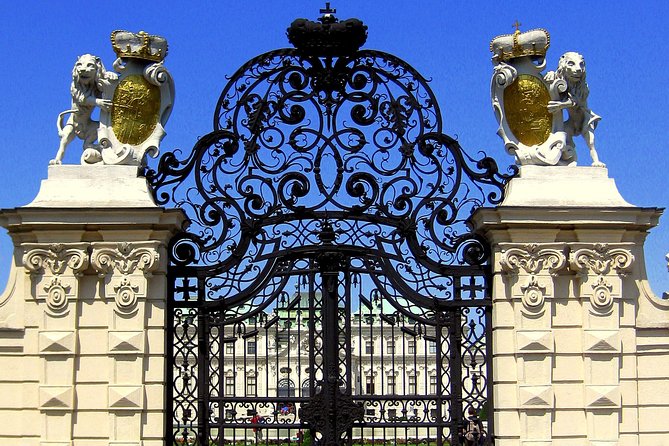
The tour starts at the Belvedere complex, specifically the Upper Belvedere gardens area where the city opens up in front of you. This is one of Vienna’s best “lookout” moments. From the terrace, you get a grand sense of scale, and that scale is the point.
The guide frames Belvedere through two lenses. First, the palace ties to Prince Eugene, a major figure in the military story of Austria. Second, the bigger focus is how the palace symbolism changed over time. You learn how, in 1955, the site became a symbolic birthplace for the Second Republic. That matters because it shows how Austria used meaning from the past to shape its post-war identity.
From there, you move into the Belvedere gardens and the Lower Belvedere axis. Gardens can look like decoration, but here they are treated like a political statement. The descending garden layout is all about order and hierarchy, and you can read it like a design argument: power wants straight lines, control, and perspective.
What you should watch for here is your own body and attention span. Gardens are beautiful, but they can also turn into a long shuffle if your guide does not keep it sharp. The best version of this stop is when the guide points out how the layout leads your eye and then connects that to the story being told.
Admission is marked free for these stops, which is a nice value angle. You are paying for interpretation and time, not for a stack of ticket fees.
Schwarzenbergplatz, French Embassy, and the “Memory vs. Message” Contrast
After Belvedere, you step into a different kind of telling: memorials and monuments that carry political messages you can’t ignore.
At Schwarzenbergplatz, you see the Soviet War Memorial. The focus is the 1945 Soviet monument honoring Red Army soldiers who died ending Nazi rule in Vienna. The guide’s framing is balanced and careful: liberation and occupation can coexist in memory. That’s a hard idea, but it’s also one of the most useful insights you can take from Vienna after WWII. It stops you from thinking in single-tone stories.
Then the route shifts again with Hochstrahlbrunnen and the French Embassy nearby. The fountain is monumental and tied to Vienna’s alpine tap water, which sounds like a calm civic detail at first. But placed beside the French Embassy, it turns into a contrast study. Two Allied powers, two different architectural messages, both sitting in the same city you thought was just one uniform style.
From here you take a short tram ride along the Ringstraße, one of Vienna’s signature civic projects from the 19th century. This is smart pacing. You get to cover distance without wearing yourself out too early. And as you roll past the reconstructed State Opera, the guide connects cultural continuity to what wartime destruction tried to break.
A practical note: the tour says public transport is not included. Since a tram ride is part of the route description, I suggest you travel prepared to pay your transit cost if needed. If you already plan to use transit that day, this tour can fit neatly into that plan.
Burggarten to MuseumsQuartier: Mozart, Power, and Military Infrastructure
Next comes Burggarten, close to the imperial court atmosphere. Mozart is present in spirit and statue here, but the tour uses this stop to set tone, not just to point at a face. The guide ties the garden to the imperial setting, and then adds a darker historical footnote connected to the nearby Academy of Fine Arts.
You learn about the famous detail that the Academy famously rejected a young Adolf Hitler. Even if you know the outline, hearing it tied to the geography helps. You can see how ordinary institutions sat next to the mechanisms that later caused enormous harm. It’s one of those moments where the city’s beauty does not erase what happened nearby.
Then you head toward MuseumsQuartier Wien, where Maria Theresa still commands the square and the twin museums frame the area. This is another contrast-heavy stop. The guide brings in Vienna’s militarized final months with one of the city’s FLAK towers, described as concrete witnesses to the late-war period.
This is the part of the tour where you’ll feel the real value of a guide. A free-standing bunker-like structure can look random on a street level view. Here, it becomes part of the war story without turning into doom and gloom for the full day.
If you have photography in mind, this is one of your best windows. The mix of open square, museum facades, and wartime infrastructure gives you layers. Just remember you may be outdoors in the weather, since the tour is a walking circuit.
More Historical Tours in Vienna:
- Vienna: Time Travel and Magic Vienna History Tour
★ 4.6 · 3,879 reviews - Vienna: World War II Historical Walking Tour
★ 4.8 · 1,772 reviews - Vienna Historic Center Small Group Walking Tour
★ 5.0 · 1,746 reviews - Time Travel-Magic Vienna History Tour Ticket
★ 4.5 · 1,099 reviews
Heldenplatz and the Hofburg: When Ceremonies Turned Into Political Theater
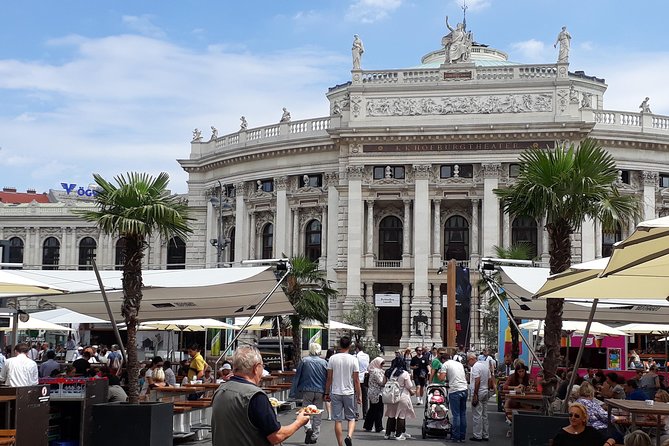
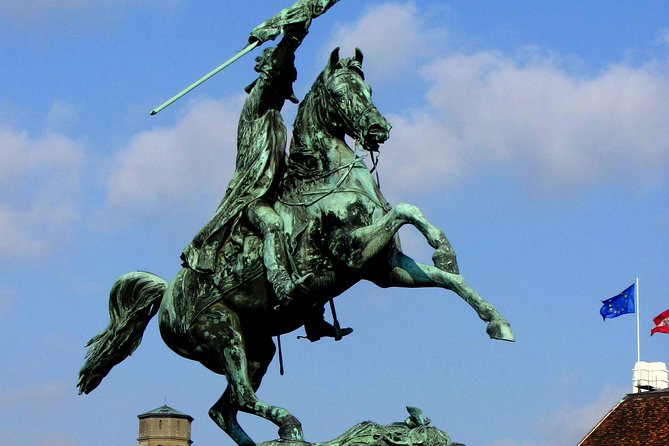
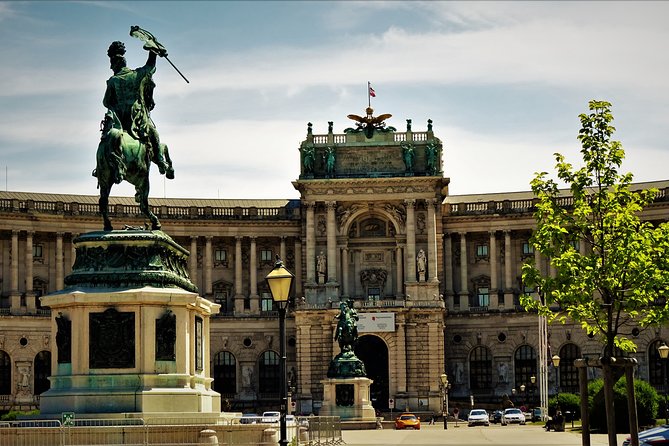
Heldenplatz is pure Vienna drama. It has served as a stage for imperial ceremony and military pride, and the guide anchors it to March 1938, when Hitler delivered the Anschluss speech here.
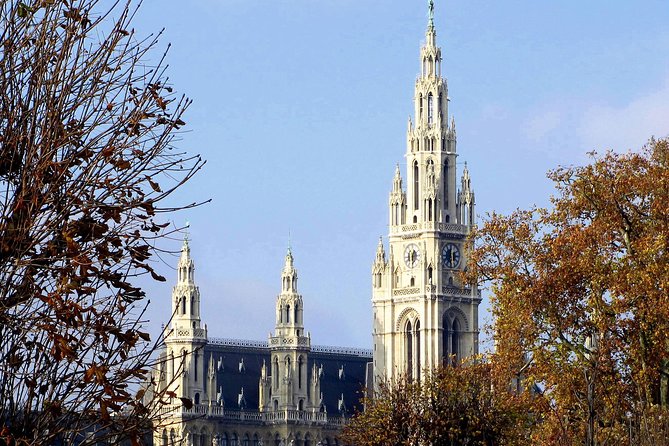
This stop hits hardest if you approach it with curiosity instead of shock. The guide’s job is to place the speech in the larger role the square played before and after. That’s why it matters that the square is framed by buildings linked to parliament, city hall, museums, and the Burgtheater. The story becomes clearer when you understand that these are not random backdrops. They are architectural choices that carried political weight.
If you want a good mental trick, use this: ask yourself how a place designed for ceremony becomes useful to an authoritarian message. The tour nudges you toward that question without saying it out loud.
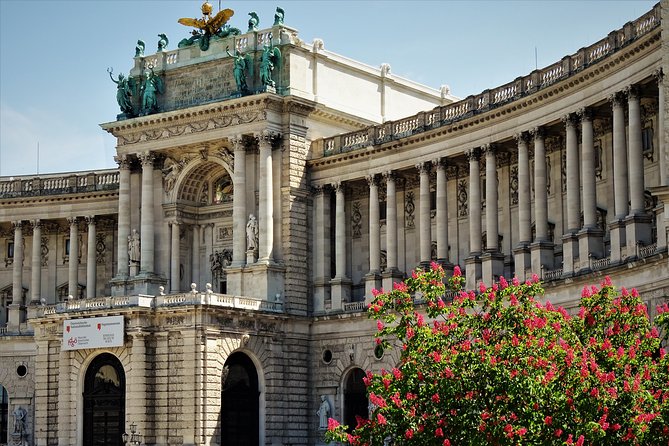
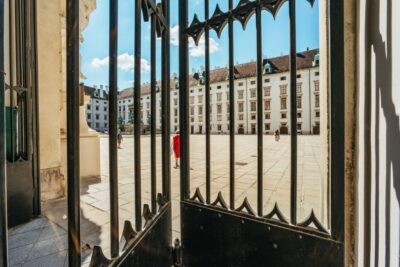
Then you move into the Hofburg. This is the seat of power for seven centuries, and the tour frames it as Austria’s long arc, from monarchy to republic and into the modern presidency. You don’t just get dates. You get the idea that the building is a physical timeline.
At one point, the route also touches the transition zone where imperial facades meet ecclesiastical grandeur and today’s luxury boutiques. Even if you are not shopping, it helps you understand Vienna’s balancing act. Ceremony, commerce, spirituality, all layered on top of each other.
This area can involve a bit more urban “traffic” than gardens. Wear shoes that forgive uneven sidewalks, and don’t plan a major shopping spree right before this walk. You’ll enjoy the architecture more when you are not hurrying.
Judenplatz, Pestsaule, and St. Stephen’s Cathedral After Fire and Looting
The emotional centerpiece comes at Judenplatz Holocaust Memorial, including the Nameless Library. The tour places it on the site of Vienna’s medieval Jewish community, destroyed in 1421. Then it connects the memorial to the 65,000 Austrian Jews murdered in the Shoah.
This is not a long stop, but it is essential. The guide approach here is quiet and respectful, with enough explanation to make you understand what you are seeing and what it represents. If you are visiting Vienna for the first time, this stop prevents your city view from becoming only aesthetic.
After that, you continue to Colonna Della Peste, also known as the Plague Column. It is described as Counter-Reformation in marble, using art and devotion to reclaim a city after crisis. This is a sharp reminder that Vienna faced multiple disasters, not only WWII. And it shows how a city uses art to cope when life breaks.
Finally, you reach St. Stephen’s Cathedral. The tour calls it Vienna’s Gothic heart, and then adds a WWII detail tied to April 1945. Parts of the cathedral burned when looters set fire to nearby shops. It’s a tragic end to a war that had already cost the city so much.
This is one of those moments where the cathedral’s scale feels different. You stop seeing it as just a landmark and start seeing it as a survivor. The guide’s narrative makes the wartime context feel close, not academic.
Admission is listed as free for these stops, so again, you are paying mainly for your guide’s ability to link places to meaning.
Price, Pace, and Logistics That Affect Your Day
This experience is priced at $342.40 per group for up to 10 people, and it runs about 3 hours. With a private group price, the value gets better as your group gets fuller. If you have 2 people, you pay more per head. If you have 6 to 10, it can be competitive with other ways of hiring a guide, especially since it covers pickup and interpretation for multiple key areas in one go.
You have two start times, 09:30 and 14:00. The earlier slot is great if you want museums later the same day. The afternoon start works well if you want a slow morning and you’re planning a longer evening stroll afterward.
Hotel pickup is offered, and meeting points include hotels and vacation rentals in town, Reichsbruecke pier, or major train stations like Vienna Hbf and Vienna West. There is even a specific pickup detail mentioned for a certain pier, so if you’re staying by the river or arriving by train, double-check the exact start point you were assigned.
Language is English, and the tour uses a mobile ticket. It’s also private, meaning you do not share the guide with strangers. That can matter a lot when you have questions, need a slower pace, or want to adjust to what you care about most.
A few practical considerations:
- Moderate physical fitness is requested, so plan for steady walking and some stairs or uneven terrain.
- Public transport to and from attractions is not included, so if transit is needed during your route, budget for it.
- Food and drinks are not included. Bring water, and plan a coffee stop on your own terms. Many guides are good at timing a pause without blowing up the schedule.
- Service animals are allowed, and pets are not permitted in certain areas visited.
From the guiding style side, people often highlight guides like Brigitte and Walter for making the city feel like it clicks. Alex is also cited for being fun and helpful with answers beyond the route. If you want a guide who handles both big themes and small practical tips like where to eat and how to move around, this tour tends to deliver.
Should You Book This Private Vienna WWII and Post-War Highlights Walk?
Book it if you want a fast, structured way to understand Vienna’s WWII and post-war story without getting lost in a museum-only day. You will like it if you care about how politics gets built into streets, squares, and monuments, and you want a guide to translate that into something you can remember later.
Skip it or pair it with something lighter if you are not up for memorial and WWII details. Also consider your schedule. This is a 3-hour walk, so if your priorities are strictly palace interiors or deep museum time, you’ll still want separate reservations.
My honest take: this is one of the better “first orientation” options in Vienna because it teaches you how to read the city. You come away with a clearer mental map and a more accurate sense of what you are looking at, not just where it is.
FAQ
How long is the private Vienna Highlights History Walk?
It lasts about 3 hours.
How many people are included in one tour group?
The price is per group for up to 10 people, and it is private, so only your group participates.
What time does the tour start?
The tour starts at 09:30 or 14:00.
Is hotel pickup included?
Yes. Hotel pickup is included, and pickup is offered from hotels and vacation rentals in town, Reichsbruecke pier, or train stations including Vienna Hbf and Vienna West.
What language is the tour offered in?
The tour is offered in English.
Are food, drinks, or entrance tickets included?
Food and drinks are not included. The stops in the route are marked with free admission, but the tour does not list food or drink inclusion.
Does the tour include public transport costs?
Public transport to/from attractions is not included.
What is the cancellation window for a full refund?
You can cancel up to 24 hours in advance for a full refund. If you cancel less than 24 hours before the start time, the amount paid is not refunded.
Latest Vienna reviews
- Vienna Food Tour: Dishes, Wine, Street Food & Culture★ 4.7 · 12 reviews
- Vienna: mumok Museum of Modern Art Entry Ticket★ 3.8 · 13 reviews
- eBike Vienna 90min guided tour – use ebike for the whole day★ 4.0 · 13 reviews
- A box for a romantic walk in the city center of Vienna★ 5.0 · 13 reviews
- Vienna: Austrian Wine Tasting★ 4.8 · 13 reviews
- Bratislava Private Tour from Vienna★ 4.5 · 13 reviews
- Small Group Half Day Tour from Vienna to Bratislava★ 4.0 · 14 reviews
- Private One Day Trip to Bratislava from Vienna★ 4.5 · 13 reviews
Walking Tours, compared.
Guided Walking Tour of City Center Highlights
Read our review →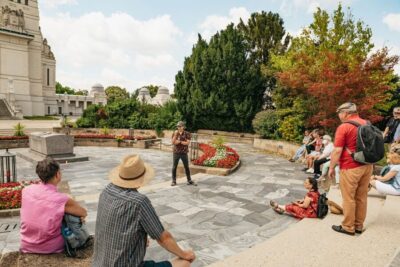
Guided Walking Tour of City Highlights & Hidden Gems
Read our review →
Vienna Historic Center Small Group Walking Tour
Read our review →
Browse the lists this tour appears in