
Reviewed · WALKING TOURS
The Ringstrasse Project Walking Tour
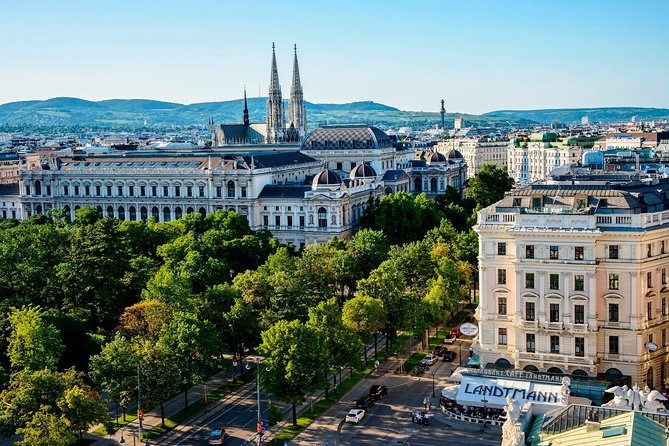
If you want a smart first look at Vienna, the Ringstrasse is the shortcut. It strings together government, opera, major museums, and big architectural ideas in one walkable loop, so you see how the city built its image in the 1800s and early 1900s. I love that this tour keeps things small and personal, so the guide can answer your questions and point out details you might miss on your own.
Two things I really liked: the free admission tickets for the stops (this matters in a city where tickets can add up fast), and the finish at Café Schwarzenberg, where you get a real sense of how Vienna’s café culture helped turn the Ring into a place to see and be seen. The one drawback to consider is that with a 2.5-hour format, most stops are short, so if you’re hoping for long indoor time, you’ll want to plan follow-up visits.
Quick takeaways
- Small group max of 8 means more back-and-forth with the guide and less standing around
- Morning or afternoon departures help you match the tour to your sightseeing rhythm
- Free admission tickets at key landmarks reduce the hassle of budgeting and planning
- Otto Wagner and Vienna Secession show up in a single stop at Postsparkasse, with clear visual takeaways
- Cafe Schwarzenberg finish gives you context for why the Ring turned into social center stage
- English guided tour with professional, friendly energy, highlighted by guides like Sussana and Biljana
The Ringstrasse is Vienna’s big idea, in one guided walk
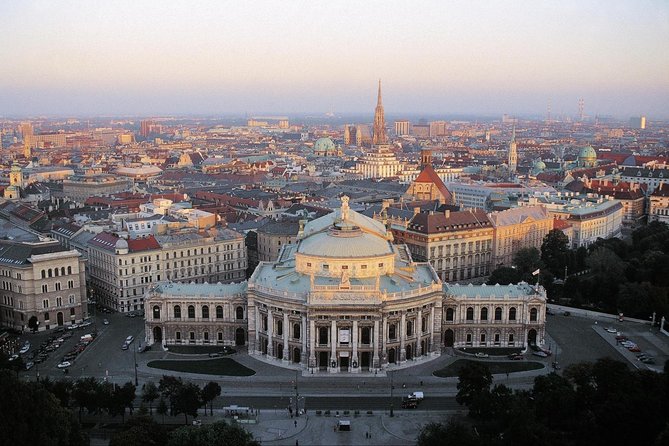
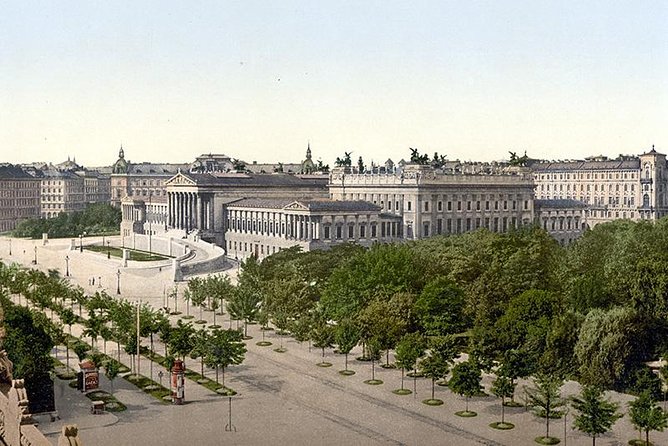
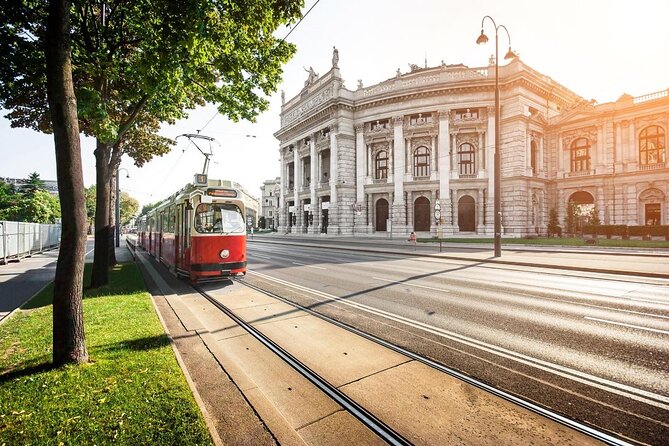
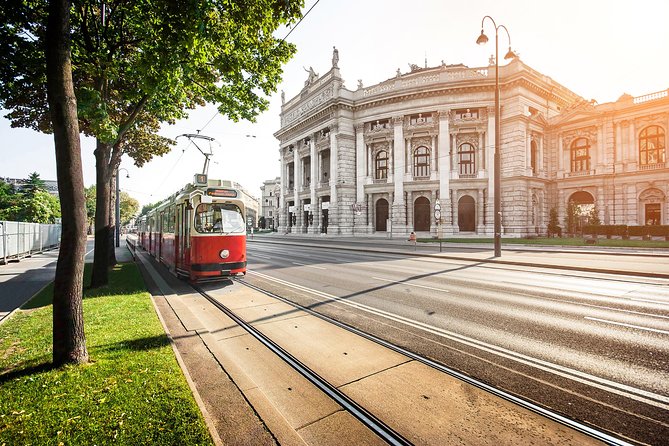
The Ringstrasse is Vienna’s statement street. Instead of quiet lanes, you get a grand sequence of buildings that say, very clearly, what the city valued: civic power, music, art, banking, and the stylish public life that grew around it. When you walk it with a guide, you stop treating the Ring as a photo backdrop and start seeing it as a timeline of taste and ambition.
One of the best things about this tour is that it doesn’t just point at pretty façades. It connects what you see to what it meant at the time. You’ll hear why certain buildings were placed along the Ring, and how architecture and public culture worked together. For me, that turns the whole experience from sightseeing into understanding, without getting heavy or slow.
More Walking Tours in Vienna
- Vienna: Guided Walking Tour of City Center Highlights
★ 4.7 · 4,989 reviews - Vienna: Vienna Central Cemetery Guided Walking Tour
★ 4.8 · 3,307 reviews - Vienna: Guided Walking Tour of City Highlights & Hidden Gems
★ 4.9 · 2,180 reviews
Meeting at Café Landtmann, then walking with a plan
The tour starts near public transportation at Café Landtmann (Universitätsring 4, 1010 Wien). You’ll also end at Café Schwarzenberg on the Kärntner Ring, so it’s a smooth start-to-finish route that feels like one continuous outing rather than a grab-and-go checklist.
You can pick a morning or afternoon departure, which is handy in Vienna where your best day can depend on where you want to fit museums, rest time, and evening opera plans. The tour uses a mobile ticket, so you are not hunting for paper in your bag.
Group size is capped at 8 travelers. That’s the sweet spot for this kind of walking tour. You don’t feel lost in a crowd, and you can actually hear the guide. It also helps explain why the guide quality stands out so much in real-world feedback, including praise for Sussana and Biljana. The humor and friendly professionalism are not just personality, they make the walking easier, because you stay oriented and engaged.
Stop 1: Rathausplatz and Vienna City Hall’s neo-Gothic story
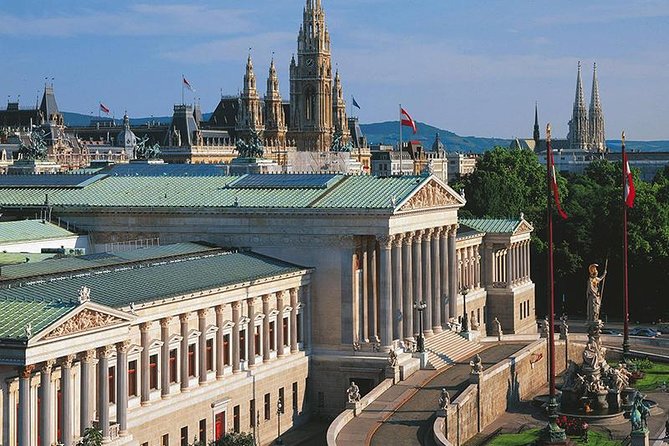
Your first stop is Rathaus at Rathausplatz on the Ringstrasse. Vienna City Hall is a seat of local government, built from 1872 to 1883 in a Neo-Gothic style. It houses key offices like the Mayor’s office and rooms connected to the city council and the Vienna Landtag.
This is a great place to begin because it sets the tone. The Rathaus is not subtle. It signals authority, stability, and the kind of civic pride that shaped the Ring’s grand look. Even if you mainly care about architecture, this stop gives you the language to notice things like style choices and how buildings broadcast meaning.
You’ll have about 15 minutes here, and admission is listed as free. With the short timing, you should treat it as orientation rather than a full interior deep visit. I’d recommend taking a minute to look up before you move on, then glance across the square for the overall massing, not just details.
Stop 2: Wiener Staatsoper, where music takes the foreground
Next up is Wiener Staatsoper, the Vienna State Opera. It’s a major landmark on the Ringstrasse, and it matters culturally because it was the first major building on this boulevard route, showing how central opera and music were to Viennese identity.
Construction dates run from 1861 to 1869, and the building has 1,709 seats. You don’t need to be an opera fanatic to appreciate what that number hints at: this wasn’t a small cultural project. It was designed to hold a serious public, and the Ring was part of that strategy.
You’ll get around 20 minutes, with free admission tickets indicated for the stop. Again, think of it as a guided preview. If you want to linger, you’ll likely need a separate ticketed visit later. Still, the guide helps you connect why the opera building feels like a headline, not a side note, along the Ring’s grand sequence.
A different sort of Vienna day:
- Vienna: Vivaldi’s Four Seasons Concert in Karlskirche
★ 4.7 · 14,951 reviews - Vienna: Spanish Riding School Training
★ 3.9 · 9,281 reviews - Vienna: Skip-the-cashier-desk-line Giant Ferris Wheel Ride
★ 4.5 · 7,859 reviews - Vienna: Schönbrunn Palace & Gardens Skip-the-Line Tour
★ 4.7 · 7,739 reviews
Stop 3: Kunsthistorisches Museum Vienna and the power of art
After opera comes museum scale. Kunsthistorisches Museum Vienna is both the institution and the main building, and it’s described as the largest art museum in Austria and one of the most important museums worldwide.
This is a stop where the guide’s context can really change your experience. You are seeing a building that represents more than one collection. It represents Vienna’s push to be a cultural capital, where art is presented with the same seriousness as government and commerce.
You’ll have about 20 minutes at this location, with free admission tickets listed. With limited time, I’d focus on what the museum building communicates from the street, then let the guide steer your attention to a few key features. If you find yourself wanting more, that’s actually a good sign. Vienna museums deserve time, and this tour can be your launchpad for choosing your best follow-up.
Stop 4: Postsparkasse by Otto Wagner, Vienna Secession in action
This is one of the most visually rewarding stops: Postsparkasse, the Austrian Postal Savings Bank building. It’s designed and built by Otto Wagner, and it’s regarded as an important work of the Vienna Secession, connected to Art Nouveau design thinking.
This stop is valuable because it bridges styles. The Ring is often associated with grand historic looks, but here you see a different kind of modern edge for its era. The building feels like it’s evolving, not repeating older formulas.
You’ll spend about 20 minutes here, and the stop includes free admission tickets. Since you won’t have hours to soak it in, your best move is to let the guide point out what makes it Secession, then use your eyes to spot those design cues yourself. This is the kind of stop where a short, well-guided look can save you from feeling lost in architecture-speak.
Stop 5: Stadtpalais Todesco and the salon world of Sophie von Todesco
Then the tour shifts from big public institutions to aristocratic life and culture. Stadtpalais Todesco was built between 1861 and 1864 for the Todesco family. One key figure is Baroness Sophie von Todesco, who established a renowned salon for artists and intellectuals.
This stop is important because it reminds you the Ring wasn’t only about official buildings. It was also about social influence. Salons helped shape ideas, and Vienna’s public life was tied to who met whom and where.
You’ll have about 15 minutes here, with free admission tickets listed. The time is short, so don’t expect a long storybook lesson. Instead, think of it as a thematic pause. You’ll come out of it understanding that the Ring’s cultural role was not random. It was organized around spaces where conversations and ideas could happen.
Stop 6: Café Schwarzenberg, why the Ring became a social stage
The tour ends with a visit to Café Schwarzenberg on the Ringstrasse. This is not just a snack stop. The café interior is noted for being largely unchanged since it opened in the 19th century. That means you’re not just going to a café, you’re stepping into a preserved atmosphere tied to the Ring’s heyday.
You’ll spend about 25 minutes here. The tour is designed to give you insight into Vienna’s thriving café culture in the latter half of the 19th century, when the Ring became a place to see and be seen from the moment it was completed.
One practical note: food and drinks are not included, so come ready to order what you want. Still, this ending is smart value for a walking tour. You get a real break, plus a cultural finish that makes the Ring feel human, not only monumental.
If you like people-watching, this is your moment. And if you prefer calm, you can use the café seating time to reset before your next museum or evening plans.
What the guide adds (and why it shows in the reviews)
The biggest difference between a good self-guided walk and this kind of guided outing is interpretation. A professional guide gives you the “why” behind the “what.” In feedback, the guide experience stands out strongly. People praised Sussana and Biljana specifically, calling out professional, friendly delivery and a terrific sense of humor.
That humor is not just a nice-to-have. On a 2.5-hour walking route, it keeps you from zoning out when buildings start to feel similar. It also helps you remember details later, because the guide turns observations into small stories you can recall.
Also, the tour format supports personal attention. With a max of 8 travelers, the guide can keep pace with your group’s questions. One of the most impressive signals from real-world experience is that the tour can still run even when bookings are low, and the personalization stays strong. Translation: you should expect a tour that feels like an actual guided experience, not a rushed bus-style lecture.
Price and value: is $177.44 reasonable?
At $177.44 per person for about 2 hours 30 minutes, the price is not low. But when I look at what you get, it starts to make sense for a first-time Vienna Ringstrasse deep understanding without spending your whole day piecing together tickets and guide time.
Here’s where the value comes from:
- You’re getting a professional guide for the full 2.5 hours.
- The stops include free admission tickets for the major landmarks on the route, which reduces the need to add separate ticket costs on your own.
- The group size limit of 8 means you’re paying for guidance that is easier to interact with.
- The tour uses a mobile ticket and offers morning or afternoon departures, so you can fit it into a real itinerary instead of forcing one rigid schedule.
The main reason you might feel the price is steep is if you already know Vienna well and only want a casual walk for photos. In that case, you could do it on your own. But if you want the Ringstrasse to click, having a guide connect the architecture, the institutions, and the cultural context is where your money goes.
Who this tour is perfect for
This tour fits best if you:
- are in Vienna for a limited time and want a structured overview of the Ringstrasse areas
- care about architecture and want explanations tied to the city’s institutions and social life
- prefer small groups and a guide who can talk, not just point
- want a classic ending with Café Schwarzenberg rather than a rushed exit into the next queue
It also has a children’s family tour option. If you’re traveling with kids, the guide focuses on symbols on buildings and everyday life in Vienna around 1900. That’s a smart approach for younger travelers who might otherwise get impatient with adult-style explanations.
Who should consider another plan
If you want to spend long hours inside the major sights, you may find the stop durations too brief. This is built for walking and seeing, with free entry built into the stop rhythm, not for staying until you fully exhaust every room.
Also, if your priorities are very different, like only churches or only specific museum collections, you might want a more specialized tour. The Ringstrasse route covers a wide range. That’s its strength, but it’s also why it’s not the best choice if you only want one narrow theme.
Should you book the Ringstrasse Project Walking Tour?
I’d book it if you want a guided, efficient way to understand what makes Vienna feel like Vienna. You get a tight sequence of major Ringstrasse landmarks, free admission tickets at the stops, and a proper cultural finish at Café Schwarzenberg. The guide quality shows up clearly, with praise for guides such as Sussana and Biljana, and the small-group size keeps the experience lively.
Skip it only if you already feel confident with the Ringstrasse story, or if you want long indoor time at each site. For most first-timers, though, this is a strong use of a half-day window.
FAQ
What is the duration of the Ringstrasse Project Walking Tour?
It runs for about 2 hours 30 minutes.
Where is the tour located?
The tour is in Vienna, Austria, along the Ringstrasse.
How much does the tour cost?
The price is $177.44 per person.
What language is the tour offered in?
The tour is offered in English.
How many people are in the group?
The tour has a maximum of 8 travelers.
What is included in the price?
It includes a 2.5-hour guided tour of Vienna’s Ringstrasse and a professional guide.
What is not included?
Food and drinks are not included, and there is no hotel pickup and drop-off.
Are tickets included for the stops?
The stops list admission tickets as free.
Where do we meet and where does the tour end?
You meet at Café Landtmann, Universitätsring 4, 1010 Wien, Austria, and the tour ends at Café Schwarzenberg, Kärntner Ring 17, 1010 Wien, Austria.
Can I get a full refund if I cancel?
Yes. You can cancel up to 24 hours in advance for a full refund.
Latest Vienna reviews
- Private tour of Hallstatt and Salzburg through beautiful Alps★ 5.0 · 3 reviews
- Vienna: Vienna under the Nazis, Private Walking Tour★ 1.8 · 3 reviews
- Magical Vienna Christmas Market Tour – 2 Hours★ 2.7 · 3 reviews
- Vienna: Mythos Mozart Experience Ticket& Guided Walking Tour★ 2.5 · 3 reviews
- Vienna: Private tour Mauthausen and Linz★ 4.1 · 3 reviews
- Vienna Private Schönbrunn Palace Tour, Extra Rooms and Gardens★ 5.0 · 3 reviews
- Skip-the-line Belvedere Palace Guided Tour with Transfers★ 5.0 · 3 reviews
- Schoenbrunn Palace Skip-The-Line and Vienna Highlights Private Tour★ 4.5 · 3 reviews
Walking Tours, compared.
Guided Walking Tour of City Center Highlights
Read our review →
Guided Walking Tour of City Highlights & Hidden Gems
Read our review →
Vienna Historic Center Small Group Walking Tour
Read our review →
Browse the lists this tour appears in