
Reviewed · WALKING TOURS
Vienna: Essential History Walking Tour
Vienna’s imperial center has a way of making history feel real, and this walking tour is a smart shortcut. You’ll move through the sights that shaped the Habsburg world, then end at St. Stephen’s with the kind of context that makes the city snap into focus.
I really like how the tour stays tight and efficient, hitting major landmarks in about 2 hours without turning into a marathon. I also love the storytelling style, with guides like Herbert Stojaspal and Herbert known for dry humor and practical details that explain what you’re actually looking at.
One consideration: the route is heavily focused on the imperial and Habsburg core, so if you want a more general, neighborhood-by-neighborhood Vienna view, you may feel it leans more palace than city life.
Key things you will notice on this tour
- Roman Vienna to the castle question: you start with the city’s early setting and why power chose this spot
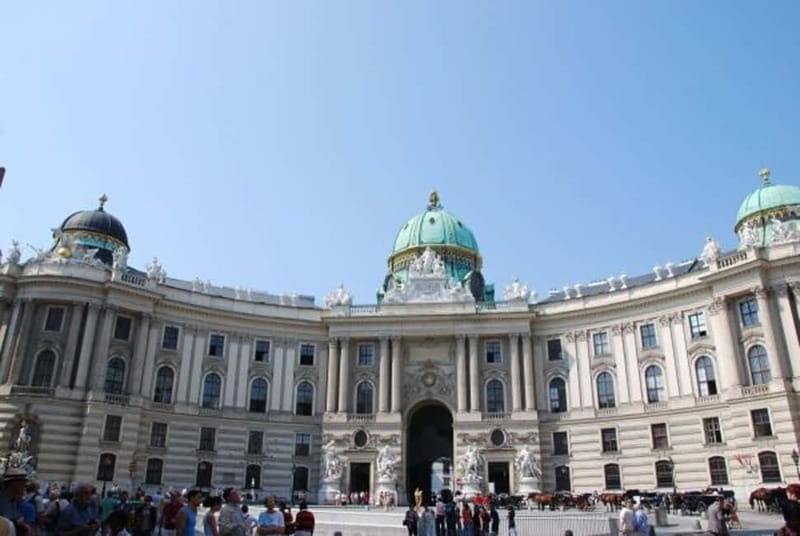
- Hofburg and Heldenplatz in plain language: big buildings, big power, and the people behind them
- Austrian National Library rooftop symbolism: you’ll learn what the symbol means and why Joseph II is tied to the area
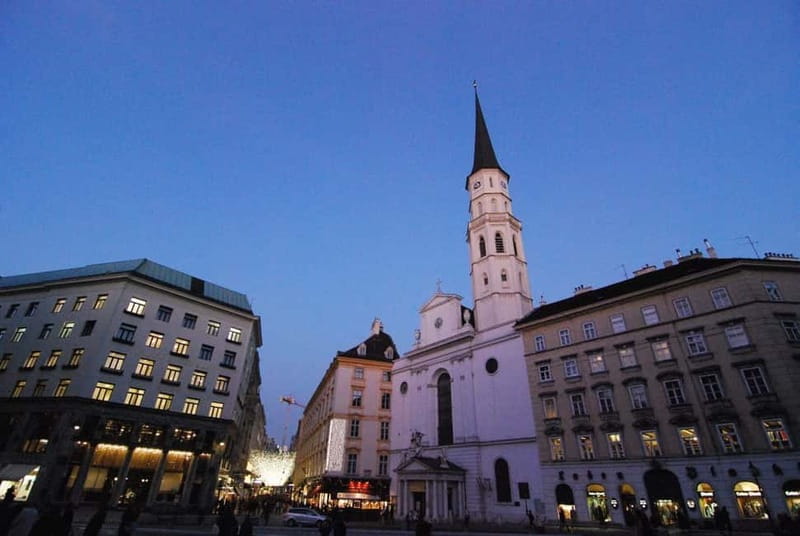
- Habsburg wedding traditions at St. Michael’s Church: including the surprising fact that the groom was not always present
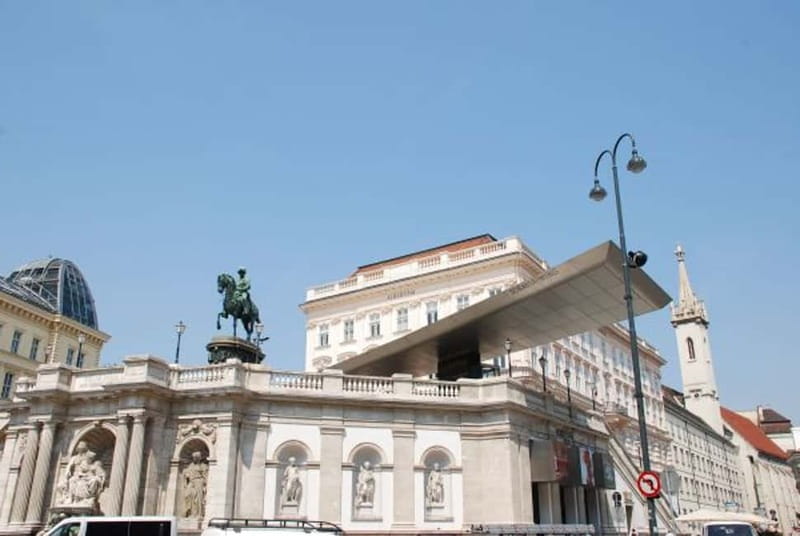
- WWII reminders near the Albertina: the Monument Against War and Fascism adds weight to the walk
- St. Stephen’s Cathedral as the ending payoff: you’ll hear how WWII damage changed it and why school facts can be incomplete
Getting oriented fast: Michaelerplatz 3 to the imperial core
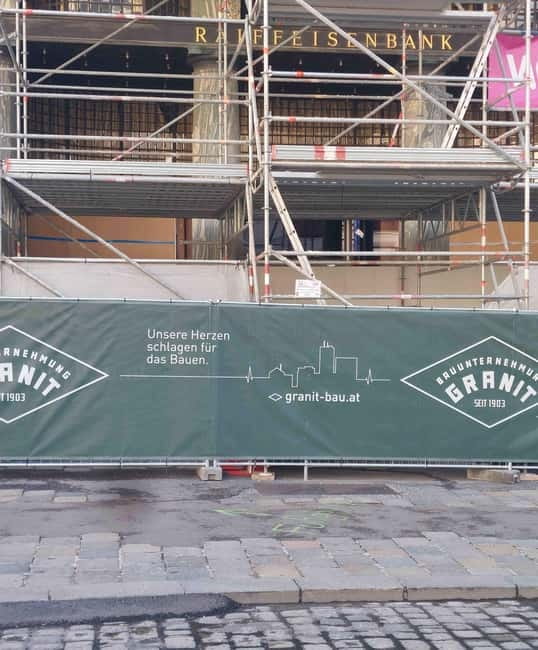
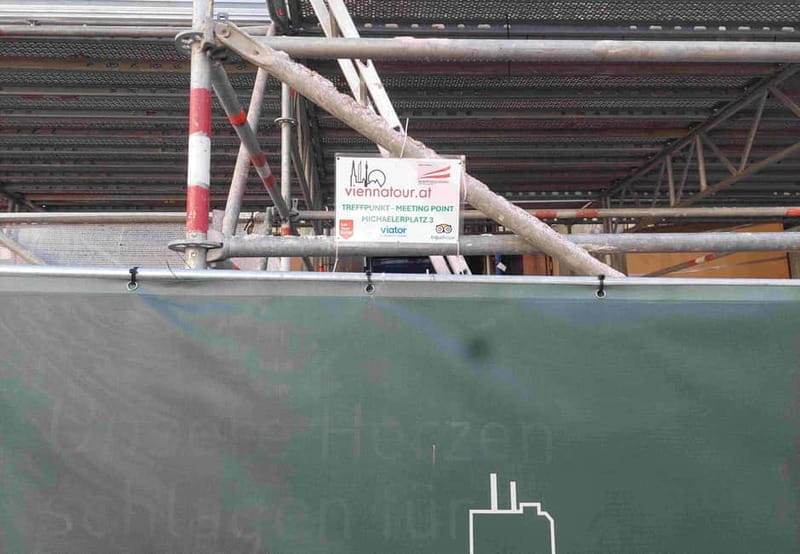
This tour is built for your first day in Vienna or any day when you want your bearings quickly. The meeting point is in front of Loos Haus at Michaelerplatz 3, a short walk from the U3 metro at Herrengasse. Look for the building facade that says Raiffeisenbank, and you’ll know you’re in the right spot.
The walk is designed for a small group, which matters. You can actually ask questions, and your guide can keep pace without turning the experience into a lecture. A lot of guides use visual support too, and in past groups you may see an iPad used at each stop to show what the scene looked like in earlier eras.
Plan on comfortable walking shoes. The tour runs in all weather, and it’s not a sit-down museum day. Also, keep your day light: luggage or large bags are not allowed, and video and audio recording are off the table.
More Walking Tours in Vienna
- Vienna: Guided Walking Tour of City Center Highlights
★ 4.7 · 4,989 reviews - Vienna: Vienna Central Cemetery Guided Walking Tour
★ 4.8 · 3,307 reviews - Vienna: Guided Walking Tour of City Highlights & Hidden Gems
★ 4.9 · 2,180 reviews
Roman Vienna and the Hofburg: why the city grew where it did
The first stops set you up for everything that comes next. You begin around the Michaelerplatz excavations, where you’ll get a sense of Roman Vienna and the logic of early power. The guide connects the dots with a key question: why was a castle built here in the first place? Even if you know Vienna as an empire of palaces, this start helps you understand the geography that allowed the Habsburg machine to expand.
Then you move into the Hofburg orbit. This is where Vienna stops being a pretty city and turns into a governing system. You’ll hear why the Hofburg Palace matters, and you’ll also get a feel for the scale of the grounds, listed here as covering 555,000 m². That number is not trivia. It explains how the empire could function as a world unto itself, with ceremonies, administration, and court life all stacked inside one huge complex.
This part of the route is also good for learning how to read architecture. You’ll be looking at facades and realizing that buildings often hide stories about who controlled the city at different points in time, and how changes in rule show up in stone.
Heldenplatz to the Imperial Treasury: power on display, not just power in books
Next comes Heldenplatz, where the space feels bigger than it should on a walk. You’ll see Heroes’ Square and learn what lies behind the facades. This stop is worth it because it trains your eye. Instead of treating the square as a backdrop for photos, you’ll understand how it functioned as a stage for authority.
From there, the tour turns toward the Imperial Treasury. The message here is simple: Vienna’s most impressive objects are not only about beauty, they’re about legitimacy. You’ll learn why an Imperial Treasury visit fits naturally into any Vienna trip, and your guide will point out what you can look for when you come back on your own.
Even without entrance fees included, you’ll get enough orientation to decide how long you want to spend later. The tour is basically a guided primer, so you don’t feel lost in the glittering stuff.
The Austrian National Library state room and Joseph II’s roof symbol
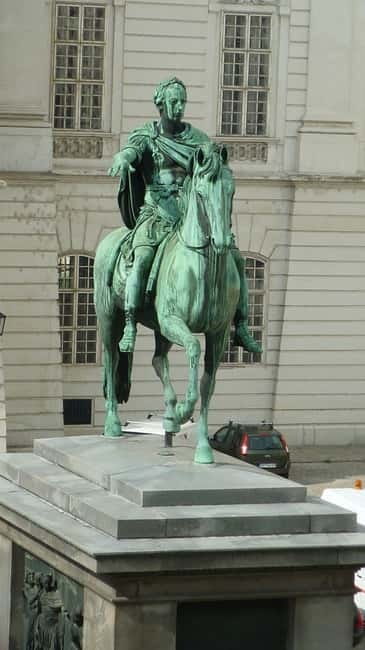
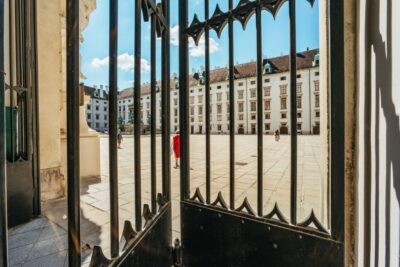
One of the standouts is the Austrian National Library stop with its state room. This is not just a building pass. You’ll learn about what you’re seeing, including the symbol on the roof and what it means. You’ll also discover why the square is named after Emperor Joseph II, which gives you a name and a reason rather than a random label on a map.
This stop is also a great reminder that Vienna’s grandeur is often tied to administration, education, and the control of information. When you understand that, the library becomes more than a pretty facade. It becomes a clue about how the empire imagined knowledge and authority.
If you enjoy stories that connect art, politics, and everyday life, you’ll probably feel your interest sharpen here. And since the tour is live and interactive, you can ask how Joseph II’s era fits into the broader timeline the guide is building.
More Historical Tours in Vienna:
- Vienna: Time Travel and Magic Vienna History Tour
★ 4.6 · 3,879 reviews - Vienna: World War II Historical Walking Tour
★ 4.8 · 1,772 reviews - Vienna Historic Center Small Group Walking Tour
★ 5.0 · 1,746 reviews - Time Travel-Magic Vienna History Tour Ticket
★ 4.5 · 1,099 reviews
St. Michael’s Church and the Habsburg wedding story you won’t forget
The tour then shifts to a very specific side of Habsburg life: the church where all Habsburg weddings took place, which is St. Michael’s Church. You’ll also hear about how the schedule worked, including that it’s closed on Sundays and public holidays, so this is one of those stops you appreciate on a guided day rather than trying to catch on your own without planning.
The most memorable detail is the wedding tradition that surprises people: the groom was not always present at some weddings. That single fact changes how you think about court life. It wasn’t just romantic ritual. It was political machinery, and sometimes the logistics of rule mattered more than the symbolism of a groom standing at the altar.
You’ll also hear about St. Michael’s architecture and how it combines three different architectural styles. This is a useful skill because it teaches you how to spot Vienna’s layers. Instead of assuming buildings were built in one uniform moment, you’ll start to see Vienna as an ongoing project.
Neuer Markt and the Providentia Fountain anecdote
As you continue, you’ll pass the Neuer Markt area and the Providentia Fountain, where your guide shares anecdotes. This is one of those stops that feels small on the map but lands hard in a story-based tour.
Why it matters: fountains and statues are Vienna’s way of saying, in stone, what a society wanted to believe about itself. When you hear the anecdote, the detail stops being decoration and becomes meaning.
This is also a good break in the walk. You’re not only hitting major monuments. You’re also learning how to notice the quieter symbolic bits that you would otherwise walk right by.
Albertina plus the Monument Against War and Fascism: art, memory, and a hard turn
The Albertina Museum is next, and here the tour earns serious credibility. You’ll learn that the Albertina is home to the largest graphical collection in the world. That fact alone gives the stop weight, but your guide also uses it to talk about more than museums. You’ll connect collecting, culture, and power.
Then you’ll face a harder moment near the Monument Against War and Fascism. This section matters because it keeps the tour honest. Vienna’s imperial story is real, but so is the trauma that came later. The monument functions like a mental reset, so the walk doesn’t become a nonstop parade of impressive buildings.
If you come to Vienna expecting only beauty, this part helps you understand why people remember the city in layers. It’s still worthwhile even if you prefer light history, because the tour doesn’t let you ignore what happened.
State Opera area and the Carinthian Gate Theatre to Hotel Sacher change
You’ll stop near the Vienna State Opera and learn why the Hotel Sacher stands where the Carinthian Gate Theatre once was. This is one of my favorite kinds of story on tours: a real-world example of how the city changes shape over time, while some names and landmarks keep getting repeated.
It’s also useful for planning. Vienna has many streets where you’ll later ask yourself, what was here before? A tour like this gives you the habit of asking that question, and that habit makes the city feel less like a list and more like a living place.
Imperial Crypt and Habsburg burial ritual: the closing that reframes everything
The tour ends in the imperial mindset, but it shifts into something intimate. You’ll see the Imperial Crypt and learn about the Habsburg burial ritual. This isn’t presented as spooky theater. It’s explained as part of how the dynasty understood death, continuity, and legitimacy.
These details land best because you’ve already learned about the wedding traditions and court logic earlier. Now you see how the same mind worked at the end of life, not just at ceremonial beginnings. The result is a more complete picture of how the empire thought.
St. Stephen’s Cathedral: partial WWII destruction and the facts schools skip
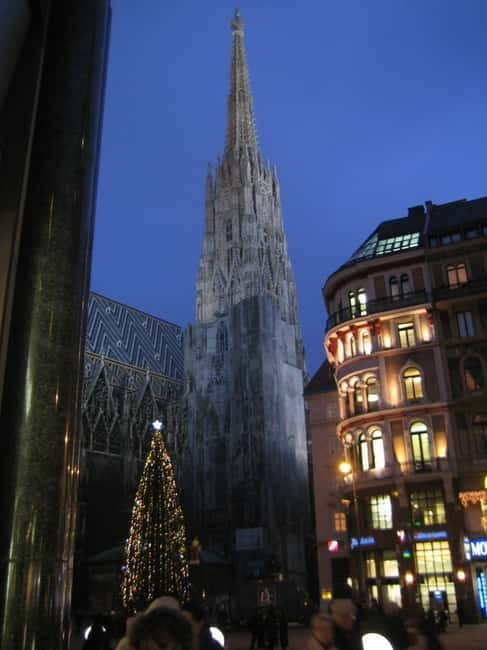
Your final stop is St. Stephen’s Cathedral, the landmark of Vienna. It’s the natural place to end because the building gives you a visual anchor for everything you learned during the walk.
You’ll hear about partial destruction during WWII and why not everything taught in school is correct. Even if you never get the full timeline in one go, this ending does one important thing. It teaches you to keep a critical eye on easy facts and simple versions of history.
It’s also a good moment to decide what you want next. If you feel curious, you know you’ll likely want to read more or visit more. If you feel overwhelmed, you at least leave with a framework that makes Vienna less confusing.
Price and value: $34 for a two-hour orientation to “why” Vienna looks like this
At $34 per person for a two-hour walking tour, this is strong value if you’re the type who likes to understand what you’re seeing. You’re not paying for entrance tickets, since those are not included. Instead, you’re paying for interpretation and route efficiency.
That’s the real cost-benefit. Vienna’s imperial core is visually impressive, but without context it can be easy to blur together. With a guide like Herbert Stojaspal, Herbert, or Dorothy, you get details and anecdotes that you probably would not notice on your own: the rooftop symbol at the National Library, the Joseph II connection, the wedding tradition at St. Michael’s, and the WWII reminders near the Albertina.
If you only have a day or two and want your money to translate into better sightseeing later, this tour fits that goal well.
Who should book, and who might want a different approach
This tour is a great match if you:
- want a first-time orientation to Vienna’s historic center
- like architecture with stories, not just dates
- enjoy guides who use humor and also answer questions clearly
It may be a tougher match if you:
- have mobility impairments, since it’s not suitable for that group
- are traveling with children under 12
- want a wide city sweep rather than a focused imperial core route
- expect lots of museum time, since entrance fees are not included and this is still a walking experience
Should you book Vienna Essential History Walking Tour?
Yes, book it if you want a practical, high-signal introduction to Vienna’s imperial story in a short time. For $34 and two hours, you’ll get a lot of “why this matters” that makes the rest of your trip easier to plan, whether you return to the National Library, revisit the Albertina area, or spend more time around St. Stephen’s.
Skip it only if you strongly prefer a general tour of many neighborhoods, or if the Habsburg and imperial focus sounds like more of what you already know. Otherwise, it’s the kind of start that turns Vienna from a picture into a place with logic.
FAQ
What is the duration of the Vienna Essential History Walking Tour?
The tour lasts 2 hours.
How much does the tour cost?
The price is $34 per person.
Where do I meet the guide?
Meet in front of Loos Haus at Michaelerplatz 3, 1010 Vienna. It is about a 3-minute walk from the Herrengasse metro station line U3.
Are entrance fees included?
No. Entrance fees are not included.
What languages are available?
The live tour guide is available in English and German.
Is video or audio recording allowed during the tour?
No. Video recording and audio recording are not allowed.
Latest Vienna reviews
- Vienna Food Tour: Dishes, Wine, Street Food & Culture★ 4.7 · 12 reviews
- Vienna: mumok Museum of Modern Art Entry Ticket★ 3.8 · 13 reviews
- eBike Vienna 90min guided tour – use ebike for the whole day★ 4.0 · 13 reviews
- A box for a romantic walk in the city center of Vienna★ 5.0 · 13 reviews
- Vienna: Austrian Wine Tasting★ 4.8 · 13 reviews
- Bratislava Private Tour from Vienna★ 4.5 · 13 reviews
- Small Group Half Day Tour from Vienna to Bratislava★ 4.0 · 14 reviews
- Private One Day Trip to Bratislava from Vienna★ 4.5 · 13 reviews
Walking Tours, compared.
Guided Walking Tour of City Center Highlights
Read our review →
Guided Walking Tour of City Highlights & Hidden Gems
Read our review →
Vienna Historic Center Small Group Walking Tour
Read our review →
Browse the lists this tour appears in