
Reviewed · WALKING TOURS
Vienna: Meet Beethoven Life Private Guided Walking Tour
Vienna has a way of sounding like music even when you are just walking the streets. This private Beethoven-themed tour turns the city into a listening experience, with stops tied to the composer’s life and Vienna’s major musical landmarks.
I especially like how the day mixes big postcard sights with specific Beethoven connections, from the Secession Building kickoff to the long visit at Beethoven Pasqualatihaus. I also like that you get a true private guide, with reported guides such as Ingrid and Sergio praised for tailoring the stories to your pace and interests, even when someone in your group wants to go deep.
One thing to consider: not every building along the route has included entry. You will get plenty of exterior views and walk-by architecture, and you might have optional paid moments like entering the Secession Building, plus any extra cathedral church stops depend on time and what you ask for.
Key highlights worth putting on your radar
- Licensed private guide who ties Vienna’s landmarks directly to Beethoven
- Beethoven Pasqualatihaus included with a full 2-hour visit and access to his personal traces
- Classic concert upgrade option with a ticket for Beethoven, Mozart, Strauss, or Schubert in the evening
- Ringstrasse architecture loop with Rathaus, Parliament area, and major opera and theater facades
- Time to pause at Volksgarten, a quieter green break in the middle of the Old Town
- Flexible add-on stops like Stephansplatz and St. Stephen’s Cathedral if you request them
Starting at Friedrichstraße, then Secession’s golden dome
You meet at Friedrichstraße 12, 1010 Wien. It is a convenient spot for getting oriented, and the meeting location is near public transportation, which matters in Vienna when you do not want to burn time just getting started.
Your tour begins at the Secession Building (Secessionsgebaude). The practical part is easy: find your name on a holding card, then walk with the guide. Visually, this is a strong opener. The golden dome is the kind of detail you notice right away, especially with the building’s clean white look. The guide also explains how this site connects with Beethoven, so you are not just admiring architecture for architecture’s sake.
You have only about 10 minutes here, so do not expect a long museum-style visit. If you want to step inside, you can, but it is an extra admission fee (optional 4.5 to 9.5 EUR). For many people, the exterior alone is enough if you want to keep your focus on the Beethoven story.
More Walking Tours in Vienna
- Vienna: Guided Walking Tour of City Center Highlights
★ 4.7 · 4,989 reviews - Vienna: Vienna Central Cemetery Guided Walking Tour
★ 4.8 · 3,307 reviews - Vienna: Guided Walking Tour of City Highlights & Hidden Gems
★ 4.9 · 2,180 reviews
Old Town and Ringstrasse, where Beethoven lives inside the streets
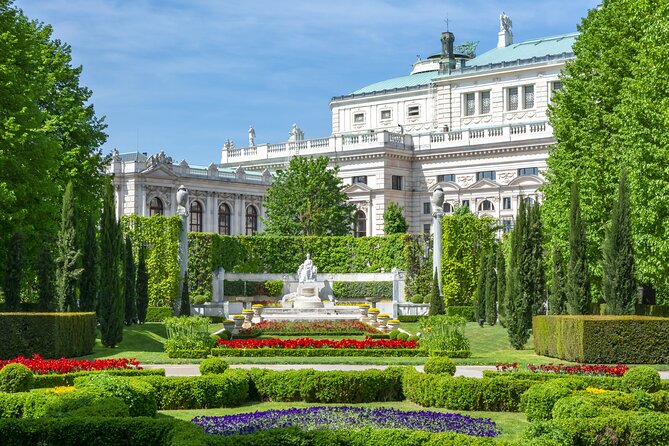
After Secession, the tour shifts into the Historic Center of Vienna. This segment lasts about an hour and is built around commentary, meaning the guide should give you the why behind what you are seeing.
You will move through the city’s layers: Baroque castles and gardens, then the late-19th-century Ringstrasse lined with grand buildings, monuments, and parks. This is one of the smartest ways to understand Vienna’s musical identity without getting stuck in one museum. You see the stages where cultural power was displayed, and then the guide brings Beethoven into the picture through stories that connect the setting to the composer’s time.
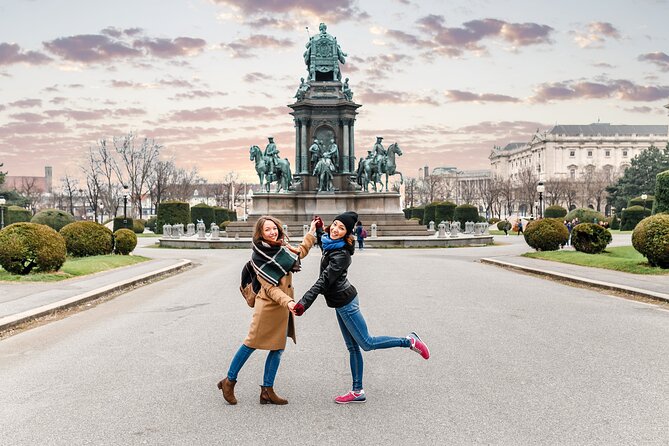
Next comes a more direct Beethoven encounter, the Beethoven Statue in Beethovenplatz. Expect about 25 minutes here. This is a great stop if your group likes photos and short, unhurried moments. One detail I liked from real experiences shared by people who booked this tour: guides tend to keep it conversation-friendly close to the statues, so you can ask questions and still get time to take pictures.
Music icons on the walk: Staatsoper, Albertina, Theatermuseum, Burgtheater
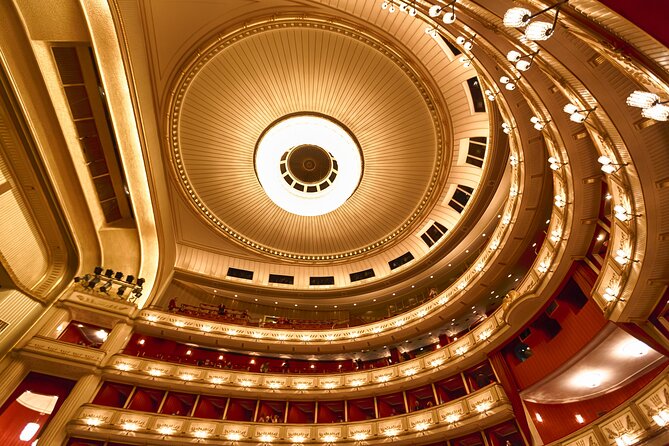
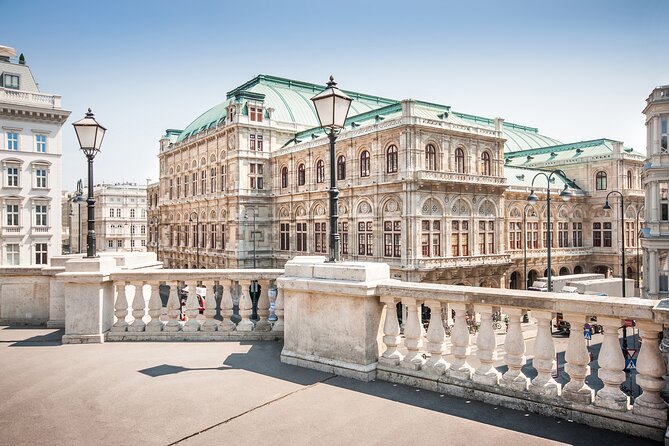
From here, the tour leans into Vienna’s performance culture. At Wiener Staatsoper, you spend around 10 minutes. This is a prime spot because Vienna built much of its musical reputation around major concert halls and opera houses. Even if you are not going inside, seeing it in the middle of a guided “music city” route helps the whole theme click.
You then head to Albertina. The time is short, about 10 minutes, but it is a helpful palate cleanser. The building itself is part of the mood, and the guide points out that Albertina houses major art works, including masterpieces by Da Vinci, Raphael, Michelangelo, Durer, Rembrandt, and others. It is a reminder that Vienna’s creative world is not only about composers, it is about the arts generally, and the guide uses that connection to keep the Beethoven story from feeling like a one-note lecture.
A standout stop is Theatermuseum. You get a close look at the building for about 10 minutes. It also carries a specific Beethoven link: the guide explains that Beethoven conducted a private Viennese premiere of his Eroica (his 3rd Symphony) there. This is exactly the kind of stop I enjoy because it makes a famous work feel tied to real places, not just labels in a program.
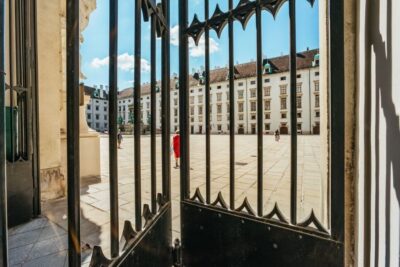
Then you pass Hofburg from the outside only. You get around 10 minutes. That can be a downside if you were hoping for interiors, but it is still worth it for context. The Hofburg area is huge and historically layered, and from outside it helps you understand why Vienna’s power centers matter to its arts culture.
You continue to Burgtheater on the Ringstrasse, around 10 minutes. The focus here is the exterior detail and the civic-building feel of the theater. It is not a ticket stop, but it helps you recognize the “theater as city symbol” idea that shows up again and again on the Ring.
A breather at Volksgarten, then Rathaus square on the way to Beethoven Pasqualatihaus
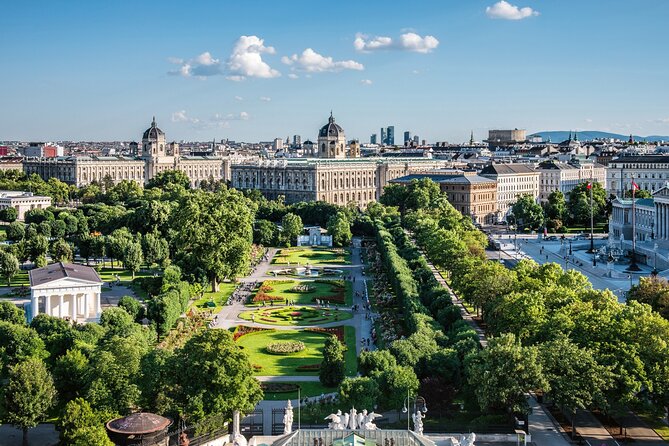
Halfway through, you get a breather at Volksgarten. You spend about 25 minutes, and this is one of the best pacing choices on the route. The park is a quieter pause with green space and roses. Vienna can feel nonstop on a busy day, so this break is not wasted time. It also lets you reset your brain before the biggest, most narrative-heavy part of the tour.
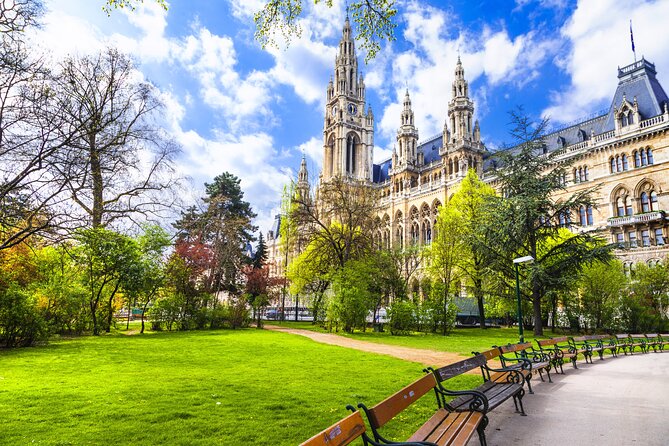
Then the walk tightens back up around major civic power landmarks. At Rathaus, you get around 10 minutes. It is known for its massive municipal scale and the fact it was built using an enormous number of bricks (the tour notes put that figure at about 30 million). After that, there is a walk around the square where you are close to the Austrian Parliament Building and the University of Vienna. This area matters because it frames Vienna as a city where learning and politics sit right beside music culture.
You end this “outer Vienna” stretch along Ringstrasse, with about 10 minutes for the guide to connect multiple major sights along the boulevard, from opera settings to Rathaus and beyond.
A different sort of Vienna day:
- Vienna: Vivaldi’s Four Seasons Concert in Karlskirche
★ 4.7 · 14,951 reviews - Vienna: Spanish Riding School Training
★ 3.9 · 9,281 reviews - Vienna: Skip-the-cashier-desk-line Giant Ferris Wheel Ride
★ 4.5 · 7,859 reviews - Vienna: Schönbrunn Palace & Gardens Skip-the-Line Tour
★ 4.7 · 7,739 reviews
Beethoven Pasqualatihaus: the real centerpiece of the tour
Now you reach the true anchor of the experience: Beethoven Pasqualatihaus. This is where the tour earns its money.
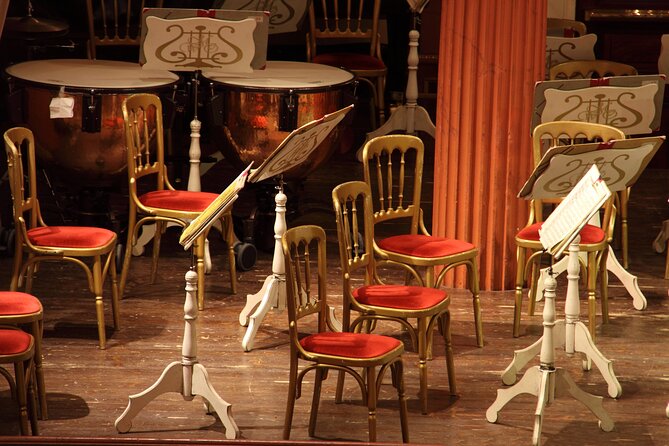
You spend about 2 hours here, and the admission ticket is included. This is not a quick photo stop. The focus is on the composer’s life as lived in a residence, with an interesting collection of his notes, a piano, photos, and paintings. The guide also tells stories tied to famous works like Fur Elise and Fidelio, which is a great way to make the music feel less abstract.
Why this is so valuable: a walking tour gives you the city’s shape, but the Pasqualatihaus gives you the human scale. You get time to slow down, read what you can, and let the Beethoven theme feel grounded. In a good tour, this is where the guide’s storytelling and the building’s details start reinforcing each other.
If your group loves music history, this portion is the must-see. If your group is more mixed, it still works because the museum’s focus on personal artifacts and daily life keeps it from being only dates and names.
Optional add-ons near Stephansplatz, St. Stephen’s, and Karlskirche
After Pasqualatihaus, the tour mentions several attractions that you can request the guide to include. The theme is built around the Beethoven route, but the guide can adapt based on your needs.
These potential add-ons include:
- Stephansplatz (around 10 minutes if you request it)
- St. Stephen’s Cathedral (around 10 minutes if you request it)
- Karlsplatz (around 10 minutes if you request it)
- Karlskirche (around 10 minutes if you request it, and note that entry is not included)
This is a practical flexibility point. If you want to finish your day with one of Vienna’s most recognizable landmarks, ask early enough that it fits the timing. If you wait until the end and the group is tired, you might find it harder to squeeze in.
Also note: some of these have “admission ticket not included” listed (like Karlskirche), so you should be prepared for possible extra costs if you want to enter.
Extended option: an evening concert ticket and how to plan for it
If you upgrade to the extended tour, you get a ticket to a classical concert in Vienna’s Old Town area. The performers can be tied to Beethoven, Mozart, Strauss, or Schubert, depending on availability. The timing is important: concerts usually start between 5:30 pm and 8 pm, and the exact time is listed on your concert ticket sent by email.
Here’s how I would plan it: treat the concert as a fixed appointment. Build buffer time so you are not rushing from the tour to a venue. The experience provider notes that the concert is separate in the evening, and availability can change the specific day and time. That means you should confirm details in your email the day before.
The value of this upgrade is simple. A Beethoven walking tour explains why the music matters. A live concert is where you feel it in your body, even if you are not a hard-core classical fan.
Price, what you really get, and where the extras might land
The price is $264.50 per person for this private guided walking tour, lasting about 3 to 5 hours. That sounds like real money, so I look for included value.
In this case, the tour includes:
- A private walking tour led by a licensed guide
- Beethoven-related sightseeing stops
- Entrance to Beethoven Pasqualatihaus
- In the extended option, a ticket for a classical concert
So you are paying largely for two things: a guide who keeps the Beethoven theme coherent across multiple stops, and included entry to the tour’s key location. Many city walking tours rely on you paying for everything yourself. Here, Pasqualatihaus is already built into the cost, which is a smart way to reduce surprise spending.
Potential extras you should be aware of:
- Secession Building interior is optional (not included)
- Some stops list admission as not included, such as Theatermuseum and Hofburg, and Karlskirche if you add it
- Any requested church or museum entry may add costs, depending on what you choose on the day
The most cost-effective approach, in my opinion, is to decide what you want most. If you care deeply about the Beethoven museum side, the base tour already has a strong centerpiece. If you want both story and sound, go extended and plan the evening concert.
Who this tour fits best
This is a great match if you:
- Want a private guide who can answer questions and adjust your pace
- Love Beethoven or want a focused introduction to why Vienna shaped him
- Prefer walking plus one major museum moment, rather than a long day of hopping between unrelated sites
It can also work for a family group, especially if one person wants Beethoven details and another just wants a good guided look at Vienna’s core sights. One piece of feedback that stands out is how guides can meet different interests at the same time, keeping both a “connoisseur” and a casual learner engaged.
If your group is allergic to walking, the tour is still manageable, but it is a full Old Town loop with multiple short stops. Build in water breaks, and use the Volksgarten pause as your reset.
Should you book this Beethoven walking tour?
Yes, I would book it if you want Vienna’s famous sights with a clear theme and a real guide who makes the Beethoven pieces connect. The reason is straightforward: the tour invests its time in Pasqualatihaus (included, about 2 hours), and the rest of the walk builds context around it.
Choose the extended version if you can handle a concert evening and you want to end the day with live classical music tied to the composer theme. Just be strict about concert timing, since the exact start time comes on your ticket.
If you are on a tight schedule or only want a quick taste of central Vienna, you might skip this and pick a shorter walk. But for a half-day style experience that is genuinely themed and well organized, this one is easy to recommend.
FAQ
How long is the Vienna Meet Beethoven Life Private Guided Walking Tour?
It is listed as about 3 to 5 hours.
Where does the tour meet, and where does it end?
The meeting point is Friedrichstraße 12, 1010 Wien, Austria. The tour ends back at the meeting point.
Is this a private tour?
Yes. It is a private tour/activity, and only your group participates.
What language is the tour offered in?
The tour is offered in English.
What is included in the tour besides the guide?
The tour includes Beethoven-related sightseeing and the entrance ticket to Beethoven Pasqualatihaus. In the extended option, it also includes a ticket to a classical concert.
Is the Beethoven Pasqualatihaus ticket included?
Yes. Entrance to Beethoven Pasqualatihaus is included, and the visit is about 2 hours.
Are there any sites where entry is not included?
Yes. Entry is not included for some places on the route, and Secession Building interior is optional with an extra fee. Karlskirche also notes admission is not included if you add it.
If I choose the extended option, when is the classical concert?
Classical music concerts take place in the evening, usually between 5:30 pm and 8 pm. The exact time is on your concert ticket attached in your email.
What is the cancellation policy?
Free cancellation is available up to 24 hours in advance for a full refund. If you cancel less than 24 hours before the experience starts, the amount paid is not refunded.
Latest Vienna reviews
- Private tour of Hallstatt and Salzburg through beautiful Alps★ 5.0 · 3 reviews
- Vienna: Vienna under the Nazis, Private Walking Tour★ 1.8 · 3 reviews
- Magical Vienna Christmas Market Tour – 2 Hours★ 2.7 · 3 reviews
- Vienna: Mythos Mozart Experience Ticket& Guided Walking Tour★ 2.5 · 3 reviews
- Vienna: Private tour Mauthausen and Linz★ 4.1 · 3 reviews
- Vienna Private Schönbrunn Palace Tour, Extra Rooms and Gardens★ 5.0 · 3 reviews
- Skip-the-line Belvedere Palace Guided Tour with Transfers★ 5.0 · 3 reviews
- Schoenbrunn Palace Skip-The-Line and Vienna Highlights Private Tour★ 4.5 · 3 reviews
Walking Tours, compared.
Guided Walking Tour of City Center Highlights
Read our review →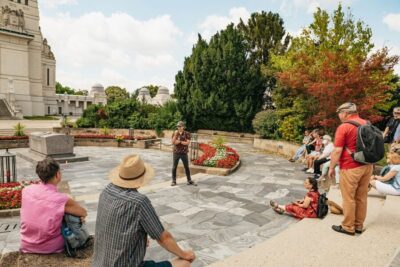
Guided Walking Tour of City Highlights & Hidden Gems
Read our review →
Vienna Historic Center Small Group Walking Tour
Read our review →
Browse the lists this tour appears in