
Reviewed · WALKING TOURS
Vienna Private Walking Tour including State Opera
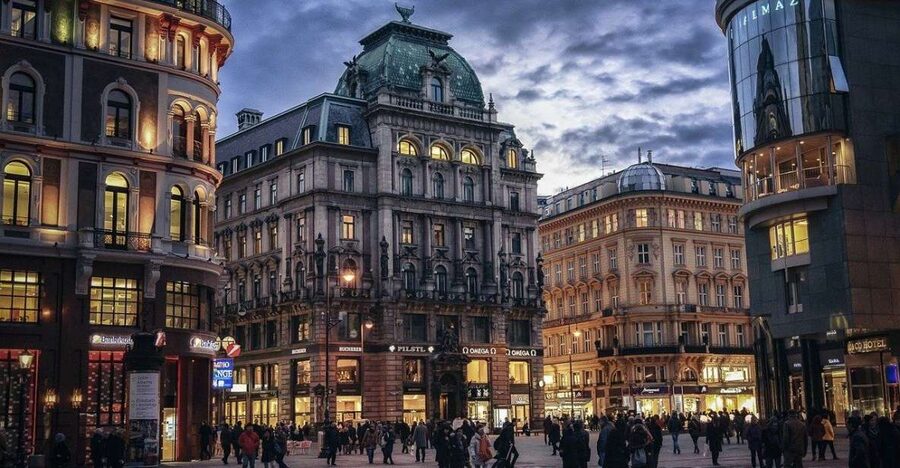
What makes this tour interesting is how it connects Vienna’s big political story to its musical one, all on foot and in the center of town. You start at the Vienna State Opera and end up at Stephansplatz, so you see the city’s power and its art side by side.
I like that the guide does not treat the Habsburg era like a textbook. You get clear links between the Holy Roman Empire, Austro-Hungarian rule, and the shock of the World Wars, then the tour lands on what came next: the birth of the Second Republic. And I also like the way the route threads classical composers into real places you can point at.
One possible drawback to plan around: the “State Opera visit” may not mean a full, inside-the-auditorium experience. In particular, you may only get access to public areas like the lobby, and a more extensive opera-house visit can require extra steps on your side.
Key highlights you will care about
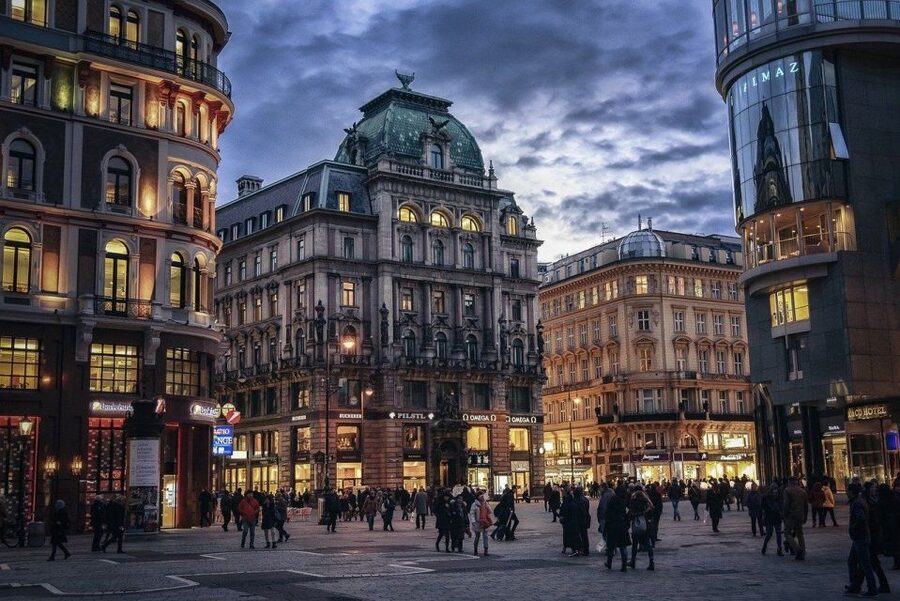
- State Opera start point: A proper handshake with Vienna’s most famous stage, starting right at the building.
- Habsburg storytelling on the street: Hofburg area, Michaelertor, and the imperial church in one coherent narrative.
- Roman roots and medieval layers: You’ll pass evidence of older Vienna than you might expect.
- Stephansplatz and Stephansdom: The route ends at a landmark you will not forget.
- Music history built into the walk: Mozart, Haydn, Beethoven, Schubert, the Strauss family, Brahms, Mahler, and more.
- Private-group feel: With a group cap of up to 15, your guide can actually pace the tour.
Vienna’s power map, on foot: State Opera to Stephansplatz
This is a 3-hour private walking tour that focuses on Vienna’s core, with a big theme: how politics, religion, and the arts grew from the same roots. It starts at the State Opera, then rolls through the imperial center, finishing at Stephansplatz and the Cathedral, Stephansdom. If you like your history with street-level landmarks and your music facts attached to a real building, this format works.
The meeting point is Stephansplatz 8A, 1010 Wien. Plan to arrive a few minutes early so you can get settled and your guide can start on time. Comfortable shoes matter here. The route is a walking-heavy way to cover a lot of sight in a short window.
You also have a useful group-size limit to think about. The price is listed as $323 per group up to 15. That changes the value a lot depending on who you travel with. If you fill close to the maximum, you are looking at roughly $22 per person. If it is just a small group, the cost per person rises, so you will want to be sure you are getting what you want from a private guide.
More Walking Tours in Vienna
- Vienna: Guided Walking Tour of City Center Highlights
★ 4.7 · 4,989 reviews - Vienna: Vienna Central Cemetery Guided Walking Tour
★ 4.8 · 3,307 reviews - Vienna: Guided Walking Tour of City Highlights & Hidden Gems
★ 4.9 · 2,180 reviews
The State Opera stop: what you likely see, and what to confirm
The tour kicks off at the Vienna State Opera House, a major part of Vienna’s identity. The building’s name history is part of the story: it was first called the Vienna Court Opera in the 1860s, and later the name changed in 1920 under the early Austrian Republic. Your guide connects that change to the shift in politics and culture around the former imperial world.
From there, the tour is designed to link the opera house to its musical lineup. The tour materials cite familiar works like Verdi’s Don Carlo and pieces such as La Traviata and La Clemenza di Tito, plus big-name directors associated with the venue, including Gustav Mahler, Herbert von Karajan, and Claudio Abbado.
Here is the important planning detail. Even though the tour advertises a visit inside the State Opera, the experience can be more limited than you might hope. You might only be in public-facing spaces such as the lobby rather than getting the kind of full view people imagine when they hear inside the opera house. Also, some versions of the experience may require separate arrangements if you want access beyond the public areas.
So my practical advice: before you go, make sure you know what “visit the State Opera” means for your exact time slot. Ask whether you are entering areas beyond the lobby, and whether any paid areas are involved. The tour listing says entrance fees are not included, so paid access could be on you if you want more than the basic visit.
The Habsburg backbone: Hofburg area, imperial churches, and gates
After the opera, you head into the Hofburg zone, and this is where the tour earns its keep. You are not just sightseeing. You are being shown how imperial power was staged in stone.
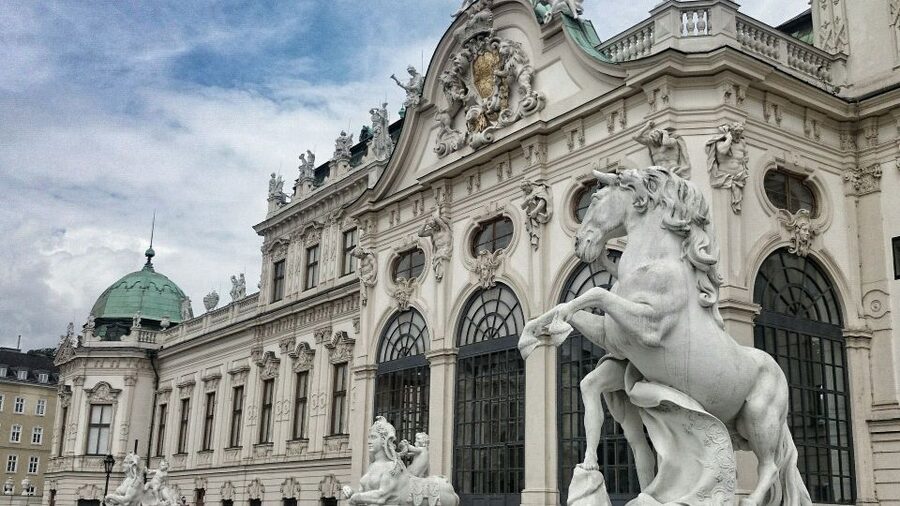
Expect stops and viewpoints around the Hofburg complex, plus a pass by the Michaelertor gate. Near that gate you will see the Church of St. Michael, also called Michaelerkirche. This church is described as the emperors’ official church for years, which helps you understand why this part of Vienna feels so ceremonial. It is not random architecture. It is power made visible.
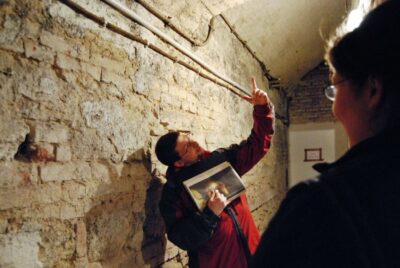
The tour also mentions Roman and medieval layers in this zone. That includes ancient Roman ruins in the square and older medieval walls, plus remnants tied to the former Burg Theatre. This is a good reminder that Vienna did not start as a Habsburg postcard. It evolved over centuries, and you can still spot the earlier timeline if your guide points it out.
One thing I appreciate about this section is that the guide is supposed to keep the story moving from empire to empire. You hear the Holy Roman Empire and then the later Austro-Hungarian Empire, with the Habsburg monarchy as the connective tissue. For many visitors, that time period can feel like one long blur. A walking route through the imperial center helps you sort it out into smaller, clearer beats.
Roman streets to medieval walls: Graben and the city’s older rhythm
A favorite part of this style of tour is when the guide turns a street name into a story. You will pass through the Graben, known as Der Graben, and it is linked back to Roman-era use. The tour information also mentions Richard Lionheart using the area to enter the city, which gives the street a medieval storyline on top of its older Roman base.
Standing on a well-known street like this, it is easy to think Vienna is all grand buildings and formal squares. But that is not really true. Streets like the Graben show you the everyday routes that people used long before the city’s imperial image got famous.
As you keep walking, you will reach Peterskirche, St. Peter’s Church. The tour notes that it has been there since the 4th century. That is a big claim, but it fits the feel of the stop: the kind of age where you slow down without realizing you have.
If you like “how did this city actually work” history, this middle section is where you start to see the pattern. You move from imperial spectacle into the street-level continuity that made commerce and daily life possible through wars and regime changes.
A different sort of Vienna day:
- Vienna: Vivaldi’s Four Seasons Concert in Karlskirche
★ 4.7 · 14,951 reviews - Vienna: Spanish Riding School Training
★ 3.9 · 9,281 reviews - Vienna: Skip-the-cashier-desk-line Giant Ferris Wheel Ride
★ 4.5 · 7,859 reviews - Vienna: Schönbrunn Palace & Gardens Skip-the-Line Tour
★ 4.7 · 7,739 reviews
Mozart Monument and art around the Hofburg
The tour also includes a stop near the Mozart Monument. It may sound simple, but it matters. Vienna’s music reputation can feel like a marketing label until you see how the city literally installs music into public space.
From there, you get viewpoints tied to the Art History Museum and the Hofburg area. The tour materials say you’ll admire fine arts and classical music through the 19th and 20th centuries, and that composers such as Mozart, Haydn, Beethoven, Schubert, the Strauss family, Brahms, and Mahler are part of the story.
What you should expect is not a concert. It is a guided sense of place. Your guide ties music to patrons, institutions, and court culture that supported composers over generations. Even if you only recognize a couple of those names, the route is still useful because it explains why Vienna became Vienna in the first place.
World Wars, the Second Republic, and why the story is not just pretty
Vienna can feel polished to visitors, but the tour’s arc is supposed to include the darker turns too. The tour highlights specifically mention World Wars and the birth of the Second Republic. This is where you should pay attention to tone.
History in this part of Europe can get sensitive fast, and the guide’s handling style matters. I do not want to scare you off, but I will give you a practical check. If your guide starts making modern political comments instead of sticking to history in a respectful, factual way, you should speak up politely or ask to refocus the tour. One guide name linked to a troubling experience was Franziska Pfisker, and the concern involved abrupt remarks about Jewish history and concentration camps that went off into personal or political territory. You deserve a guided experience that keeps the focus on learning.
That said, the core historical coverage is valuable. Understanding what changed after the World Wars helps you read Vienna’s 20th-century layers instead of treating them like separate chapters. When you tie those events back to the imperial center you are walking through, the city’s layout starts to make sense as a living record of change.
Stephansplatz and Stephansdom: the grand ending
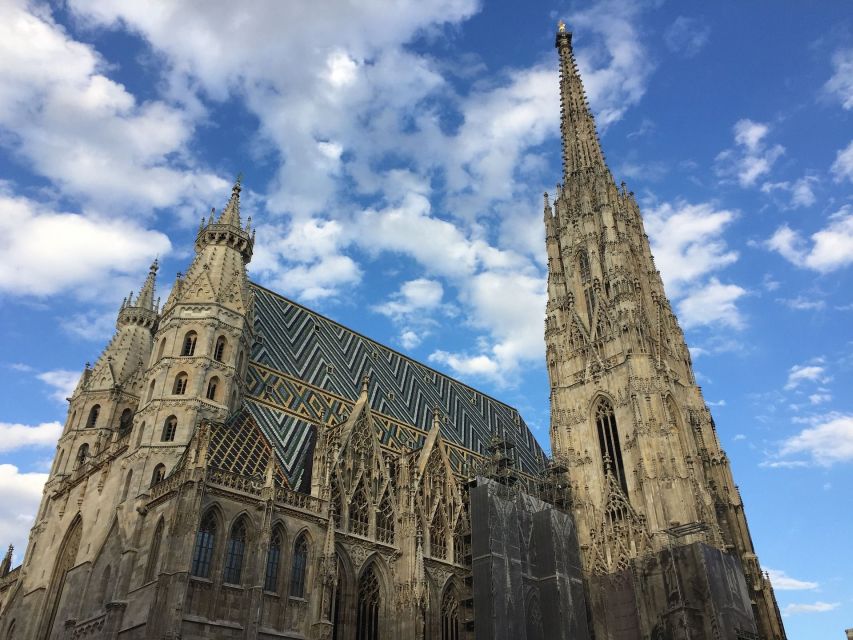
The tour finishes at Stephansplatz, with the centerpiece being Stephansdom, Vienna’s cathedral. This is one of those stops that works even if you are tired, because the scale hits you quickly. The tour materials call it a majestic Roman-Gothic masterpiece and one of the tallest churches in the world, so expect a real wow moment when you finally look up from the street.
Stephansdom also functions as a narrative anchor. You have spent the 3 hours learning about empires, institutions, and religion as part of governance. Ending here gives the story a place that feels stable and permanent. It is not just a sightseeing finish. It is a sense of how Vienna keeps its identity even as political power shifts.
If you want to get a little extra out of the final minutes, take a moment to orient yourself: remember where you started, and notice how central this cathedral is to the city’s mental map. That helps the tour stick.
How long is enough, and how to pace your day
Three hours is a practical chunk of time for Vienna’s central area. You see a lot without the day disappearing. The route is walking-heavy, so you should not schedule another museum right afterward unless you plan for a slower pace.
If you are planning a bigger day, you can use this tour as your foundation. It gives you the “where everything is” knowledge for later self-guided wandering, especially around the Hofburg and the Stephansplatz area. Think of it like a guided orientation that also happens to be historical and music-themed.
Also note the language options. The tour is available in English and German. If your group has mixed comfort levels, private format helps because the guide can usually slow down and clarify.
Price and value: when $323 is a bargain, and when it is not
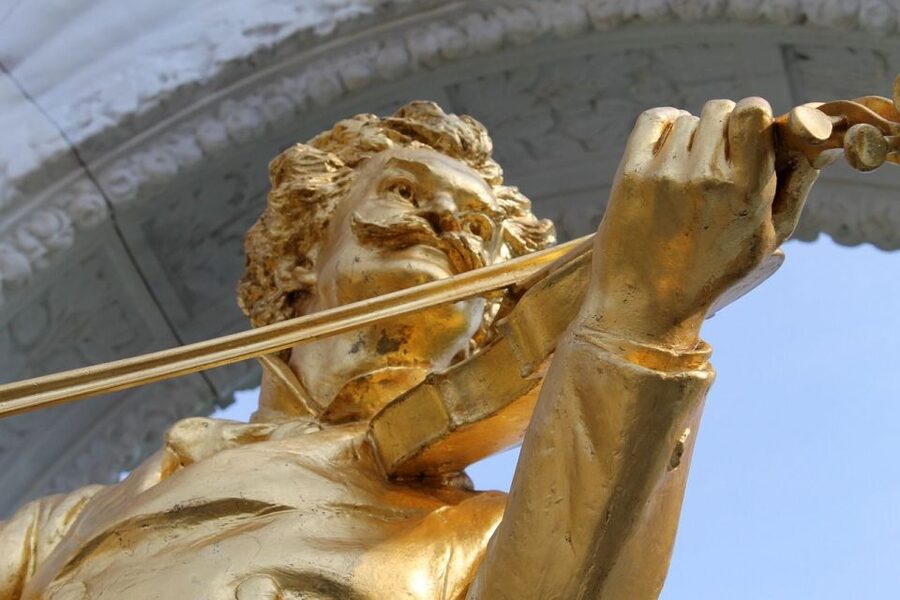
The price is $323 per group up to 15 for 3 hours. That is the kind of pricing that can be a bargain if you have enough people to split it, and expensive if you are traveling as a couple.
Here is the value logic I recommend you use:
- If you have a group of friends or family, private guides become a better deal fast. You are paying for one expert to pace the conversation and keep the history coherent.
- If you are solo or just two people, you should compare the cost against what you might get from a high-quality group tour or self-guided walking route. The private part only pays off if you truly want conversation, questions, and a guide who can adapt pacing.
Given the tour’s focus, it is especially worth it if you want a guided framework for Vienna’s Habsburg story and the city’s music connections. If you just want to check boxes quickly, it may feel less efficient.
Who this tour suits best
This experience is a strong fit if you:
- Love history that connects politics and culture, not just dates.
- Want a guided route through Vienna’s imperial core and Roman-to-medieval layers.
- Prefer walking with a story, ending at a major landmark like Stephansdom.
- Are traveling with people who appreciate learning but still want a human guide.
It is not a great fit if you:
- Have mobility constraints, since the tour is not suitable for people with mobility impairments.
- Expect a guaranteed full opera-auditorium experience. The tour’s State Opera access should be treated as something to confirm.
Should you book this Vienna Private Walking Tour including the State Opera?
If you want a 3-hour guided walk through Vienna’s imperial center with Habsburg history and classical music context, this is a smart way to spend your time. The State Opera start and the Stephansplatz finish give the tour a clear beginning and end, which makes it easier to remember afterward.
But be a careful shopper on the opera part. Before you commit, confirm what you will actually see inside the State Opera and whether any interior access beyond the public areas involves extra cost. Also, if your group is sensitive to how guides discuss difficult historical topics, ask your guide to keep it focused and respectful.
If those pieces check out, I think you will enjoy how the route connects Vienna’s grand buildings to the stories that made them matter. If not, you might be better off with a different walking tour that matches your expectations for the opera access.
FAQ
How long is the Vienna Private Walking Tour including the State Opera?
It lasts 3 hours.
What is the price for this private tour?
The price is $323 per group, up to 15 people.
Where do we meet for the tour?
The meeting point is Stephansplatz 8A, 1010 Wien, Austria.
Which languages is the live guide available in?
The live tour guide is available in English and German.
Does the tour include a visit to the State Opera?
Yes, the tour includes a visit to the State Opera.
Are entrance fees included?
No, entrance fees are not included.
Latest Vienna reviews
- Private tour of Hallstatt and Salzburg through beautiful Alps★ 5.0 · 3 reviews
- Vienna: Vienna under the Nazis, Private Walking Tour★ 1.8 · 3 reviews
- Magical Vienna Christmas Market Tour – 2 Hours★ 2.7 · 3 reviews
- Vienna: Private tour Mauthausen and Linz★ 4.1 · 3 reviews
- Vienna Private Schönbrunn Palace Tour, Extra Rooms and Gardens★ 5.0 · 3 reviews
- Vienna: Mythos Mozart Experience Ticket& Guided Walking Tour★ 2.5 · 3 reviews
- Skip-the-line Belvedere Palace Guided Tour with Transfers★ 5.0 · 3 reviews
- Schoenbrunn Palace Skip-The-Line and Vienna Highlights Private Tour★ 4.5 · 3 reviews
Walking Tours, compared.
Guided Walking Tour of City Center Highlights
Read our review →
Guided Walking Tour of City Highlights & Hidden Gems
Read our review →
Vienna Historic Center Small Group Walking Tour
Read our review →
Browse the lists this tour appears in