
Reviewed · WALKING TOURS
World War II History Vienna Old Town Private Walking Tour
Vienna’s Old Town is one of the easiest places to understand how WWI to WWII played out, because you can walk from one landmark memory to the next. I love how this tour uses a clear timeline, from Franz Ferdinand’s assassination through Vienna’s 1945 bombing and liberation. I also like that you start right at Morzinplatz, at a site tied to Nazi terror and the Gestapo. The only real drawback is the format, you have just 2 hours, so you’ll want to come with the questions that matter most to you.
If you care about interpretation, not just facts, you’ll appreciate the 5-star licensed guide. The tour is designed for your language choice, so the story stays understandable even when it gets heavy. Wear comfortable shoes and dress for the weather, because this is a real walking tour, not a bus ride.
Key highlights to know before you go
- Start at Morzinplatz near the memorial tied to Nazi terror and the former Hotel Metropol
- WWI to WWII timeline with causes and consequences, not random stops
- Propaganda and daily life in German-occupied Austria, plus the human impact
- Holocaust Memorial and Remembrance Stones that slow the pace and sharpen focus
- Imperial landmarks with wartime meaning, including Hofburg (exterior) and Heldenplatz
- Finish by the State Opera area, near a monument reflecting on war and fascism after 1945
Why Vienna’s Old Town is a smart place to learn WWII
Vienna can feel like a postcard city if you only look at the palaces and churches. This kind of tour forces you to see the other side of the same streets: the propaganda, the occupation, the persecutions, and the official buildings that carried power before and during the Nazi era.
What I like about this format is that it is not just name-dropping leaders. You look at how events connect, why WWI set the stage for WWII, and how Austria’s political shifts were part of the story. You also get to see World War II and Holocaust memorials in context, not in isolation.
And you do it on foot in Inner Stad, where many historic sites are close enough that a good guide can connect the dots without rushing you from one corner of the city to the next.
More Walking Tours in Vienna
- Vienna: Guided Walking Tour of City Center Highlights
★ 4.7 · 4,989 reviews - Vienna: Vienna Central Cemetery Guided Walking Tour
★ 4.8 · 3,307 reviews - Vienna: Guided Walking Tour of City Highlights & Hidden Gems
★ 4.9 · 2,180 reviews
Morzinplatz and the Nazi terror starting point near Hotel Metropol
Your tour begins in front of the Denkmal der Opfer des Faschismus at Morzinpl. 4. This matters because it is a strong anchor before the walking starts. You are not starting with an abstract lecture. You are starting with a memorial tied to the victims of Nazi terror.
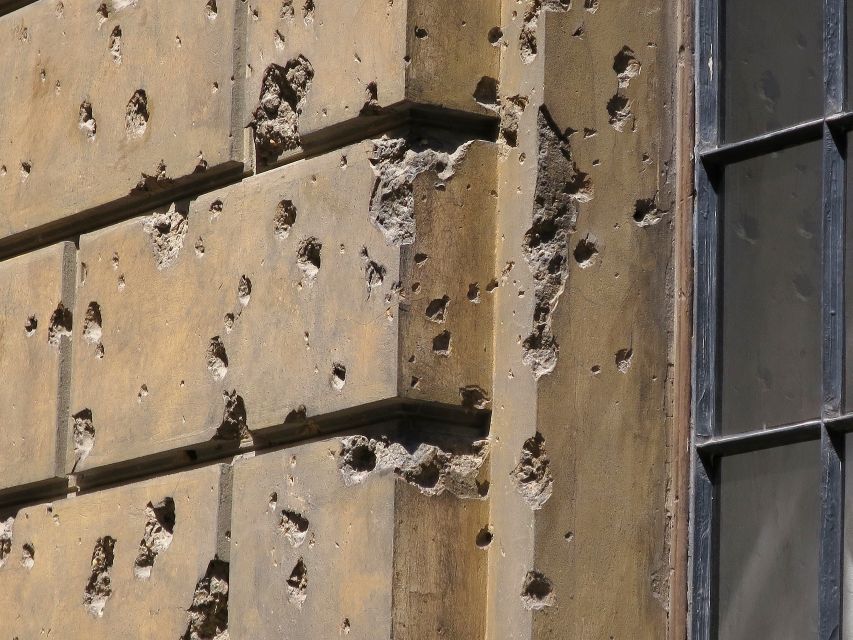
The guide then brings in a key local detail: in 1939, the former Hotel Metropol in this area was used as the Gestapo headquarters in Vienna. That kind of specific, place-based history is exactly what makes walking tours worthwhile here. Instead of just learning that the Gestapo existed, you learn where you can see the institutional imprint it left behind.
This first segment also sets the tone for the rest of the walk. You’ll hear about the timeline leading up to the war and the consequences that followed, and you’ll likely hear names that shaped Nazi policy, including Adolf Hitler and Ernst Kaltenbrunner. Expect the guide to frame these figures in the Austrian reality of the time.
Inner Stad streets where propaganda and daily life were real
Once you’re moving through the Old Town, the tour shifts from the big overview to how war showed up in daily life. You’ll pass through areas where German-occupied Austria experienced political propaganda as a visible, lived reality, not something that stayed in documents.
The advantage of having a private, language-specific guide here is pacing. In a crowded public tour, questions often get cut off. In a private setup, you can ask, and you can get answers that fit what you actually want to understand, whether it is why Austria became involved or how occupation changed life on the ground.
You’ll also get a sense of how quickly the ordinary can become dangerous. The guide doesn’t treat this as distant history. Instead, you’ll connect the political story with what people would have noticed day to day, even when the city still looked unmistakably Viennese.
Holocaust memorials and Remembrance Stones, with room to process
As you continue through Inner Stad, you come to the Holocaust Memorial and Remembrance Stones. This is one of the most important parts of the tour, because these markers force a slower, more careful kind of attention.
What makes this section valuable is the combination of location plus explanation. Holocaust memorials can feel like isolated objects if you only look at them briefly. Here, the guide can place them in the broader story the tour has been building, including the tragic fate of Vienna’s Jewish citizens.
Even if you know the outline of events already, you may find the Remembrance Stones and the way the guide links them to the surrounding city make the history stick differently. You are seeing commemoration that belongs to the street, not just to a museum room.
And because the tour is only 2 hours, you don’t get dragged through too many stops. You get to focus on a smaller number of high-impact moments.
More Historical Tours in Vienna:
- Vienna: Time Travel and Magic Vienna History Tour
★ 4.6 · 3,879 reviews - Vienna: World War II Historical Walking Tour
★ 4.8 · 1,772 reviews - Vienna Historic Center Small Group Walking Tour
★ 5.0 · 1,746 reviews - Time Travel-Magic Vienna History Tour Ticket
★ 4.5 · 1,099 reviews
St. Stephen’s Cathedral as an orientation point in the bigger story
St. Stephen’s Cathedral is listed among the stops you’ll see on this WWII themed walk. In practical terms, it is a strong orientation point in Vienna’s historic core, and a helpful way to keep your mental map straight.
In a tour like this, that matters. WWII history is dense, and you may feel your brain trying to store names, dates, and details. Seeing a major landmark like St. Stephen’s Cathedral helps you anchor the story in physical space while still staying focused on the WWII and Holocaust connections.
The guide will use these landmarks as cues for interpretation, so you can understand how the city’s impressive architecture existed alongside the political collapse and wartime violence that followed.
Hofburg exterior and Heldenplatz’s WWI and WWII Memorial Crypt
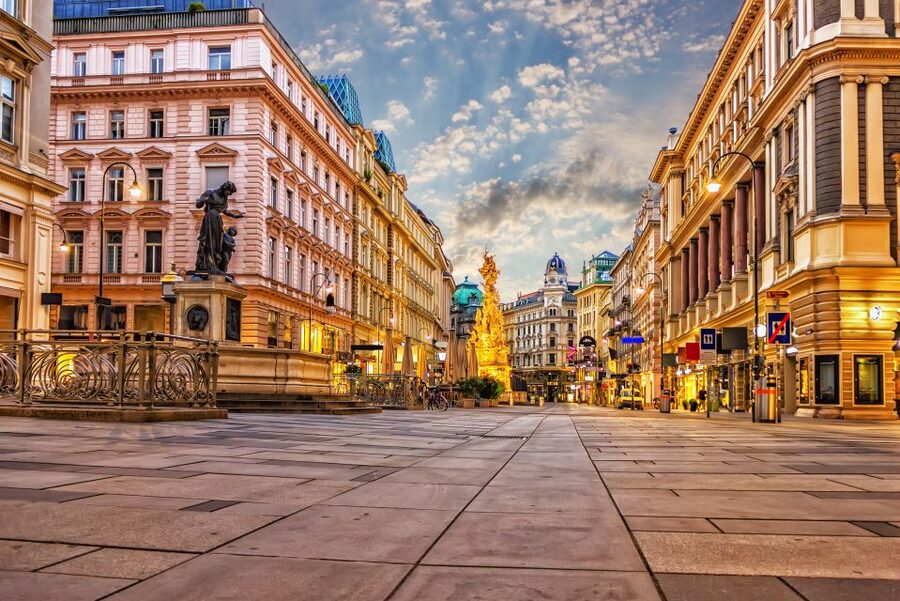
Next comes the Hofburg area, specifically the imperial palace complex in the form of exterior viewing. You are not being asked to treat it like a sightseeing detour. The point is to see how power centers existed in the same city that later became the stage for occupation and war.
Then you reach Heldenplatz, where the Memorial Crypt honors victims of WWI and WWII. This is a powerful contrast: an imperial public space used for mourning, with the war dead acknowledged in a way that is meant to be remembered.
If you’re the kind of person who likes your history tied to institutions, this segment is a good fit. You’re looking at the buildings that symbolized authority, and you’re learning how the war era reshaped who held power and what the city had to endure. The guide’s job is to keep it clear, so you leave with a better understanding of how one era transitions into the next.
Burggarten and Emperor Franz Joseph I, seen through a later lens
You also see the monument to Emperor Franz Joseph I in the Burggarten. It’s a visual reminder of Vienna’s imperial past, and the guide can help you interpret what it means to see that kind of legacy while learning about later political violence.
This part is not about romanticizing older rule. It is about recognizing continuity and change at the same time. You get a sense of how long institutions can shape a country, and how later events can turn those symbols into part of a darker historical narrative.
Ending near the Vienna State Opera, Monument Against War and Fascism
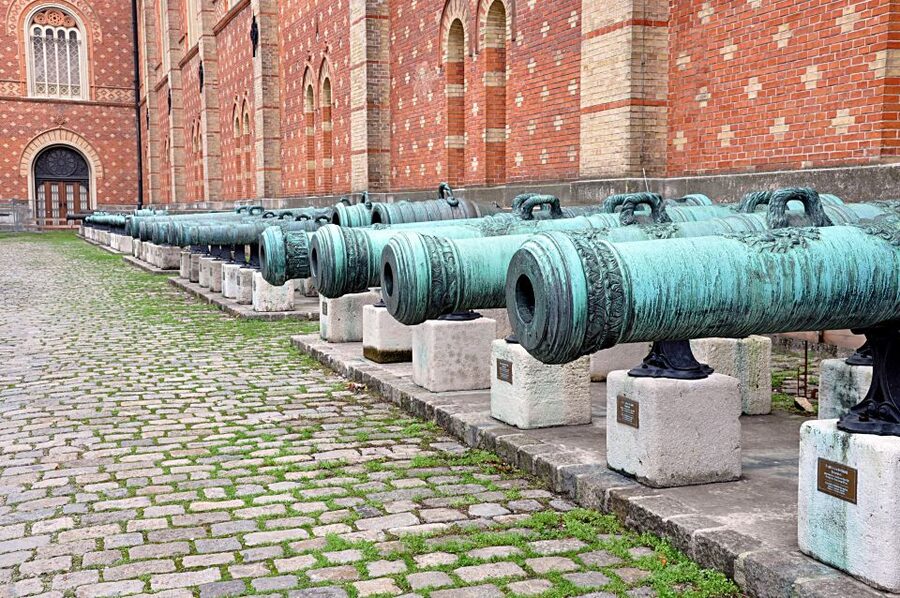
Your tour ends at the Monument Against War and Fascism near the Vienna State Opera. This is a fitting close because the State Opera area is tied to the memory of the 1945 bombing, which the tour specifically mentions as heavily damaging the venue.
Ending here gives you a clean final stop with a clear theme: how people after the war framed their refusal of fascism and their desire for peace. The guide’s explanation helps you understand that commemoration is not just about the past. It is about what a society wanted to prevent next.
If you’ve been taking notes, this ending spot is a good place to review what you learned. You can see the neighborhood energy around you, then mentally pull it back into the wartime reality your guide has been describing.
Guide quality and languages, and why it changes everything
A big part of the value here is that you’re not stuck with a generic audio track. You have a licensed guide fluent in your chosen language, and you can get expert commentary on WWII, WWI, and the Holocaust.
The tour is also tailored to your needs and interests, which is a big deal when you are choosing a history experience. You might want more on the political background, more on key figures like Adolf Hitler and Ernst Kaltenbrunner, or more on Austria’s involvement and the lived reality of occupation. A private guide can shift the emphasis to match what you care about.
I also appreciate the human side of guiding that shows up in past experiences connected to this tour style. Guides such as Peter, Sanda, Alexander, and Frau Heuberger have been praised for handling questions patiently, including when a young child joined the walk. They were also noted for balancing the pace with breaks during heat, including being guided to shade from one stop to the next. That kind of practical skill matters when the content is intense.
Finally, the language options are broad. English, German, Italian, French, Spanish, Russian, Polish, Chinese, Japanese, Croatian, Portuguese, and Arabic are offered. If you want history explained clearly in a language you can think in, this is a straightforward way to get it.
Price and value: what $214 for 2 hours really means
At $214 per person for a 2-hour private walking tour, you should think of this as paying for three things: a high-level guide, a targeted set of meaningful sites, and interpretation that connects them into one story.
Could you walk around Vienna on your own and see a few memorials? Sure. But you would need to piece together the timeline yourself, figure out what each location meant during occupation, and connect the WWI to WWII progression without missing nuance. That’s exactly what the guide is doing for you.
You’re also paying for private attention and flexibility. The group size is limited to 1-25 people per guide, so you’re not usually competing with a huge crowd for hearing and asking questions. And if you’re traveling with family or you need to pause, a good guide’s pacing can prevent the experience from feeling like a rigid march.
One caution: because it is private and focused, it may cost more than group tours. If you are sensitive to price, compare what you get for your money. Here, you are buying interpretation, not just entry points.
Who this tour suits best in Vienna
I’d put this tour at the top of the list if you want WWII history in a format that stays visual and place-based. If you care about how political events connect to everyday life under occupation, you’ll like the way the walk includes propaganda and daily life, not only war dates.
It also works well if you like a clear structure. You get WWI and WWII context, a timeline that helps you understand causes and consequences, and a route through key imperial and commemorative landmarks.
If you are traveling with kids, keep expectations realistic, but the tour is not automatically off-limits. Past experiences connected to this guiding style included patience when a young child was involved, and that kind of flexibility can make a big difference on a short walk.
Should you book this WWII Vienna Old Town tour?
Book it if you want a short, high-impact way to understand WWI to WWII through real Vienna locations, starting at Morzinplatz and ending near the State Opera with a war-and-fascism theme. I think it’s especially worth it when you want interpretation in your language and you value expert guidance over self-guided wandering.
Consider another option if you want a longer experience, deeper museum time, or a lighter tone. This walk focuses on serious events, and it moves at walking-tour speed. For most people, that is the point. For others, it may feel like too much content in too short a window.
FAQ
How long is the World War II History Vienna Old Town Private Walking Tour?
The tour lasts 2 hours.
Where do we meet the guide?
Meet your guide in front of the Denkmal der Opfer des Faschismus, Morzinpl. 4, 1010 Wien, Austria.
Is the tour private?
Yes, it is a private group walking tour.
What sites and monuments are part of the tour?
You will see places such as Hofburg (exterior only) and the Memorial Crypt in Heldenplatz, plus the Holocaust Memorial and Remembrance Stones. The highlights also mention St. Stephen’s Cathedral and several WWII and Holocaust monuments. The tour ends at the Monument Against War and Fascism near the Vienna State Opera.
What languages are available for the live guide?
The live guide is available in English, German, Italian, French, Spanish, Russian, Polish, Chinese, Japanese, Croatian, Portuguese, Arabic.
Who will be leading the tour?
A 5-star licensed guide fluent in your chosen language leads the tour, with expert commentary on World War I, World War II, and the Holocaust.
How big is the group for each guide?
The group size is limited to 1-25 people per guide for the best experience, and additional guides are arranged for larger groups.
Is the tour easy to do if I am walking?
It is a walking tour, so comfortable shoes and weather-appropriate clothing are recommended.
Latest Vienna reviews
- Private tour of Hallstatt and Salzburg through beautiful Alps★ 5.0 · 3 reviews
- Vienna: Vienna under the Nazis, Private Walking Tour★ 1.8 · 3 reviews
- Magical Vienna Christmas Market Tour – 2 Hours★ 2.7 · 3 reviews
- Vienna: Mythos Mozart Experience Ticket& Guided Walking Tour★ 2.5 · 3 reviews
- Vienna: Private tour Mauthausen and Linz★ 4.1 · 3 reviews
- Vienna Private Schönbrunn Palace Tour, Extra Rooms and Gardens★ 5.0 · 3 reviews
- Skip-the-line Belvedere Palace Guided Tour with Transfers★ 5.0 · 3 reviews
- Schoenbrunn Palace Skip-The-Line and Vienna Highlights Private Tour★ 4.5 · 3 reviews
Walking Tours, compared.
Guided Walking Tour of City Center Highlights
Read our review →
Guided Walking Tour of City Highlights & Hidden Gems
Read our review →
Vienna Historic Center Small Group Walking Tour
Read our review →
Browse the lists this tour appears in